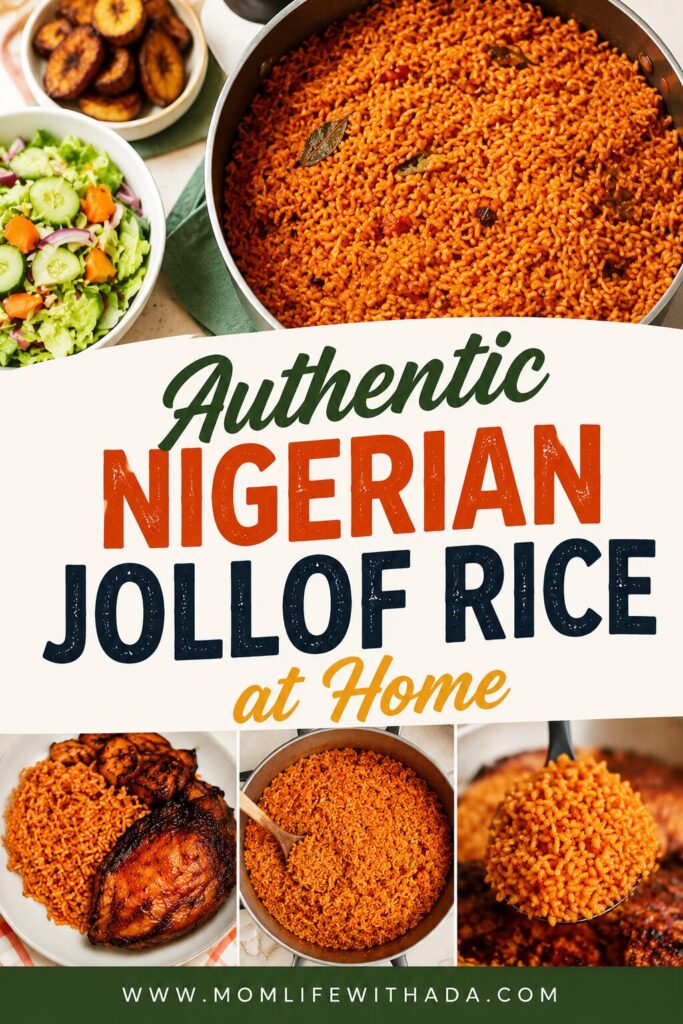
You know that moment when your neighbor rings your doorbell and says, “I smelled something amazing coming from your kitchen”? Yeah. That is exactly what happens every single time smoky Nigerian Jollof Rice is cooking on my stove. The smell alone is enough to start a whole neighborhood conversation.
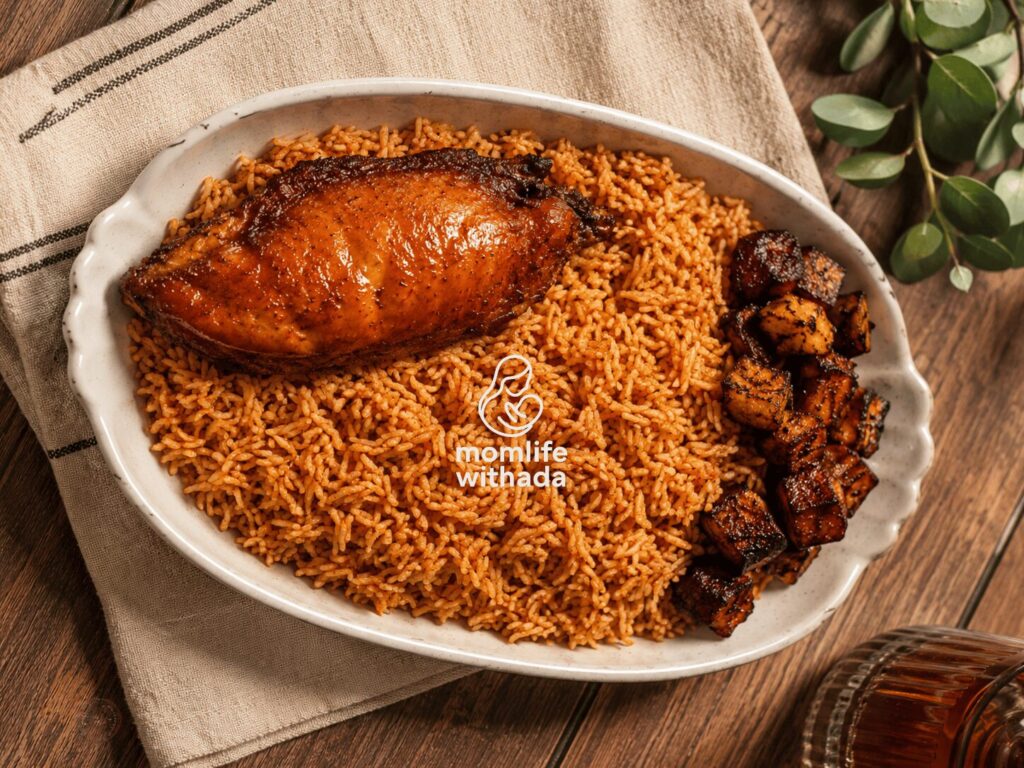
I still remember the first time I nailed this recipe. It was a Sunday afternoon, my kids were running around the house, I had already made school lunch snacks earlier that week, and I decided it was finally time to stop watching other people’s Jollof videos and make the real thing myself. That smoky, slightly charred bottom layer, the one Nigerians call “party rice,” came out so perfectly that my husband ate two plates without saying a single word. Just silence. The best kind of silence.
So if you have been trying to figure out how to get that deep, smoky flavor in your Nigerian Jollof Rice, you are absolutely in the right place. I am going to walk you through everything, step by step, in a way that actually makes sense.
📌 Quick Note: This post contains affiliate links. I may earn a small commission if you purchase through them, at no extra cost to you.
Thank you so much for supporting this blog! 💛
What Makes Smoky Nigerian Jollof Rice Different
There is regular Jollof Rice, and then there is smoky Nigerian Jollof Rice. They are not the same thing.
Regular Jollof can be good. It can taste fine. But smoky Nigerian Jollof Rice? That is an experience. It’s the kind of rice people drive across town for. That is what shows up at every Nigerian birthday party, naming ceremony, and Sunday family gathering and disappears before the other food even gets touched.
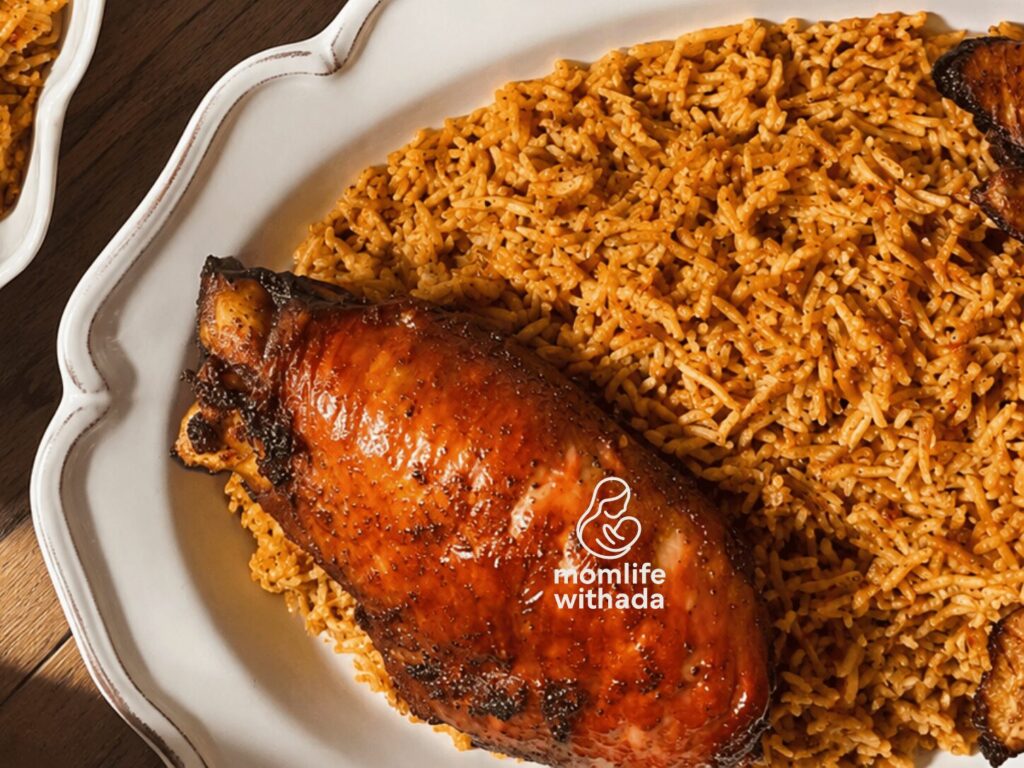
So what makes it so special? Three things:
The tomato base. Smoky Nigerian Jollof Rice starts with a deeply cooked tomato, pepper, and onion base. Not quick-cooked. Not rushed. We are talking low and slow cooking that completely transforms those raw tomatoes into a thick, rich, almost caramelized paste. This is actually the foundation of the entire dish, and most people rush this part.
The parboiled rice. Using the right type of rice matters more than people think. Long-grain parboiled rice absorbs the sauce beautifully without turning mushy. Each grain stays separate and perfectly coated. This is very different from using short grain or jasmine rice, which can clump and become soggy.
The smoky base layer. This is what sets Nigerian party Jollof apart from everything else. That smoky bottom, achieved by carefully turning up the heat at the very end and letting the bottom toast just slightly, creates an incredible smoky flavor that infuses upward through the entire pot. It is not burnt rice. It is a controlled, intentional smoke that Nigerians have perfected over generations.
Additionally, the combination of spices, stock, and aromatics used in this recipe creates layers of flavor that you simply cannot get from any shortcut method.
Ingredients You Need for Smoky Nigerian Jollof Rice
Before you start cooking, make sure you have everything ready. This makes the entire process so much smoother, especially if you are making this for the first time.
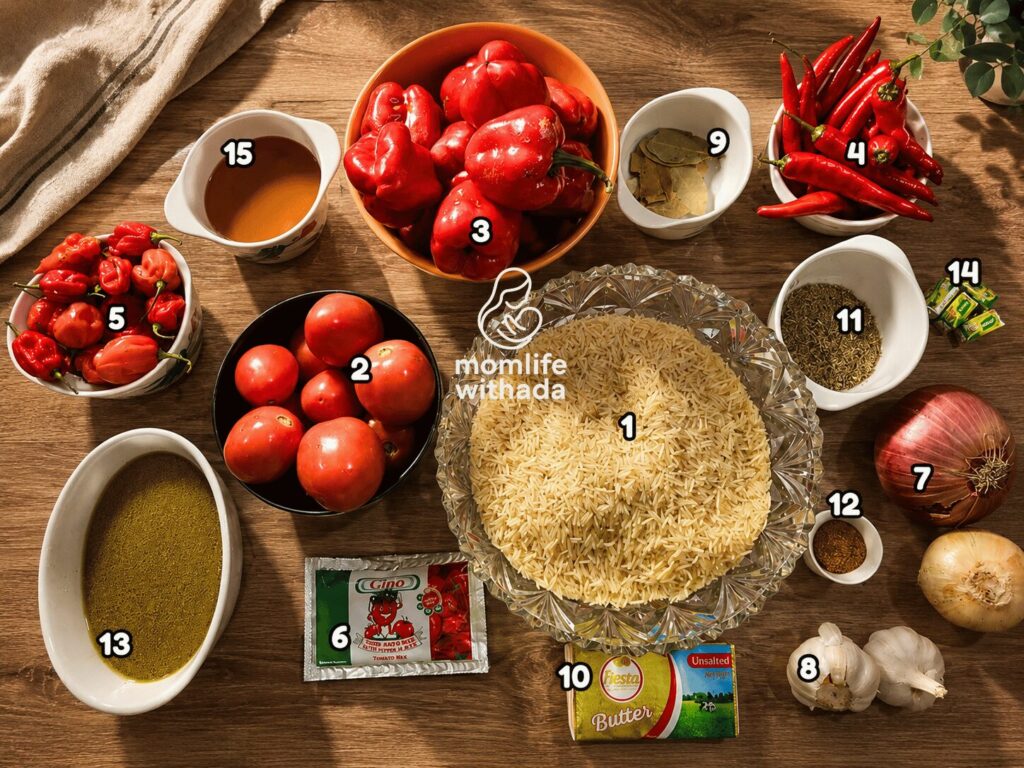
- 6 cups of Rice – For this tutorial, I’ll be using Long-Grain Parboiled Rice, but any rice is ok to use.
- Red Ball Tomatoes – This should be 20% of the tomato and pepper mix.
- Tatashe (red bell peppers) – Tatashe is long and slender, with a mildly sweet flavor, unlike regular bell peppers, which are round, blocky, and much sweeter. Although they may look similar, they are not the same and should not be used interchangeably. For authentic Nigerian Jollof Rice, tatashe should make up about 40% of the tomato and pepper blend, as it provides the rich flavor, vibrant color, and thick base that define the dish.
- Oshombo (red chilli pepper) – This should make up about 10% of the tomato and pepper blend. While it adds heat and depth of flavor, it should be used sparingly to avoid overpowering the other ingredients.
- Habanero pepper – The amount you use depends on your spice tolerance. If you prefer spicy jollof rice, you can add more peppers
- Tomato paste
- Onions – Be generous with the onions, as they add natural sweetness and depth of flavor to the rice. In general, the more onions you use, the richer and sweeter your jollof rice will taste.
- Garlic
- Bay leaves
- Unsalted butter
- Dried thyme
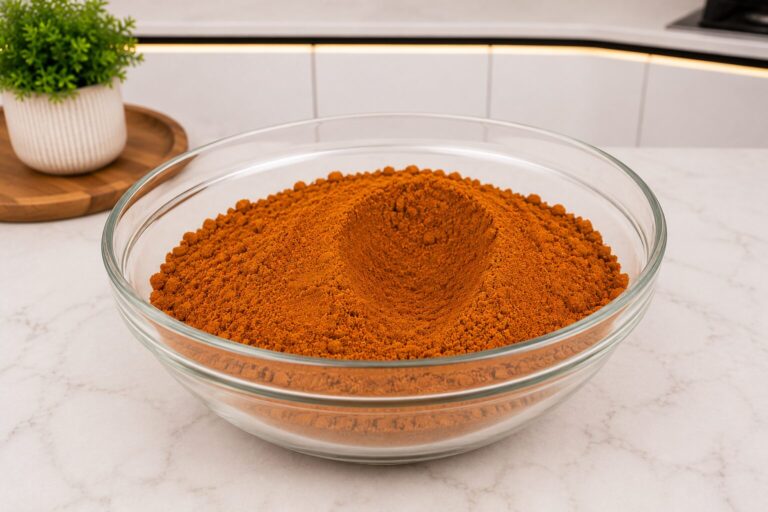
- Curry powder
- Turkey meat stock
- Knorr seasoning cubes
- Vegetable or Olive oil
- Ginger – This is optional
- salt to taste
For the Tomato Base (The Most Important Part):
- 6 large plum tomatoes (Roma tomatoes work great)
- 3 large red bell peppers (tatashe)
- 2 to 3 habanero peppers (or scotch bonnets — adjust to your heat level)
- 2 large onions (1 for blending, 1 for frying)
- 1/2 cup vegetable oil or chicken fat (chicken fat from your stock gives incredible flavor)
As For the Rice:
- 6 cups long grain parboiled rice (please do not skip the parboiling if your rice is not already pre-parboiled)
- 3 cups chicken, turkey, or beef stock (homemade is best, but good store-bought works fine)
- 1 cup tomato paste (this deepens the color and flavor)
- 2 chicken stock cubes (or your preferred bouillon)
- Salt to taste
For Seasoning:
- 1 teaspoon curry powder
- 1 teaspoon thyme
- 1 teaspoon garlic powder (or 3 fresh garlic cloves, minced)
- 1 teaspoon smoked paprika (this is a little cheat code for an extra smoky flavor)
- 1/2 teaspoon white pepper
- Bay leaves (2 to 3)
Optional But Highly Recommended:
- Chicken pieces, beef, or seafood for serving alongside
- Fried plantain (dodo), because smoky Nigerian Jollof Rice and fried plantain are one of the greatest food combinations in the entire world
- Coleslaw or garden egg salad for a complete party plate
The Secret to Getting That Smoky Flavor in Nigerian Jollof Rice
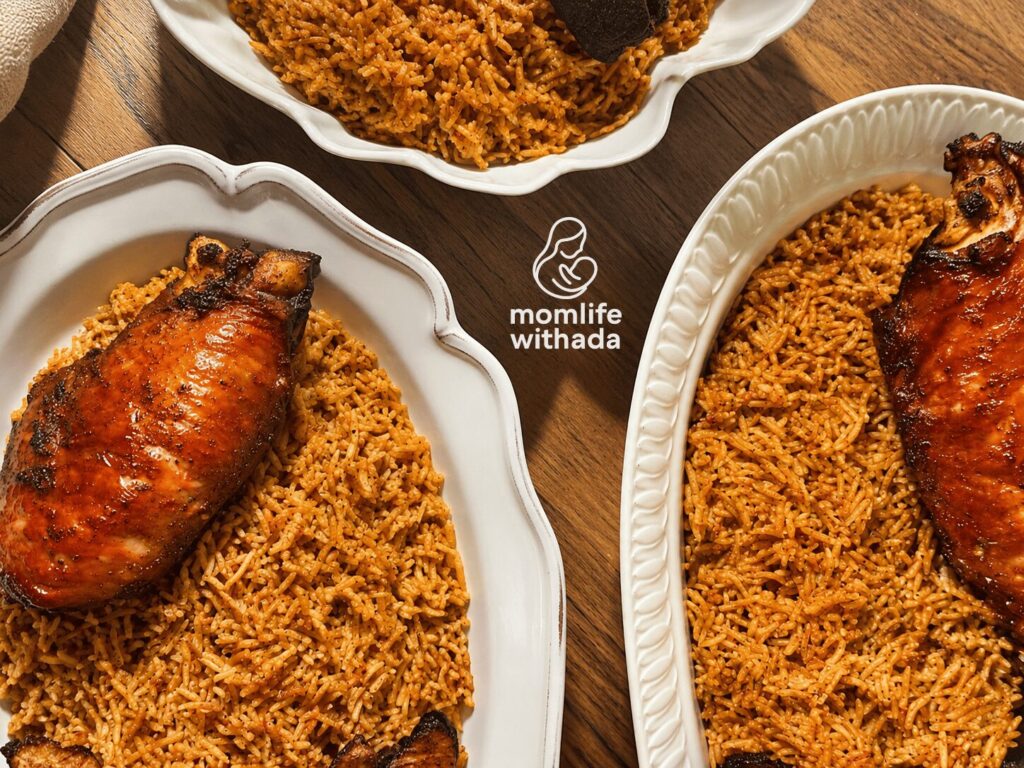
Okay, this is the part most recipes gloss over. I am not going to do that because this is exactly where the magic happens. Getting the smoky flavor in Nigerian Jollof Rice is a skill, and once you understand why it works, you can nail it every single time.
Tip 1: Fry Your Tomato Base Until the Oil Floats
This step is non-negotiable. After blending your tomatoes, peppers, and onions, you need to fry that mixture in oil over medium to medium-high heat until all the water evaporates and the tomato paste becomes dark, thick, and fragrant. The oil will literally separate and float on top of the paste.
This process usually takes 30 to 45 minutes. I know that sounds like a long time. However, every single minute is worth it. Rushing this step will give you a watery, sour-tasting Jollof Rice. Doing it properly gives you that deep, complex, umami-rich base that makes smoky Nigerian Jollof Rice unforgettable.
Tip 2: Use a Heavy-Bottom Pot
A thin pot distributes heat unevenly, which means some parts of your rice burn while others remain undercooked. A heavy-bottom pot (cast iron or a thick aluminum pot) holds heat evenly and creates that beautiful, even smoky crust at the bottom.
If you have been using a thin pot and wondering why your Jollof never comes out right, this might be your answer.
Tip 3: The “Party Rice” Technique at the End
This is the most exciting step. Once your rice is almost fully cooked, you turn the heat up to medium-high or high and let it sit uncovered for just 3 to 5 minutes. This is what creates the signature smoky bottom layer. You will hear a slight sizzling sound and notice a light smoke rising from the pot. That is your cue that the smoky magic is happening.
Do not walk away during this step. Stand right there. Listen. After 3 to 5 minutes, take the pot off the heat immediately. Let it rest for 10 minutes with the lid on. The steam will finish cooking the rice while the smoky flavor travels through every single grain.
Tip 4: Add Smoked Paprika or Use Firewood
Traditionally, smoky Nigerian Jollof Rice gets its flavor from cooking over firewood. The smoke from the wood goes directly into the food. If you are cooking on a regular gas stove, as most of us do, smoked paprika added during the sauce stage gives you a similar depth. Some people also use a tiny piece of smoked fish in the sauce for extra smokiness without changing the flavor profile too dramatically.
Tip 5: Do Not Open the Pot Too Often
Every time you lift that lid, you release steam. Steam is what cooks the rice evenly. Think of each unnecessary lid-lift as taking a little heat and moisture away from your food. Put the lid on, let the rice steam, and trust the process. Only open it when the recipe tells you to.
Step-by-Step: How to Cook Smoky Nigerian Jollof Rice
Now that you know all the secrets, let us get into the actual cooking. Follow these steps carefully, and you will end up with the most amazing smoky Nigerian Jollof Rice you have ever made at home.
Step 1: Blend Your Peppers and Tomatoes
Roughly chop your plum tomatoes, red bell peppers, habanero peppers, and one large onion. Add them to a blender with about 1/4 cup of water and blend until smooth. You want a smooth, thick puree with no large chunks remaining.
Set this blend aside.
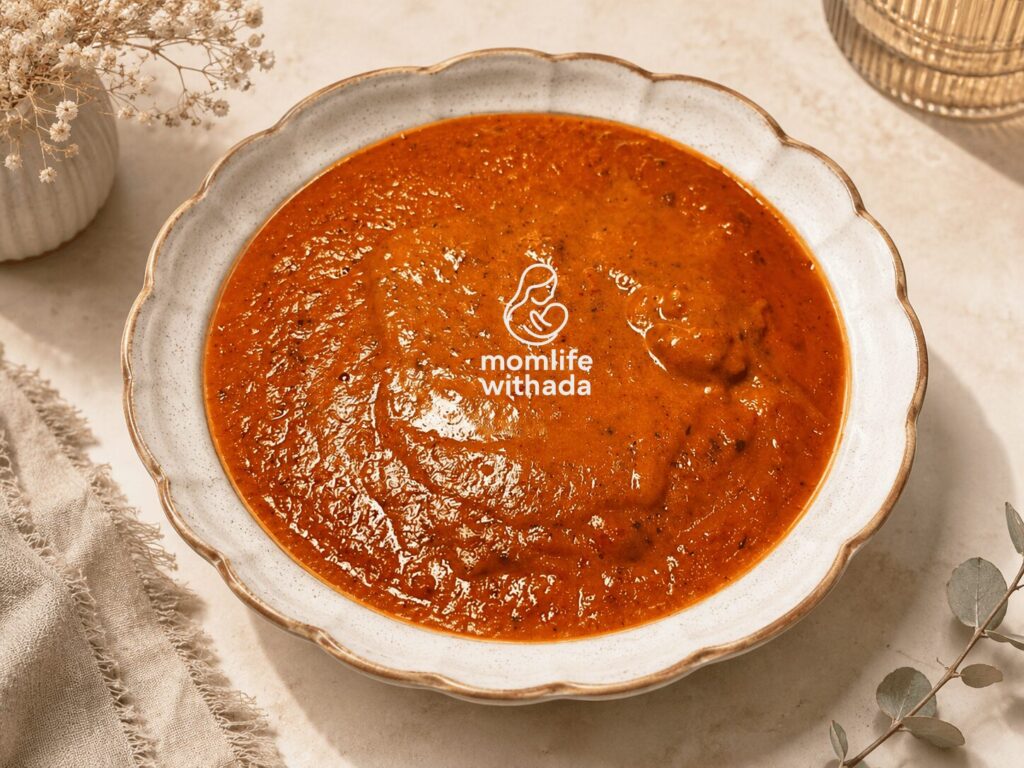
Step 2: Fry Down the Tomato Base
Heat your oil in a large, heavy-bottom pot over medium heat. Dice the second large onion and fry it in the oil until it becomes golden and fragrant, roughly 5 minutes. Next, add your tomato paste and stir it into the oil. Fry the paste for about 5 minutes until it darkens slightly.
Then pour in your blended pepper mixture. Stir everything together well. This is where patience becomes your best cooking tool. Cook this mixture over medium to medium-high heat, stirring every 5 to 10 minutes, until all the water has evaporated completely and the sauce becomes thick, dark, and the oil rises to the top. As mentioned earlier, this takes about 30 to 45 minutes.
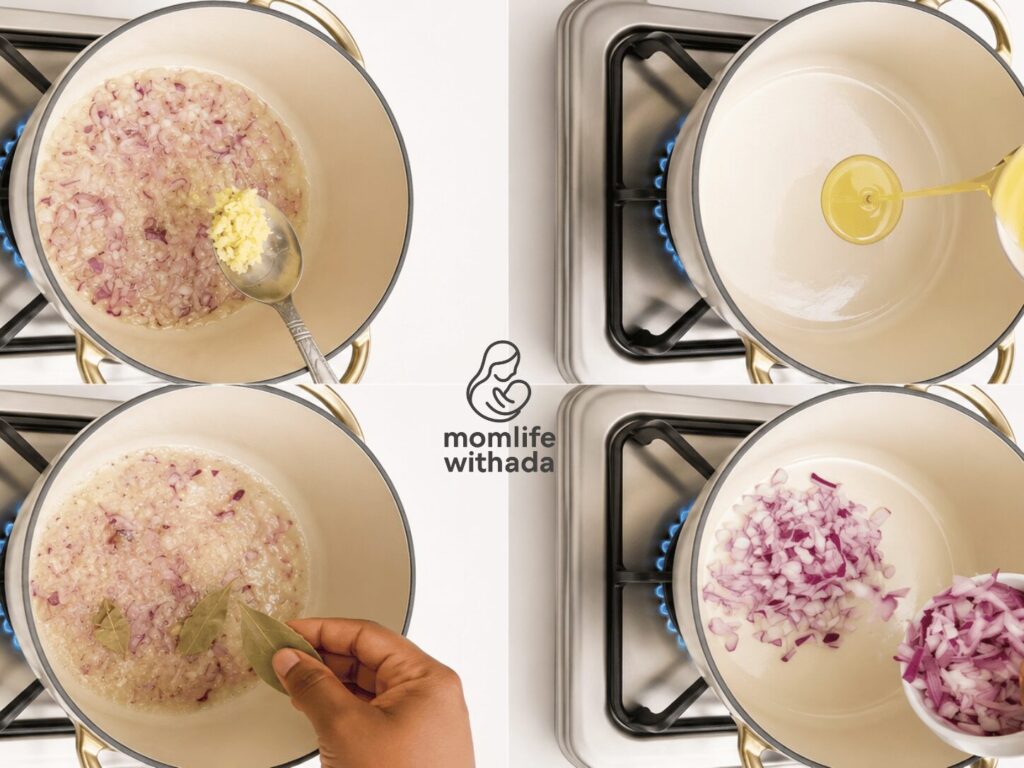
Step 3: Season Your Sauce
Once the tomato base is properly fried, add your curry powder, thyme, smoked paprika, garlic powder, white pepper, bay leaves, and chicken stock cubes. Stir everything together and cook for another 5 minutes so the spices bloom in the hot sauce.
This is the moment when your kitchen will start smelling absolutely incredible. Your family will suddenly appear from every room in the house asking when the food will be ready.
Step 4: Add Stock and Bring to a Boil
Pour in your chicken or beef stock and stir well. Taste the sauce at this point and adjust the salt. Remember that the rice will absorb all of this liquid, so the sauce should taste slightly saltier than you would like your final rice to be. Bring the mixture to a rolling boil over high heat.
Step 5: Wash and Parboil Your Rice
While your sauce is coming to a boil, wash your rice thoroughly with cold water until the water runs clear. This removes excess starch. If your rice is not already pre-parboiled, parboil it in a separate pot of boiling water for about 5 minutes, then drain completely. Pre-parboiled rice (like Uncle Ben’s or other long-grain parboiled varieties) can go straight in.
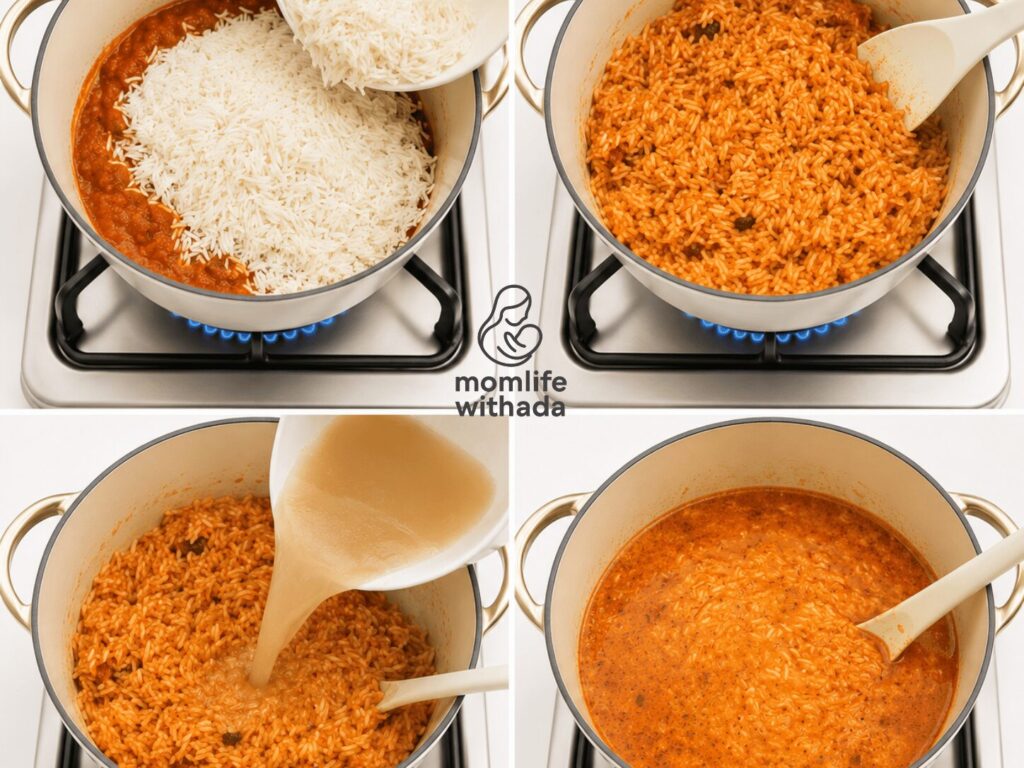
Step 6: Add the Rice
Pour your washed (or parboiled) rice directly into the boiling tomato sauce. Stir well so every grain gets coated in the sauce. The liquid level should be about 1 inch above the rice level. If it looks dry, add a little more stock or hot water.
Reduce the heat to medium-low, cover the pot tightly with foil first, then place the lid over the foil. The foil creates a seal that traps steam and cooks the rice evenly from all sides.
This double-lid technique is a game-changer. It is actually used by professional Nigerian cooks and catering services to achieve perfectly steamed, fluffy Jollof Rice every single time.
Step 7: Cook Low and Slow
Cook on medium-low heat for about 25 to 30 minutes. Do not open the pot during this time. Around the 20-minute mark, you can carefully open the pot and use a wooden spoon to fold the rice from the bottom to the top, making sure nothing is sticking. Then replace the foil and lid immediately.
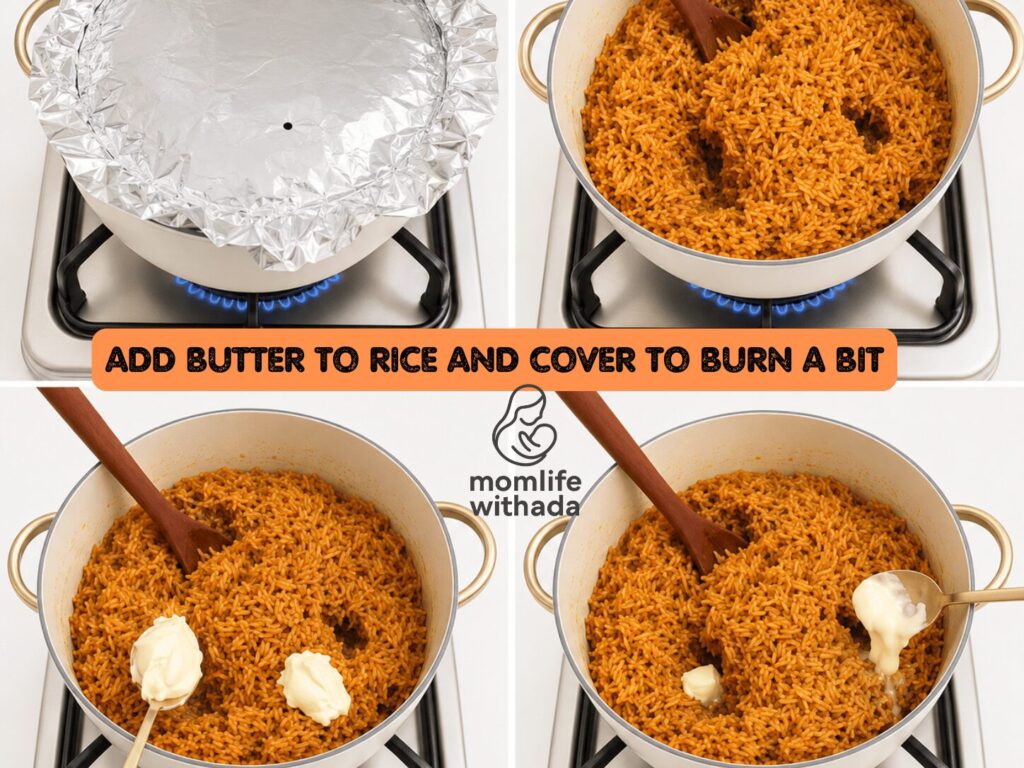
Step 8: The Smoky Finish
This is the step you’ve been waiting for. When the rice is about 90% cooked (soft but slightly firm), turn the heat to high. Remove the foil but keep the lid on, then let it cook for 3–5 minutes.
You’ll hear sizzling and notice a light smoke. A pleasant, toasty aroma means it’s perfect; if it smells sharp or burnt, remove it from the heat immediately.
Take it off the heat, keep the lid on, and let it rest for at least 10 minutes before opening. When you finally lift the lid, you’ll see rich, smoky, perfectly cooked Nigerian jollof rice, and it will be hard not to take a photo first.
Common Mistakes to Avoid When Making Nigerian Jollof Rice
Even experienced cooks make these mistakes, so I want to call them out clearly.
Mistake 1: Not Frying the Tomato Base Long Enough
This is the main reason Jollof Rice turns out sour or watery. The tomatoes must fry well so the acidity cooks out completely. If it still tastes sharp, it needs more time on the heat.
Mistake 2: Using Too Much Water
Too much liquid leads to soggy rice. A good rule is that the stock should sit just slightly above the rice level. Anything more will make it mushy.
Mistake 3: Lifting the Lid Too Often
Constantly checking lets steam escape and slows cooking. Trust the process and avoid opening the pot too often.
Mistake 4: Using the Wrong Rice
Parboiled long-grain rice works best because it holds its shape. Other types may turn soft or sticky under the sauce.
Mistake 5: Skipping the Rest Period
Resting allows the steam to settle and finish cooking the rice evenly. About 10 minutes makes a big difference in texture.
Mistake 6: Cooking in a Small Pot
Jollof needs space to cook properly. A small pot causes uneven cooking, with burnt bottoms and undercooked tops. Use a wide, spacious pot for best results.
What to Serve With Smoky Nigerian Jollof Rice
Smoky Nigerian Jollof Rice is so flavorful that, honestly, it can hold its own as a complete meal. That said, the traditional Nigerian way to serve it is with a full spread or fried ripe plantain.
Fried or Grilled Chicken is the most classic pairing. The crispy, spiced skin and tender meat with the smoky rice is a combination that never gets old. Period.
Fried Plantain (Dodo) is a must. The sweet, caramelized plantain provides a beautiful contrast to the savory, smoky rice. If you have never eaten Jollof Rice with dodo, please stop what you are doing and make this happen in your life as soon as possible.
Moi Moi is a steamed bean pudding that is commonly served at Nigerian parties alongside Jollof Rice. It adds protein and a completely different but complementary texture to the meal.
Nigerian Coleslaw adds freshness and crunch to the plate. The creamy, tangy coleslaw cuts through the richness of the Jollof beautifully.
Fish (Grilled or Fried) works incredibly well if you prefer seafood. Tilapia, mackerel, or catfish grilled with suya spices alongside a bowl of smoky Nigerian Jollof Rice is genuinely one of the best meals you can put together.
Peppered Snails or Peppered Gizzard as a side is popular at parties and turns your meal into a full Nigerian party experience right in your own home.
For more meal ideas that work for the whole family, check out these lunch ideas that are great even for picky eaters.
How to Store and Reheat Your Jollof Rice
Good news: smoky Nigerian Jollof Rice actually tastes even better the next day. Overnight, the flavors continue to develop and deepen. So making a big batch is genuinely a great strategy.
Refrigerating: Allow the rice to cool completely before transferring to an airtight container. Stored in the refrigerator, it stays fresh and delicious for up to 4 days.
Freezing: For longer storage, transfer cooled rice into freezer-safe containers or ziplock bags. Flatten the bags so they stack easily. Frozen Jollof Rice keeps well for up to 3 months.
Reheating on the Stovetop: Add the rice back to a pot with about 2 to 3 tablespoons of water or stock. Cover and heat on low for about 10 minutes, stirring occasionally. The steam brings it back to life beautifully.
Reheating in the Microwave: Place rice in a microwave-safe bowl, add a splash of water, cover loosely with a damp paper towel, and microwave in 1-minute intervals, stirring between each, until heated through. This method is quick, but the stovetop method gives better texture.
Tips for Making Smoky Nigerian Jollof Rice for a Large Crowd
If you are cooking smoky Nigerian Jollof Rice for a party, a naming ceremony, or a large family gathering, the process is essentially the same but requires a few extra considerations.
Scale all ingredients evenly when doubling or tripling the recipe. The only change needed is cooking time; larger batches may require an extra 10–15 minutes.
For big quantities, use multiple pots instead of one large one. Cooking too much rice in a single pot can cause uneven results, with burnt bottoms and undercooked tops.
You can also prepare the tomato base a day ahead and store it in the fridge. On cooking day, simply reheat it, add stock, and continue the process.
If available, cooking over firewood adds a rich, authentic smoky flavor that’s hard to match on a stovetop.
Finally, let the rice rest for 15–20 minutes after cooking so the steam distributes evenly and the flavor settles properly.
Frequently Asked Questions About Smoky Nigerian Jollof Rice
What type of rice is best for smoky Nigerian Jollof Rice?
Long-grain parboiled rice is the best option. It stays firm, absorbs the sauce well, and keeps each grain separate after cooking. Uncle Ben’s converted rice, Golden Sella basmati (parboiled type), or any good long-grain parboiled rice from an African store works perfectly.
Why does my Jollof Rice taste sour?
This usually means the tomato base wasn’t fried long enough. The acidity needs time to cook out. Fry the sauce until the oil separates and floats on top, about 30 to 45 minutes.
Can I make smoky Jollof without chicken stock?
Yes. Beef, fish, or vegetable stock all work well. Vegetable stock is a great option and still gives a rich flavor when well seasoned.
How do I get a smoky flavor without burning the rice?
Use a short high-heat finish (3–5 minutes) and add smoked paprika to the sauce. A heavy-bottom pot also helps distribute heat evenly and prevent burning.
Can I add vegetables to Jollof Rice?
Yes. Carrots, peas, or green beans can be added in the last 10 minutes. However, traditional party-style Jollof is usually served without vegetables mixed in.
Why does party Jollof taste different from homemade?
It comes down to firewood cooking, large batches, and longer preparation time. The smoke, slow-cooked base, and steaming effect in big pots all deepen the flavor.
Final Thoughts on Smoky Nigerian Jollof Rice
Smoky Nigerian Jollof Rice is not just food. It is a cultural experience, a family memory, and honestly, one of the most satisfying dishes you can learn to cook. The first time you get that smoky bottom layer right, you will understand exactly why Nigerians argue so passionately about their Jollof.
If you try this recipe, I would absolutely love to hear how it turned out for you! Drop a comment below or share your beautiful Jollof photos. Also, for more recipe inspiration and food ideas, come find me on Pinterest, where I share meal ideas, party food planning tips, and so much more every single week.
Happy cooking! 🍚🔥
Loved this recipe? Pin it for later!