I once spent an entire Saturday morning searching for one matching sock. One. Single. Sock. Meanwhile, my toddler was watching me unload half the dresser onto the floor with the energy of someone who had absolutely nothing to lose. That’s when I realized I needed a better way to organize kids’ clothes- one that actually worked for our busy everyday life. Pheewww!!😂
If your kids’ closet situation looks like a laundry volcano exploded and nobody called it in, you are absolutely not alone. Organizing kids’ clothes is something most moms try, abandon, and try at least three times again before finding a system that actually sticks. I know because I was that mom.
So today I am sharing exactly what finally worked for me. No fluff, no complicated systems that require a label maker and a lifestyle change. Just real, simple ways to organize kids’ clothes that will actually hold up past laundry day. 🙌
📌 Quick Note: This post contains affiliate links. I may earn a small commission if you purchase through them, at no extra cost to you.
You Might Also Love
- 50 Cozy Self-Care Ideas Every Tired Mom Needs
- Morning Routine for Moms: 5 Simple Self Care Habits
- 10 Easy Hairstyles for Busy Moms in a Hurry
Why Organizing Kids’ Clothes Feels So Hard (It’s Not Just You)
First of all, kids grow at an alarming rate. Something fits on Monday, and by Thursday it looks like a crop top. On top of that, the sheer volume of tiny clothing that accumulates is genuinely shocking. Add hand-me-downs from a cousin, birthday gifts from grandma, and three different seasonal swaps, and suddenly you have a chaos system instead of a clothing system.
The real reason most kids’ clothes organization attempts fail is that the systems are too complicated to maintain. If putting a shirt away requires three steps, it is not going to happen. Especially not at 7 PM when everyone is tired and someone is already crying about bath time.
So the goal here is simple: easy to set up, easy to maintain, and easy enough that even your seven-year-old can put their own clothes away. Yes, really. 😄
The First Step to Organize Kids Clothes Is a Big Purge
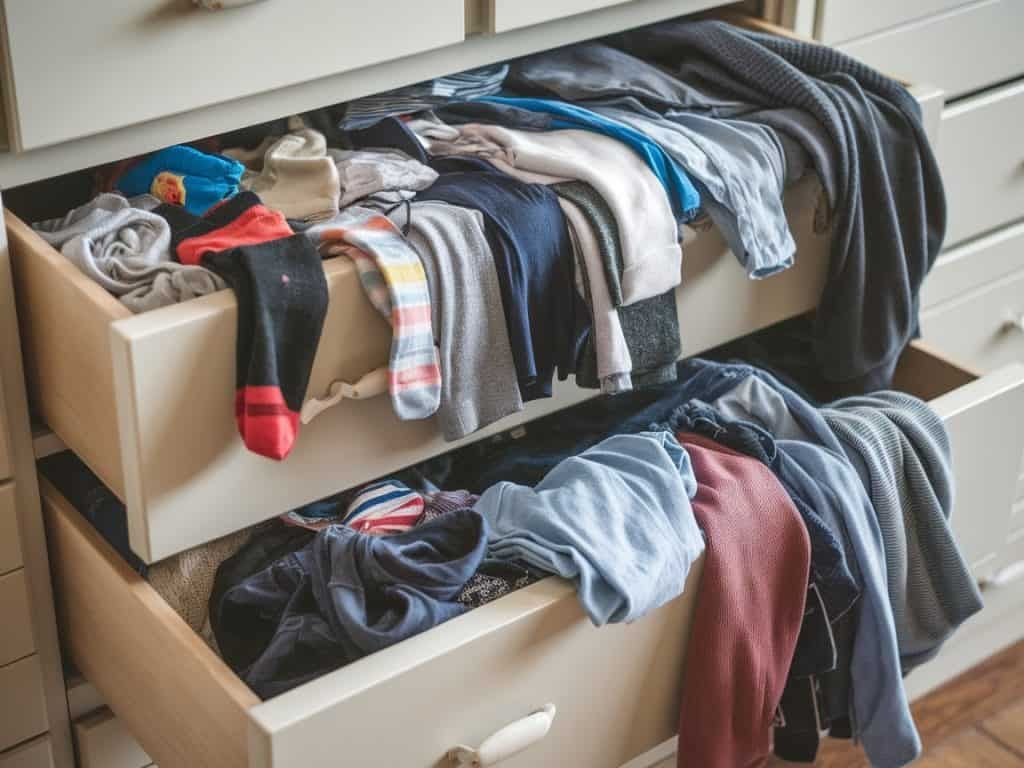
Before you buy a single bin or basket, you need to pull everything out. I mean everything. Dump it all on the bed and do an honest inventory. This step feels overwhelming at first, but it is truly the most important part of the whole process.
Sort into three piles: keep, donate, and store for the next size. Be ruthless here. If it does not fit, has a stain, or your child refuses to wear it, it goes. Kids do not need as many clothes as we think they do. A simple, manageable wardrobe is so much easier to organize than a stuffed dresser they can barely open.
✅ Quick tip: Keep roughly 7 to 10 outfits per child per season. Anything beyond that is usually just adding to the chaos, not adding to options.
While you are purging, also check for duplicates, mismatched sets, and items that belong in a completely different size bin. I personally found four pairs of shoes in my son’s dresser during my last purge. Four. He has two feet. 😭
How to Organize Kids Clothes by Age and Size So Nothing Gets Lost
Once you have purged, sorting by size is the next game-changer. This is especially helpful if you have multiple kids or you keep next-size items on hand. Use labeled bins or bags for each size range, such as 2T, 3T, 4T, and so on, and store out-of-season or next-size clothes in a separate space entirely.
I use clear stackable bins under the bed for next-size clothing. Consequently, when my youngest outgrows her current size, I simply grab the next bin and swap everything out. It takes maybe twenty minutes and feels incredibly satisfying. 🎉
For the current season, keep only what fits right now in the dresser and closet. Everything else goes in storage. This alone will cut your visual clutter by about half, and suddenly the whole system feels way more manageable.
The Best Way to Fold and Store Kids Clothes in Drawers
Okay, so this is where things got life-changing for me. I switched to vertical folding, sometimes called the KonMari method, and I will honestly never go back. Instead of stacking clothes on top of each other where everything gets buried, you fold them and stand them upright like files in a cabinet.
This means you can see every single item in the drawer at a glance. No more digging, no more unfolding a stack to find the shirt at the bottom, and no more mystery pile situations. It also makes it easier for kids to put their own clothes away correctly, because there is a clear visible space for everything.
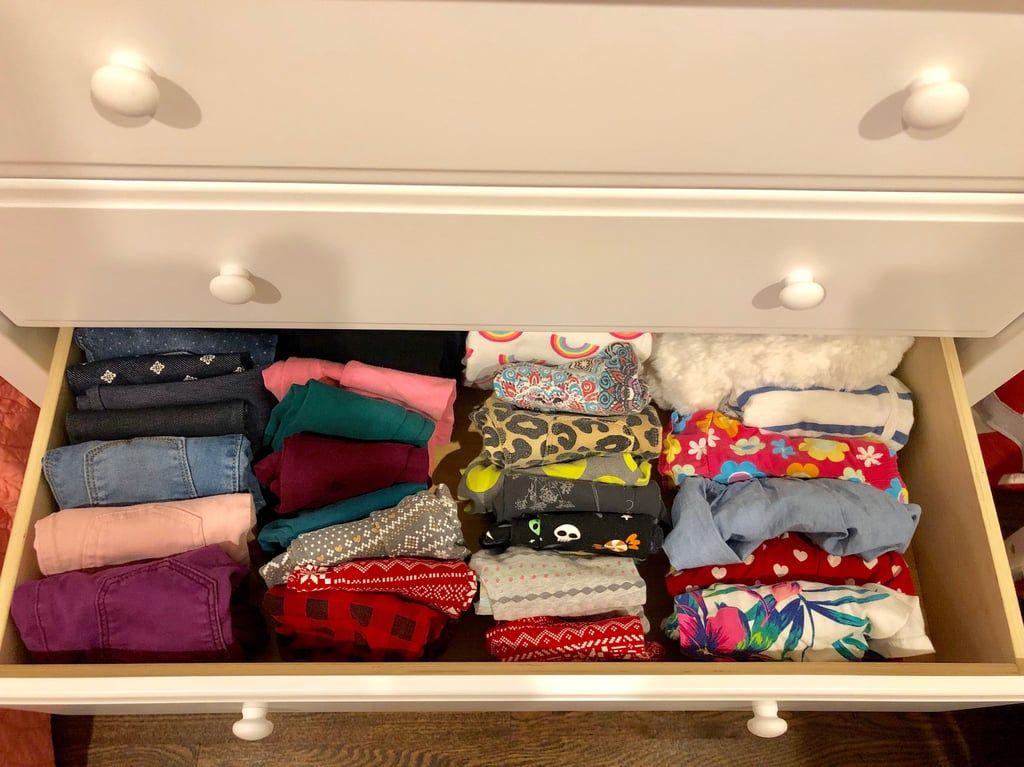
Additionally, drawer dividers are absolutely worth it. You can get simple ones for a few dollars, and they make such a difference. Tops in one section, bottoms in another, pajamas together, socks in a small bin or compartment. Simple categories, easy to maintain, and honestly kind of fun to set up. 😊
If your little one loves arts and crafts and sensory play as mine does, keeping their clothes organized also means less time hunting and more time for fun. Speaking of which, check out these 25 easy sensory bin ideas for toddlers for rainy day activities that keep them busy while you reorganize in peace. 😂
How to Organize a Small Kids Closet Without Spending a Fortune
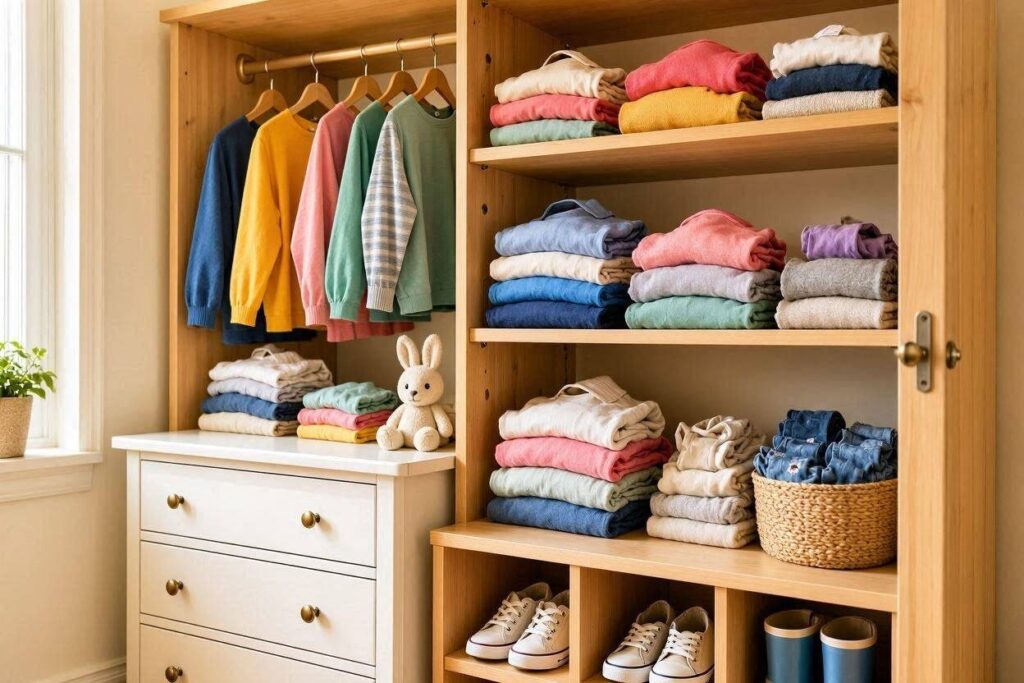
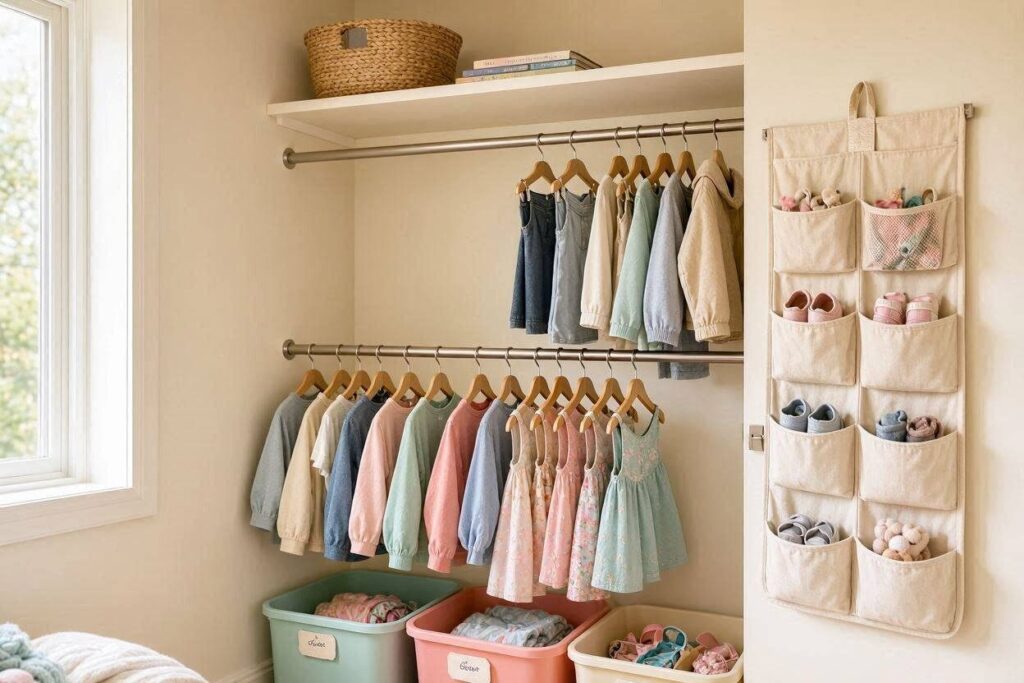
Not every home has a giant walk-in closet for the kids. Honestly, most do not. But a small closet can still be incredibly functional when you use the vertical space well.
Here is what worked best for me in a small space:
- Use a double hanging rod. Add a second rod below the existing one for hanging shorter items like shirts, jackets, and pants. This immediately doubles your hanging space without spending much at all.
- Add shelf dividers. These keep folded stacks from toppling over and creating the dreaded avalanche situation inside the closet. They cost almost nothing and make folded shelves look so neat.
- Use the back of the door. An over-the-door organizer is perfect for shoes, accessories, seasonal hats, or even school bags. Furthermore, it keeps those random items from ending up on the floor.
- Baskets on the top shelf. Use labeled baskets for out-of-season items, special occasion outfits, or accessories you do not reach for daily. Label them clearly so you are not pulling everything down to find one holiday dress. 🎄
Creating an Easy-to-Maintain System Kids Can Use Themselves
Here is the truth: the best kids clothes organization system is the one that your child can also use. Because if only you know where everything goes, you become the full-time clothing manager, and that is exhausting.😒
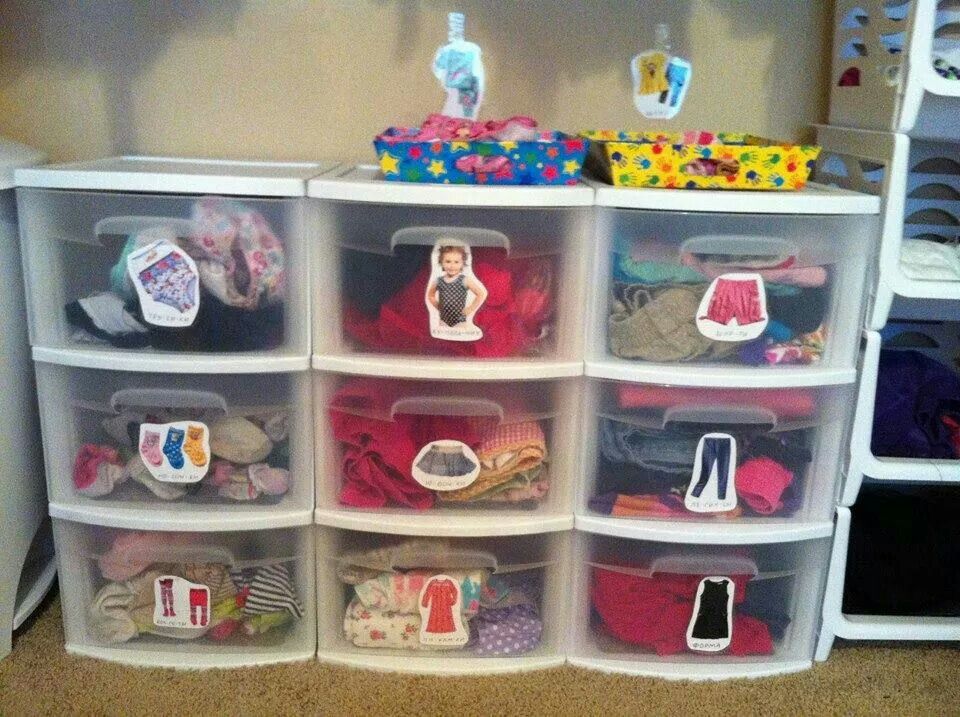
So keep it simple and visual. Use picture labels for younger kids who cannot read yet. A photo of a shirt on the shirt drawer, a photo of pajamas on the pajama drawer. It sounds small, but it is genuinely effective. My three-year-old now puts her own clothes away after laundry, and I am not even slightly exaggerating.
Also, give kids a “toss bin” for dirty clothes right inside their room. This reduces the clothes-on-the-floor situation significantly. Not completely, because kids will be kids, but significantly. 😄
More Mom Life Reads You’ll Love
- 30 Indoor Activities for Toddlers When You’re Stuck at Home
- 50 Easy Toddler Play Ideas Moms Can Set Up Fast
- 20 Backyard Camping Activities for Kids
Seasonal Swaps: How to Rotate Kids Clothes Without Losing Everything
Seasonal clothing swaps are probably the task most moms dread the most. And honestly, I used to dread them too. But once you have a system, they go from a full weekend project to about an hour of work. Here is how I do it now.
At the start of each season, I pull out the storage bin for the current season, try everything on for sizing, and then put only the items that fit into the dresser and closet. Items that no longer fit go into a donate bag or a labeled hand-me-down bin for the next sibling. Out-of-season items get folded and stored in the under-bed bins.
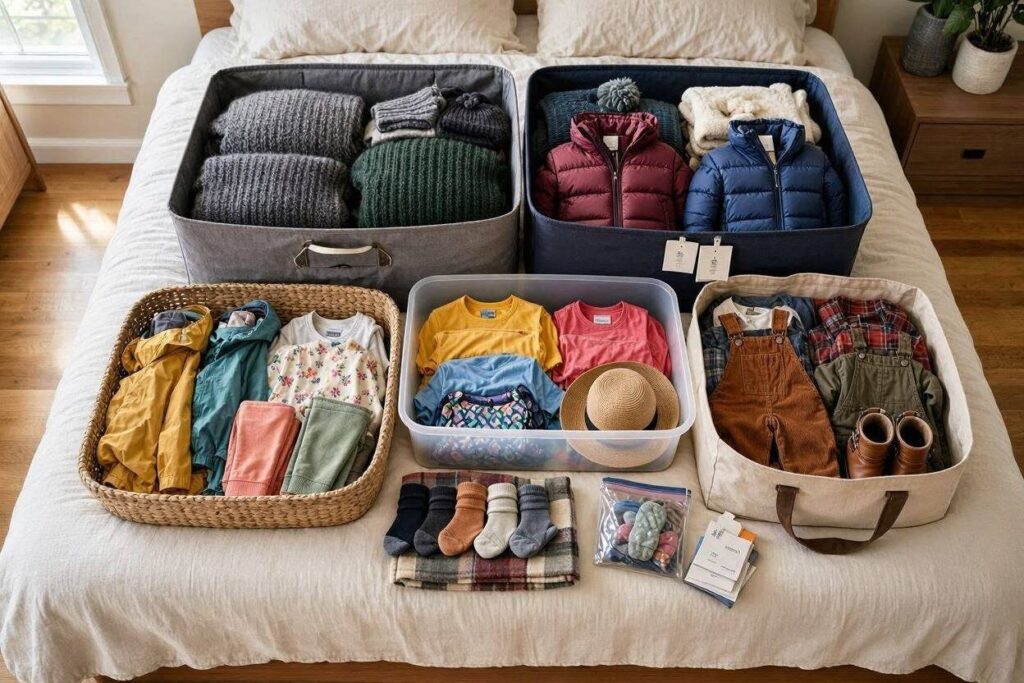
The key is to not skip the try-on step. I learned this the hard way after storing an entire bin of “next year” clothes that turned out to be the wrong size range entirely. Now I always check before storing. It saves so much future frustration. 😅
Doing this twice a year, once in spring and once in fall, keeps the system running smoothly. And since we are talking fall, if you are looking for fun fall activities to do with the kids while you tackle the seasonal swap, these 20 easy fall nature crafts are perfect for keeping little hands busy nearby. 🍂
You can also check out these 20 DIY fall crafts for kids or grab some fall printables for kids to keep everyone entertained while you sort through the clothes.
How Many Clothes Does a Kid Actually Need to Organize Kids Clothes Better
This question comes up so often, and the answer is genuinely less than you think. Most kids do well with 7 to 10 everyday outfits per season, a few sets of pajamas, one or two special occasion outfits, and a solid set of outerwear.
More clothes actually makes organizing kids’ clothes harder, not easier. When there are too many options, kids struggle to choose. Drawers get overstuffed. Folding becomes a nightmare. And laundry piles grow faster because nothing feels urgent enough to wash right away.
“A smaller, curated wardrobe means less decision fatigue for kids and way less laundry drama for moms. Win-win.” 🏆
So if your child’s dresser is bursting at the seams, that is actually your biggest sign to go back to step one and purge again. Less is truly more here.
Where to Save Pinterest Inspiration for Organizing Kids Clothes
If you are a visual person like me, saving ideas before you start organizing is really helpful. I love pinning storage ideas, drawer organization inspo, and closet setups before I tackle a new space. You can follow along and save your favourites on my Pinterest page here for more ideas on organizing kids’ clothes and keeping your home running smoothly as a mom. 📌
Quick Wins to Organize Kids Clothes When You Only Have 30 Minutes
Not every mom has a full weekend to dedicate to a closet overhaul. So here are some fast wins you can do in 30 minutes or less to make an immediate difference.
- First, go through one drawer only and remove anything that does not fit. Just one drawer. That alone feels incredible.
- Then, grab a basket and do a five-minute floor sweep of all the random clothing items lying around your child’s room. Sort them into clean or dirty.
- Next, flip all the hangers backward in the closet. Anything not worn in 30 days gets donated at the next seasonal swap. This trick genuinely helps you see what your child actually reaches for.
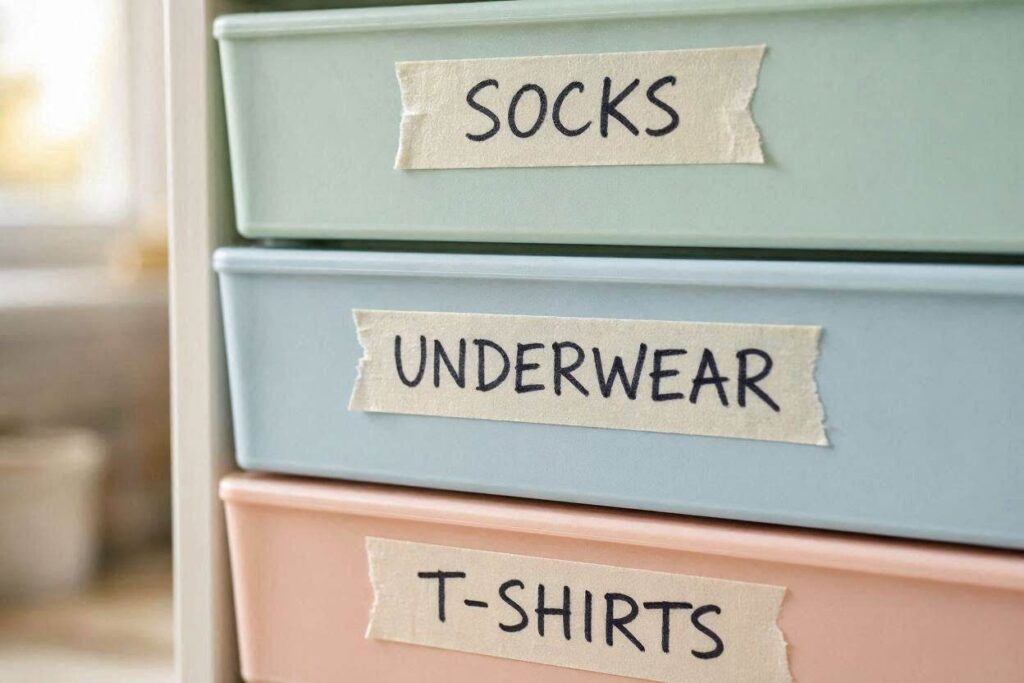
- Finally, add labels. Even handwritten ones on masking tape. Labels are the single fastest thing you can do to maintain any kids’ clothes organization system long-term.
Also, if you are working on getting more of your mom life together, I highly recommend reading through these 50 cozy self-care ideas for tired moms. Because a well-rested, cared-for mom organizes things so much better than an exhausted one. Trust me on this one. 💛
Related Reads for Fall
- 20 Fall Sensory Bin Ideas Kids Will Love
- Easy Halloween Activities for Toddlers
- 20 Easy Fall Crafts to Make and Sell
- Halloween Sensory Bin Ideas
My Favourite Products That Made Organizing Kids’ Clothes So Much Easier
I am not one to recommend things I have not actually used, so here are the items that genuinely made a difference in our home:
- Drawer dividers — Cheap, adjustable, and completely transform how a dresser drawer functions. I use them in every single drawer.
- Clear stackable bins — Perfect for under-bed storage of next-size clothing. Clear means you can see inside without opening every single one.
- Over-the-door shoe organizer — Not just for shoes. I use one for accessories, seasonal hats, and even small toys. Brilliant use of otherwise wasted space.
- Hanging closet organizer — For folded items like sweaters and leggings that do not need to hang. It uses vertical closet space so well.
- Label maker or chalkboard labels — Because the label is the system. Without it, things go back to chaos within a week. 😅
You Can Actually Organize Kids Clothes for Good — Here Is the Truth
The secret to keeping kids’ clothes organized long-term is not finding a perfect system. It is finding a simple-enough system that you can reset in ten minutes when life inevitably happens. And it will happen. 😂
Start with the purge. Sort by size. Use vertical folding. Label everything. Keep it simple enough for your kids to use too. And do a seasonal swap twice a year to keep things from building up again.
That is genuinely all it takes. You do not need a Pinterest-perfect closet or a full weekend to make this work. You just need a system that fits your family and your space.
If you found this helpful, I would love for you to save it and share it with a mama friend who is drowning in tiny clothes. And if you are looking for more ways to make mom life feel a little more manageable, check out my simple morning routine for moms and these 25 dinner outfit ideas for stylish moms because you deserve to feel great too. 💕
Also pin this post for later over on Pinterest so you can come back to it whenever you need a refresh! 📌