I spent so much on newborn clothes for my first baby. He wore them for three weeks. THREE WEEKS. 😩 That was the moment I knew I had to do better, and honestly, I had no choice because our finances took a serious hit when his birth turned into an emergency C-section we never planned for.
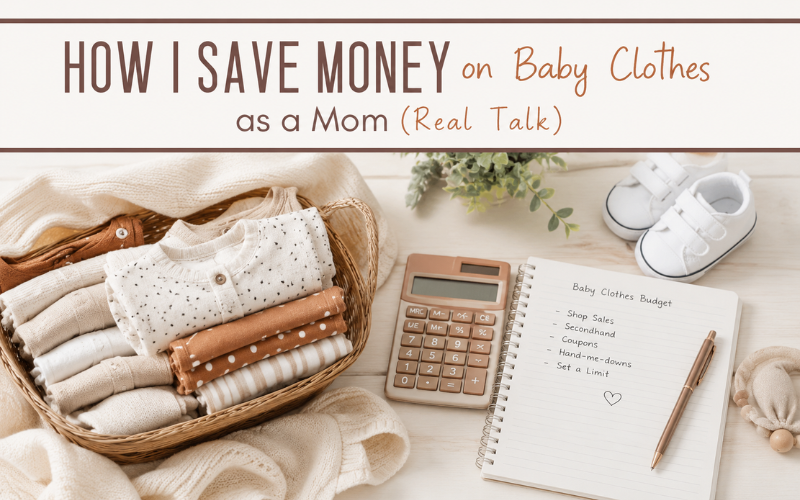
Nobody told me a CS was on the table, and definitely nobody told me how much it would cost. That experience changed how I approach every single purchase for my babies, especially clothes. So if you are a new mom trying to save money on baby clothes without feeling like you are failing your baby, you are in the right place.
📌 Quick Note: This post contains affiliate links. I may earn a small commission if you purchase through them, at no extra cost to you.
Related Read: Having a Baby on a Budget
Our First Baby Taught Us What Not to Do With Money
With our first baby, we were excited. Like, overly excited. We bought everything new, everything branded, and everything cute. We did not plan for the C-section that happened, and it drained us fast. Medical bills, recovery supplies, and the fact that I could not work for weeks- it all piled up.
Meanwhile, we had a closet full of tiny outfits our son barely wore. Consequently, we started our new baby journey in debt. It was not fun, and it was not something I want any mom to go through.
When I got pregnant with my second child, I sat down with my husband, and we made a real plan. Furthermore, we did the same with our third. Those two pregnancies were financially so different from the first. We came out on the other side without drowning, and baby clothes were a big part of where we cut back smartly.
Stop Buying Newborn Size Clothes (Seriously, Stop)
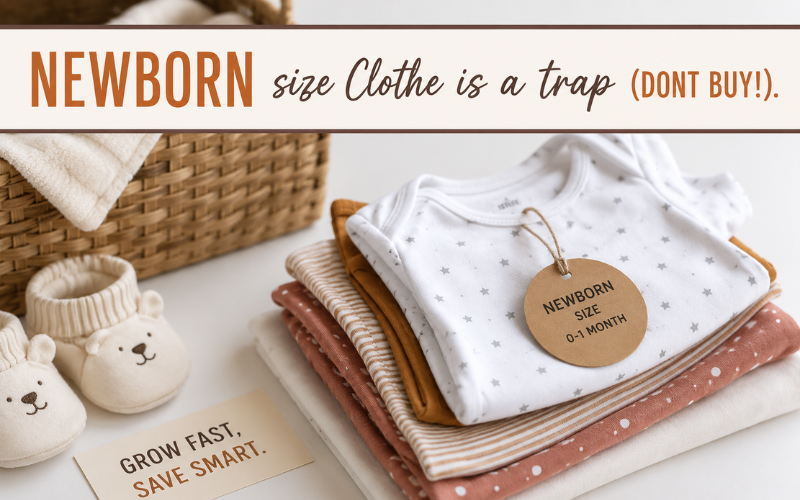
This is the first and most important thing I tell every pregnant friend. Newborn size is a trap. Most babies outgrow newborn clothes in two to four weeks. Therefore, you are essentially buying clothes for a very temporary, very expensive 30-day window.
With my second baby, I bought zero newborn size clothing. Instead, I stocked up on 0-3 months. I put her in them slightly big at first. Honestly, newborns mostly sleep, feed, and sit in bouncers. Nobody is checking if the onesie is a little loose. Additionally, 0-3 months lasts so much longer. You get way more value per piece when you buy smarter sizes.
The goal is to save money on baby clothes at every single stage, and this one tip alone saves you a good amount right from the start.
How Thrift Stores Became My Best Friend
I know, I know. Some moms are not ready for this one. But hear me out. Baby clothes are literally the best category to buy secondhand. Babies wear items so few times before they outgrow them. Most secondhand baby clothes are practically new.
With my third baby, I found a thrift store near me that separated baby clothes by size. I walked out with 14 pieces for under $12. Similarly, Facebook Marketplace and local mom groups have been golden for me. Moms sell huge bags of barely-used clothes all the time because they are also trying to save money and declutter.
Moreover, I always wash everything with a gentle baby detergent before use. Clean, safe, and so much cheaper. This is one of the best ways to save money on baby clothes without lowering your standards at all.
Related Read: How to Organize Kids Clothes
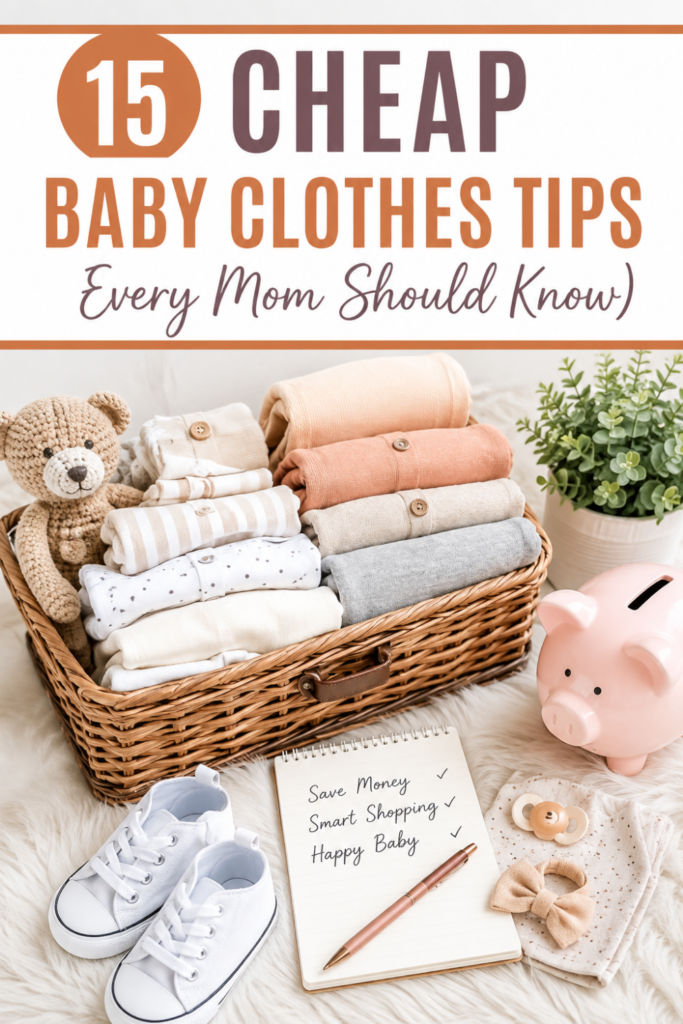
Never Skip a Swap or a Hand-Me-Down Offer
When someone offers you a bag of baby clothes, you say yes. You say yes immediately. You say yes before they finish the sentence. 😂
In addition to thrift stores, hand-me-downs have dressed at least 40% of my babies’ wardrobes. My sister gave me three garbage bags of clothes when I was pregnant with my second. I cried a little, honestly. Not because they were ugly but because I knew exactly how much money I was saving.
Clothing swaps with other moms work too. You bring what your baby has outgrown and take what fits yours. It is free, it is social, and it is one of the smartest ways to save money on baby clothes that most people overlook.
Shop End-of-Season Clearance for the Next Size Up
This one requires a little planning, but it pays off beautifully. At the end of summer, stores clear out all their warm-weather baby clothes. Therefore, you grab those in the next size up for next summer.
For example, if your baby is currently in 6-month sizes in June, you shop clearance in the 12-month section for July and August. By next summer, those clothes will fit perfectly. Furthermore, you paid 50 to 70 percent less than the original price.
I have done this consistently since my second baby, and it has saved me so much money. The key is knowing approximately what size your baby will be in the next season, which you can estimate pretty well by following standard growth charts.
Gender-Neutral Clothes Are a Long-Term Money-Saving Strategy
When I was pregnant with my second, I did not find out the gender until birth. So I bought gender-neutral pieces mostly out of necessity. However, after that experience, I kept doing it even when I knew the gender in advance.
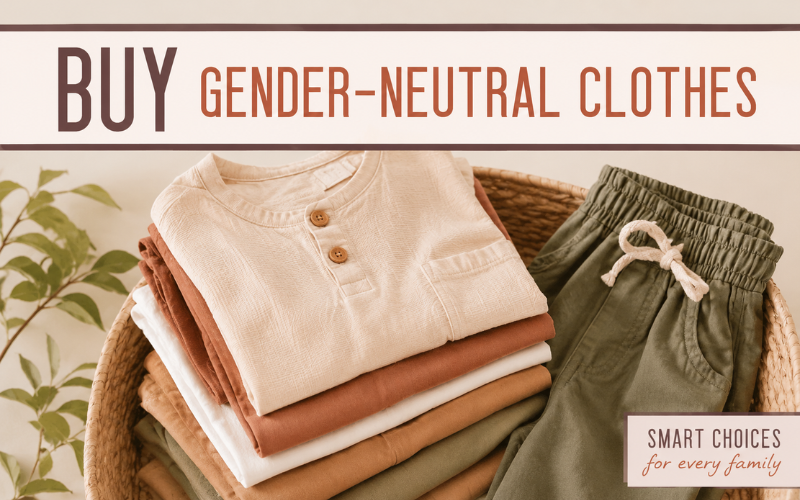
Gender-neutral clothes pass down between kids without issue. Consequently, what my second wore, my third wore too. That alone cut our spending on baby clothes significantly with the third baby. White onesies, beige rompers, green sleepers, cream cardigans. All of it worked for both babies regardless of gender.
Also, neutral pieces photograph beautifully, which is a bonus for those of us who are always snapping pictures. 📷
Only Buy What Baby Actually Needs (Not What Is Cute)
Cute baby clothes are a form of emotional spending, and I say this as someone guilty of it. The tiny tutus, the holiday-themed outfits, the matching sets that cost $40 for something a baby will wear once.
With my first, I bought so many special occasion outfits. With my second and third, I kept it simple. Onesies, sleepers, a few leggings, and one or two nicer outfits for photos or events. That is truly all a baby needs.
Additionally, babies spend most of their time in sleep and feeding cycles. Therefore, the most used items in any baby wardrobe are the simple, washable ones. Focus your spending there, and you will naturally save money on baby clothes every month.
Related Read: Save Thousands on Groceries
Sell What Your Baby Outgrows to Fund the Next Round
This is the move I wish I had started with my first baby. Every time your baby grows out of a size, you sell those clothes and use that money toward the next size up. Effectively, you are running a little clothing cycle that keeps your costs low.
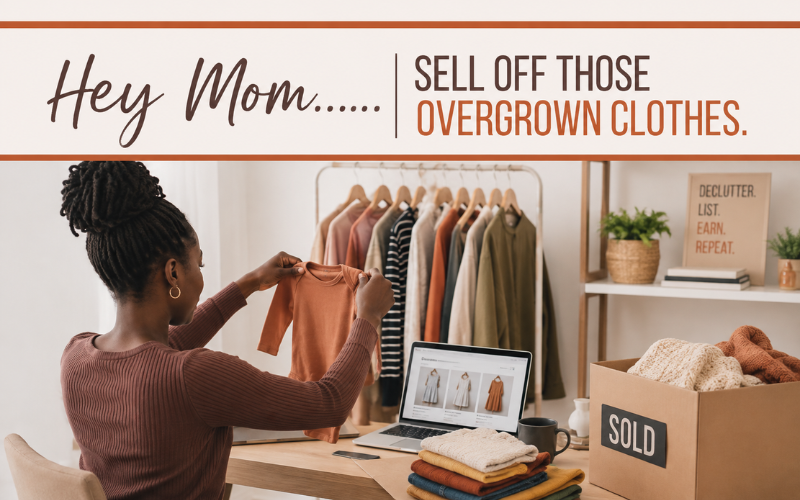
I sell on Facebook Marketplace, local buy-sell-trade groups, and sometimes Poshmark. Clothes in good condition sell fast when priced reasonably. Furthermore, bundling by size makes it easier for buyers, and you move more pieces at once.
The money I make from selling outgrown baby clothes often covers 60 to 80 percent of what I spend on the next size. That is a significant saving over time, and it keeps your home from drowning in baby clothes too. Win-win.
Sign Up for Store Alerts and Buy During Sales Only
I do not buy baby clothes at full price anymore. There is genuinely no reason to. Most baby clothing stores run sales constantly. Carter’s, Old Navy, Target, and H&M all have regular promotions that bring prices down by 30 to 60 percent.
So what I do is sign up for email alerts, add items to my cart, and wait. Usually within a week or two, there is a sale. Moreover, I use apps like Honey or Rakuten to find extra discount codes before checkout.
This habit alone has changed how much I spend. Patience is a skill when it comes to shopping, and it is one of the best tools you have to save money on baby clothes consistently.
Follow me on Pinterest for more money-saving finds and baby-friendly deals I share regularly.
How Planning Your Baby’s Birth Financially Changes Everything
I cannot end this post without circling back to what I mentioned at the beginning. With our first baby, we did not plan. We did not save specifically for the birth, for postpartum costs, or for the unexpected. When the C-section happened, it shook us financially in a way that took months to recover from.
With babies two and three, we built a specific baby fund before the birth. We saved for medical costs, for time off work, for supplies, and yes, for clothes. Consequently, when we did spend money on baby items, it did not feel desperate or stressful. It was planned.
If you are currently pregnant, please start thinking about your baby budget now. Furthermore, if you are planning a future pregnancy, consider building that financial cushion early.
Related Read: Easy Side Hustles to Boost Your Income
The Real Secret to Saving Money on Baby Clothes
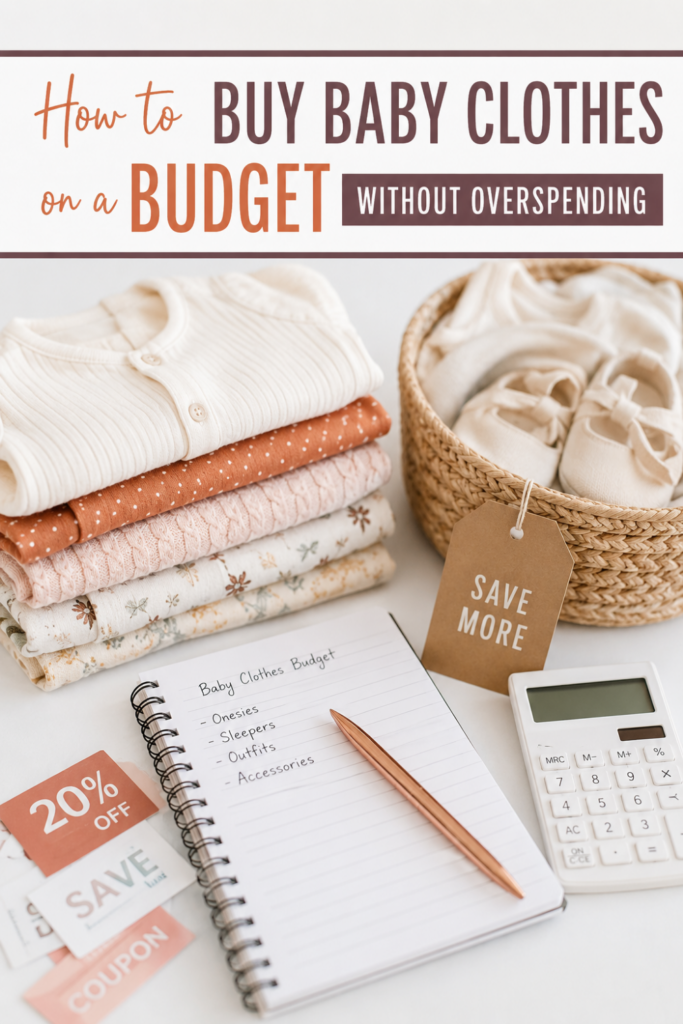
The truth is, saving money on baby clothes is not really about finding the perfect hack. It is about shifting your mindset from what is cute to what is necessary, from what is new to what is practical, and from spending emotionally to spending intentionally.
My babies have been dressed beautifully on a fraction of what we spent on our first child. Nobody could look at them and tell the difference. In fact, my third baby has one of the most stylish little wardrobes, and I spent the least on him. That is the goal.
You can do this. It just takes a little practice, a little patience, and the willingness to say no to the $38 newborn tutu. 😄
You Might Also Like:
Did this post help you? Share it with a mom who needs to read it! And drop a comment below; I would love to hear how you save money on baby clothes in your home. 💕