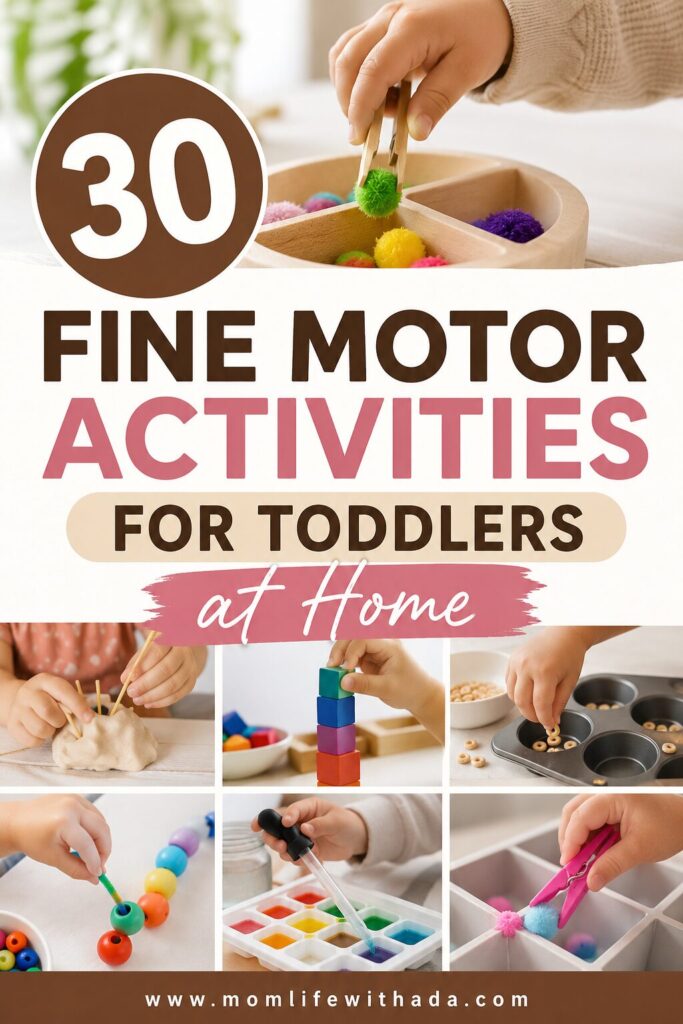
30 Fine Motor Activities for Toddlers at Home

Your toddler just dumped an entire box of cereal on the floor again, but that action is actually building important skills. Every pinch, scoop, and pour helps develop fine motor control needed for writing, eating, and dressing.

You do not need special toys. Most of these activities use simple items you already have at home, and you can start them right away.

Also, if you are looking for more ways to keep your toddler engaged at home, check out these 25 easy toddler activities you can set up fast, and these 50 easy toddler play ideas for even more inspiration.

📌 Quick Note: This post contains affiliate links. I may earn a small commission if you purchase through them, at no extra cost to you.

Why Fine Motor Activities Matter for Toddlers

Before the activities, here’s the idea: fine motor skills are the small movements in your toddler’s hands and fingers. If they struggle to pick things up or hold a crayon, they just need more practice.

These skills help with writing, drawing, focus, and everyday tasks later on. Now let’s get into the activities.

What You Need to Know Before You Start

Most of these activities require minimal setup and use everyday materials. However, there are a few things to keep in mind:

  • Age range: These activities are designed for toddlers aged 1.5 to 4 years. Some are better for younger toddlers, and some suit older ones. I have noted this where relevant.
  • Supervision: Always stay close during these activities, especially when small objects are involved.
  • Follow their lead: If your toddler does the activity differently than you expected, that is okay. The process is more important than the result.
  • Keep it short: Toddlers have short attention spans. Even 10 to 15 minutes of focused fine motor play is incredibly beneficial.

For more structured play ideas, also take a look at these 30 indoor activities for toddlers when you are stuck at home.

1. Rubber Band Stretching Board

This one surprised me. My son was fully engaged for almost 20 minutes, which feels like a win.

Materials needed: a pegboard or a homemade board with nails or pegs, plus colorful rubber bands of different sizes.

How to set it up:

Place the board flat on a table at your toddler’s height.
Show how to stretch a rubber band from one peg to another.
Let your toddler explore freely, looping and connecting the pegs in any way.

This activity builds hand strength, pincer grip, and coordination as both hands work together to stretch and place the bands. lateral coordination because both hands work together to stretch and place the bands.

2. Squeezing Water Out of Sponges

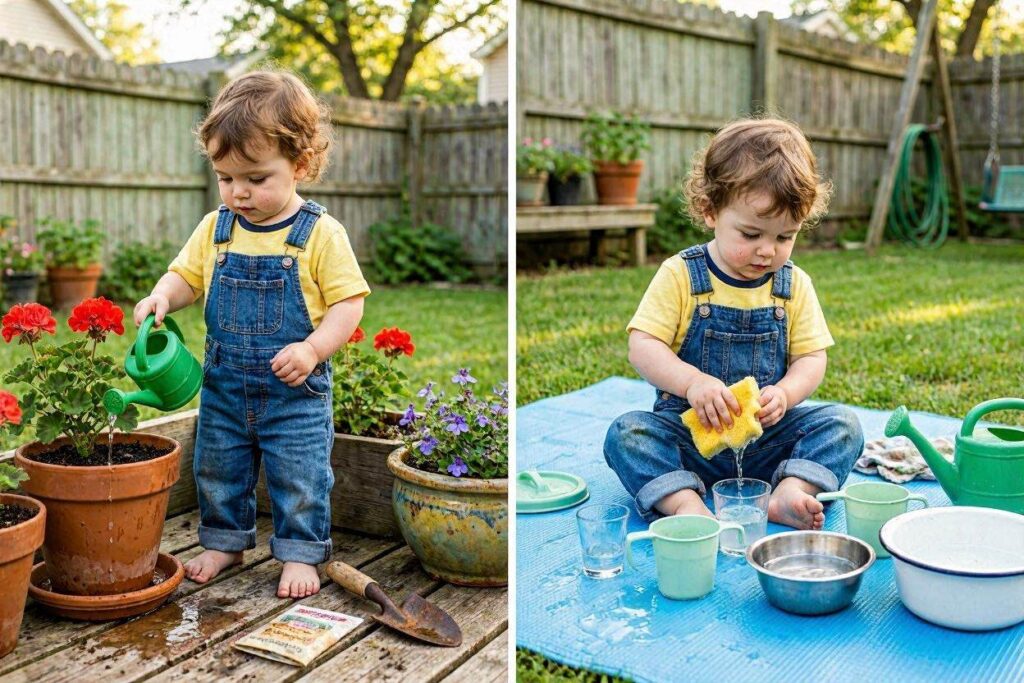
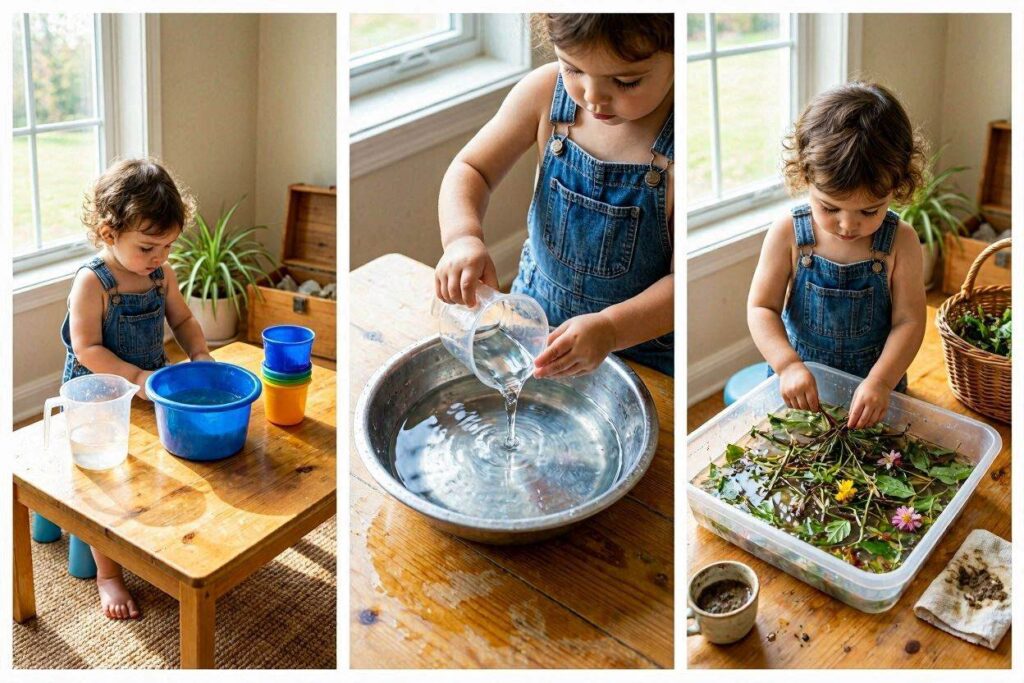
Water play is always a hit, and this version specifically targets hand strength. A strong grip is the basis of all fine motor skills.

Materials needed: A tray or shallow bin, two bowls of water (one full, one empty), and several sponges of different sizes.

How to set it up:

  • Fill one bowl with water and place it next to an empty bowl.
  • Place sponges in the full bowl.
  • Show your toddler how to pick up a soaked sponge and squeeze it over the empty bowl.
  • Encourage them to try with one hand, then both hands, and even just two fingers.

You can also add food coloring to make it even more visually exciting. This is one of those fine motor activities for toddlers that also works as a calming sensory activity.

3. Pasta Threading on Dry Spaghetti

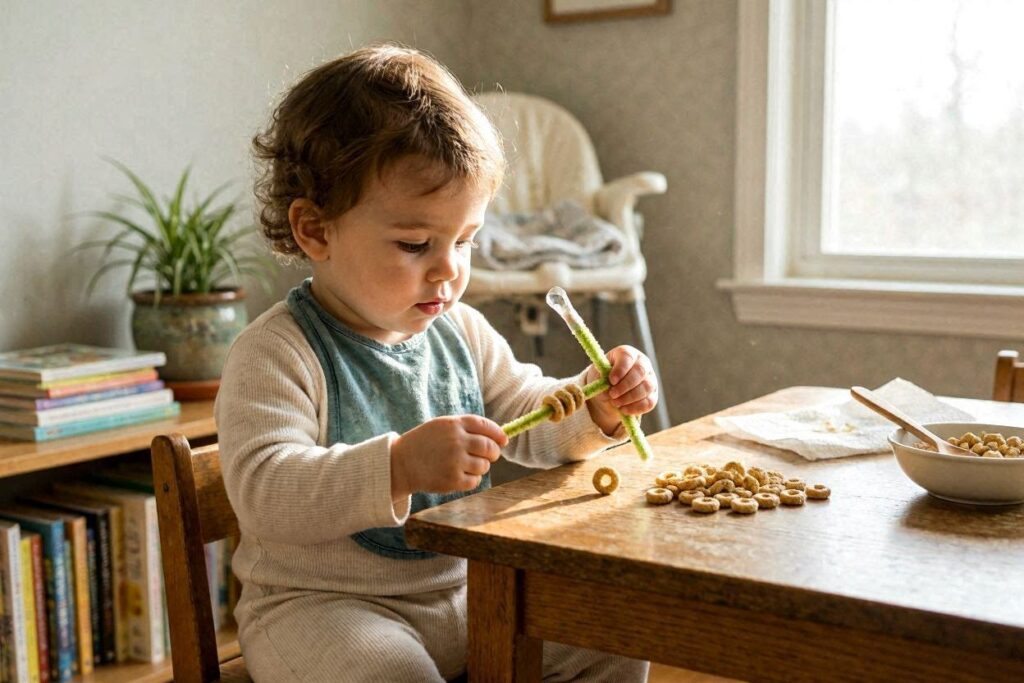
Instead of buying fancy bead threading kits, use dry pasta and spaghetti. It works just as well.

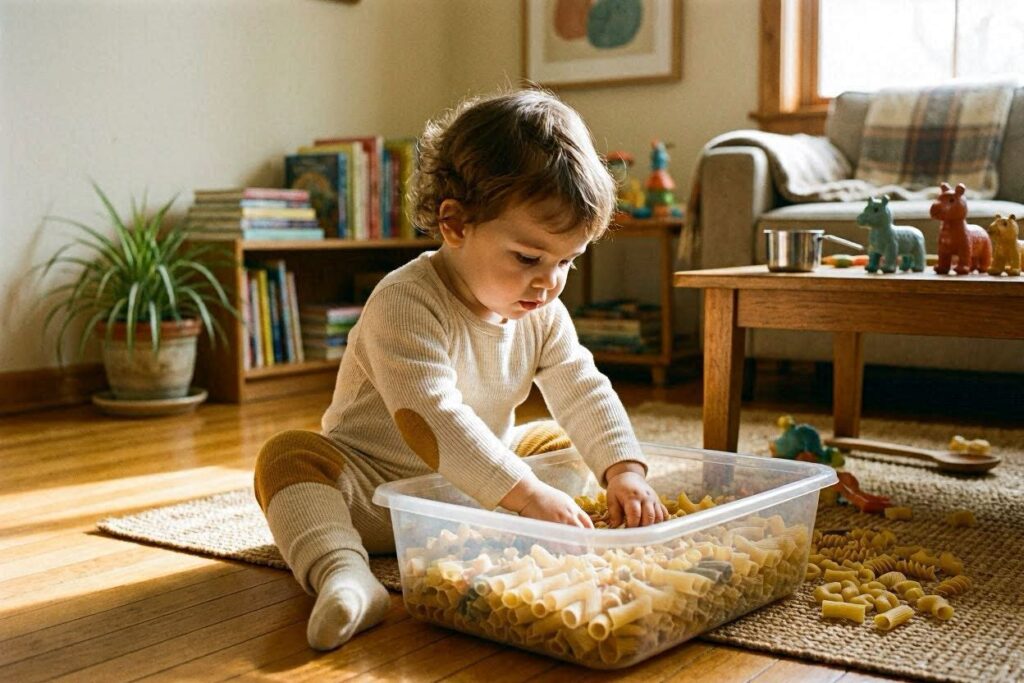
Materials needed: Dry spaghetti strands, a ball of playdough or a foam block, and various tubular pasta shapes like penne or rigatoni.

How to set it up:

  • Press several dry spaghetti strands upright into the playdough or foam block so they stand up like poles.
  • Show your toddler how to slide a piece of pasta down onto one strand.
  • Encourage them to fill each strand with as many pieces as they can.
  • For older toddlers, turn it into a sorting game by assigning colors or shapes to each strand.

Threading requires precise eye-hand coordination and a refined pincer grip. Plus, this setup takes less than two minutes to prepare.

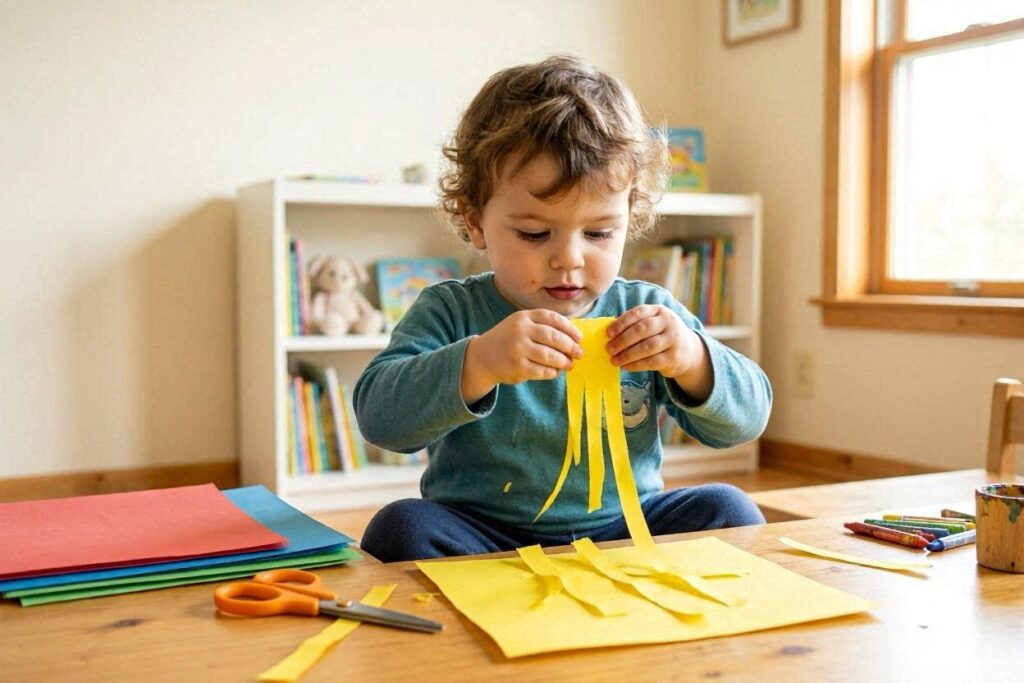
4. Tearing Paper Into Strips

This one is beautifully simple. Tearing paper might seem basic, but it actually requires a good amount of hand coordination and bilateral skill.

Materials needed: Old magazines, colorful paper, newspaper, or wrapping paper. A glue stick and a base paper for those who want to make a collage afterward.

How to set it up:

  1. Give your toddler a stack of paper and simply show them how to tear it.
  2. For younger toddlers, start them off by slightly tearing the edge so they know where to pull from.
  3. Once they have a pile of strips, they can glue them onto a big piece of paper to make a collage.
  4. Let them fill the entire page.

My daughter made the most beautiful mess with this activity and then proudly showed her dad her ‘rainbow picture.’ The tearing itself is the fine motor work. The collage is just a bonus.

5. Poking Toothpicks Into a Colander

You literally just need a colander and toothpicks. That is it.

Materials needed: A plastic or metal colander, a box of toothpicks or golf tees (for younger toddlers).

How to set it up:

  1. Place the colander upside down on a tray.
  2. Demonstrate how to push a toothpick into one of the holes.
  3. Let your toddler fill as many holes as they can.
  4. For a challenge, ask older toddlers to fill every single hole or to make a pattern.

This activity is fantastic for developing the tripod grip, which is the same grip children use to hold a pencil. If you want more simple sensory and fine motor ideas, these 25 easy sensory bin ideas for toddlers pair really well with this activity.

6. Sticker Peeling and Placing

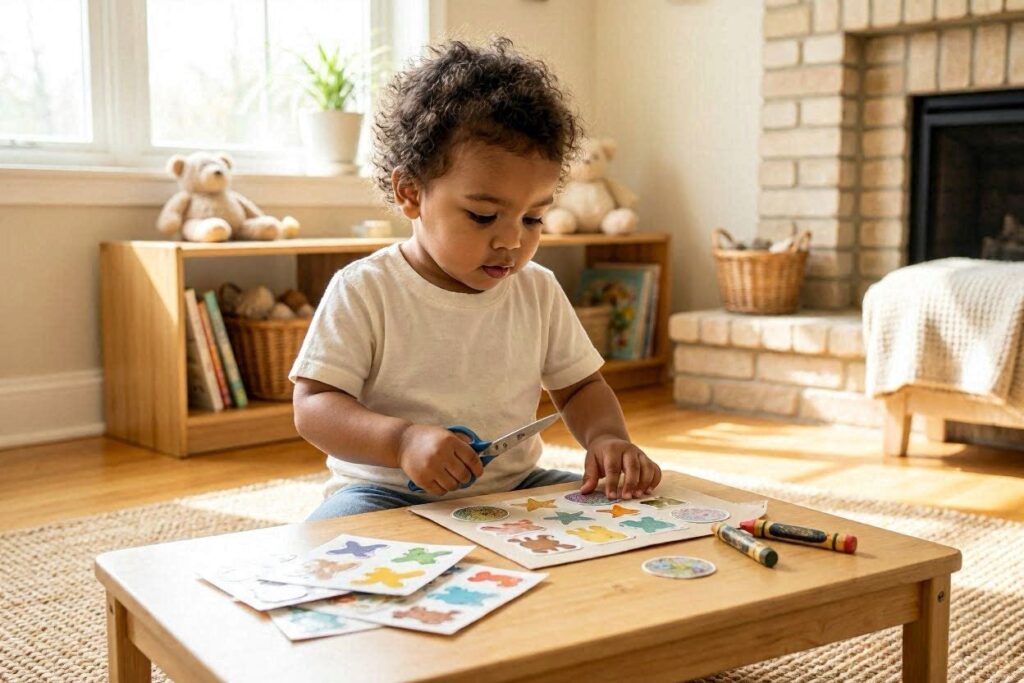
Sticker activities are seriously underrated as fine motor activities for toddlers. Peeling a sticker off its backing requires a precise pinch grip and significant finger coordination.

Materials needed: Dot stickers, foam stickers, or removable wall stickers. A piece of paper, a printed outline, or a contact paper sheet.

How to set it up:

  • Print a simple outline (a circle, a tree, an animal shape) or draw one by hand.
  • Give your toddler a sheet of stickers.
  • Ask them to peel and place stickers to fill the shape or decorate the page.
  • For younger toddlers, peel a few stickers and leave them on the edge of the table so they can just pick them up and place them.

You can also use contact paper (sticky side up, taped to the table) and let toddlers press torn paper bits, fabric scraps, or leaves onto it.

7. Transferring Water with a Turkey Baster

Materials needed: A turkey baster or large medicine dropper, two bowls, water, and optional food coloring.

How to set it up:

  • Fill one bowl with water and place an empty bowl beside it.
  • Show your toddler how to squeeze the bulb, submerge the tip, and release to suck up water.
  • Then let them squeeze it out into the second bowl.
  • Add food coloring to make the water more visually engaging.

Squeezing a turkey baster requires significant hand strength and coordination. It is one of the most effective fine motor activities for toddlers you can do with kitchen items.

8. Lacing Cards with Shoelaces

Materials needed: Thick cardboard, a hole punch, a shoelace or thick yarn with a taped tip.

How to set it up:

  • Cut cardboard into a simple shape: a star, a house, an animal.
  • Punch holes around the edges, about an inch apart.
  • Tie one end of the shoelace to the first hole.
  • Show your toddler how to push the lace through each hole, one at a time.

Lacing cards build hand-eye coordination, concentration, and finger strength. You can find free printable outlines online, or simply draw your own shapes.

9. Peeling Tape Off a Surface

Stick pieces of masking tape or washi tape all over a tray, a wooden board, or the floor. Then let your toddler peel them all off.

Materials needed: Masking tape or washi tape (both peel easily and leave no residue).

How to set it up:

  • Tear tape into various lengths and stick them all over a wooden board or the floor.
  • Press them down firmly so they require some effort to remove.
  • Give your toddler the board and let them peel every single piece.
  • For an extension, let them restick pieces in new places and peel again.

This incredibly simple activity is deeply satisfying for toddlers and works the pincer grip intensely. It also works beautifully when combined with the easy DIY crafts and activities for kids on this site.

10. Sorting Small Objects with Tongs

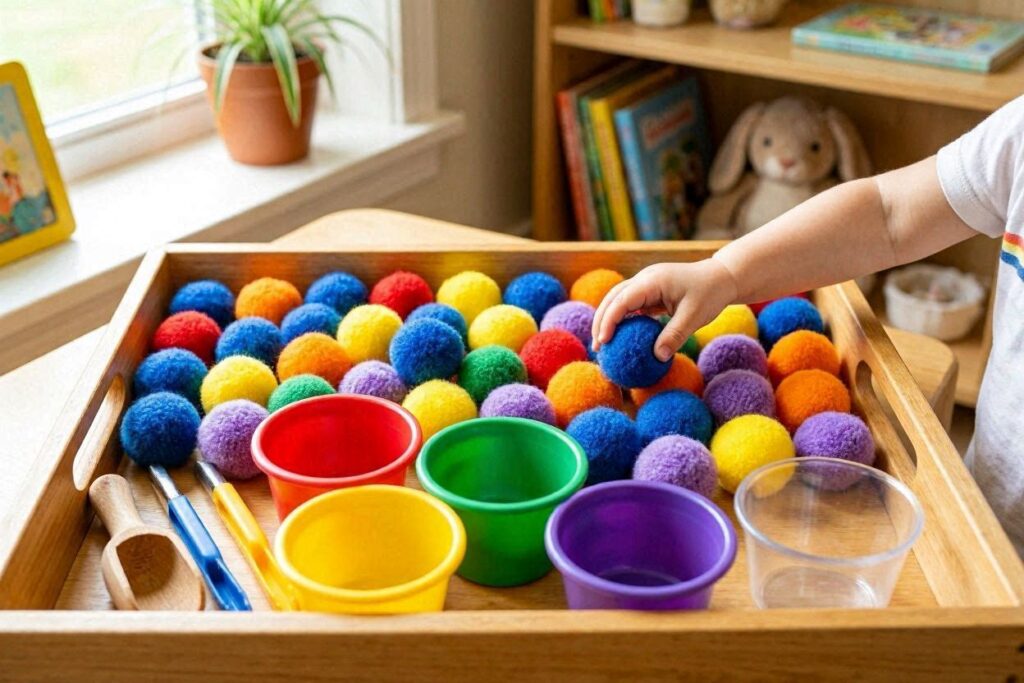
Materials needed: Mini kitchen tongs or salad tongs, a muffin tin, pom poms, large pompoms, or small plastic balls.

How to set it up:

  • Place a mix of pom poms in a large bowl.
  • Set up a muffin tin with color-coded cups or simply leave it plain.
  • Show your toddler how to grip a pom pom with the tongs and transfer it to the muffin tin.
  • For a sorting challenge, assign colors to specific cups.

Using tongs requires the child to control two sides of the tool independently, which mirrors the movement needed to use scissors later on.

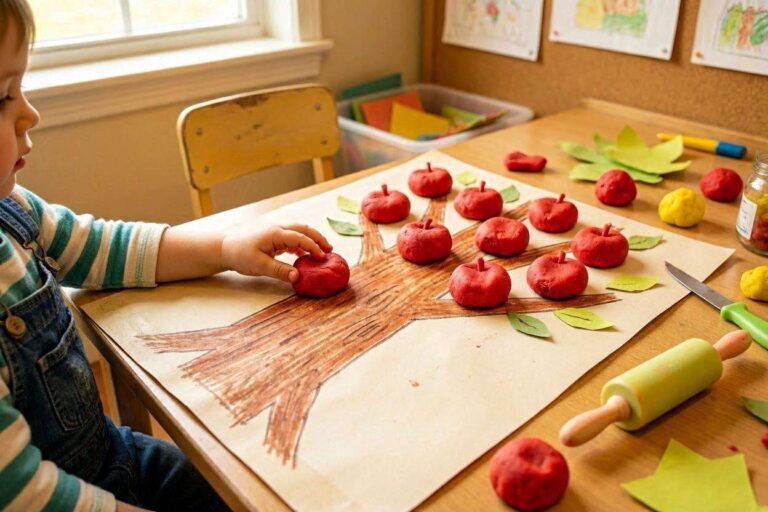
11. Playdough with Hidden Objects

Materials needed: Homemade or store-bought playdough, small plastic animals, coins, buttons, or puzzle pieces.

How to set it up:

  • Press small objects deep into a ball of playdough.
  • Show your toddler the playdough and tell them there are hidden treasures inside.
  • Let them poke, peel, pinch, and dig to find each item.
  • As an extension, let them re-hide objects for you to find.

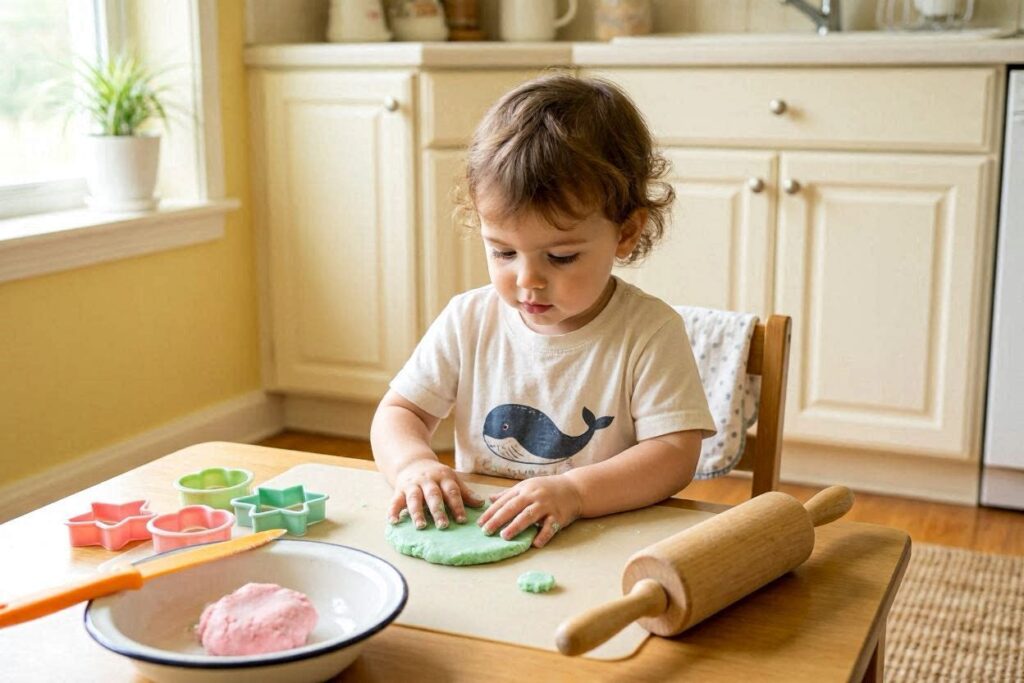
Manipulating playdough is one of the most research-backed fine motor activities for toddlers. The resistance of the dough builds hand muscle strength while the hidden objects add a motivating challenge.

12. Bottle Cap Sorting and Matching

Materials needed: Saved bottle caps in various colors and sizes, a tray or egg carton, and optional color-coded circles drawn on paper.

How to set it up:

  • Collect bottle caps of different sizes over a few weeks.
  • Draw colored circles on a sheet of paper that match your cap colors.
  • Ask your toddler to pick up each cap using their finger and thumb (pincer grip) and place it on the matching color.
  • For younger toddlers, skip the matching and just let them sort into groups or stack them.

This activity is completely free if you save your bottle caps, and it is genuinely one of the best fine motor activities for toddlers because it targets so many skills at once.

13. Painting with Cotton Swabs

Materials needed: Cotton swabs (Q-tips), washable paint, white paper, or black cardstock.

How to set it up:

  • Pour small amounts of different colored paint into a segmented tray or muffin tin.
  • Give your toddler several cotton swabs.
  • Show them how to dip the tip into the paint and press it onto the paper to make a dot.
  • Let them create freely, or suggest making dot pictures of familiar things like flowers or the sun.

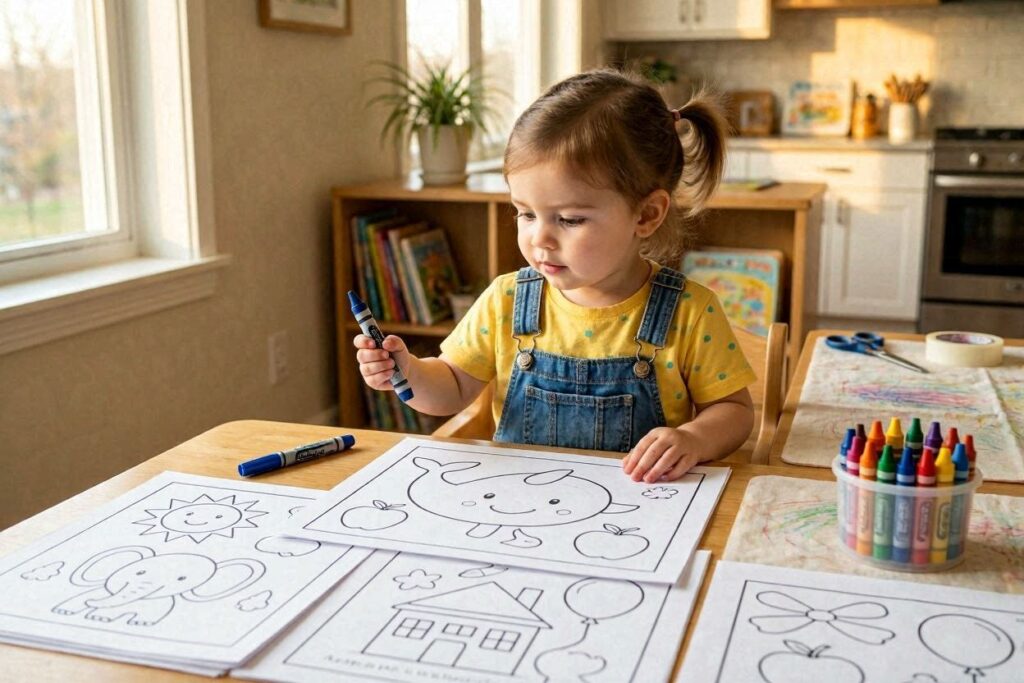
Holding a cotton swab is very similar to holding a pencil. Therefore, this activity directly prepares toddlers for writing. You can also find free printable coloring pages for kids to pair with this painting activity.

14. Pushing Coins into a Piggy Bank Slot

Materials needed: A plastic container with a lid, a sharp knife (for the adult to cut a slot), large plastic coins or real coins for older toddlers.

How to set it up:

  • Cut a coin-sized slot into the lid of a plastic container.
  • Give your toddler a pile of coins.
  • Show them how to hold the coin between thumb and forefinger and guide it into the slot.
  • Once full, take the lid off and let them dump the coins out and start again.

This activity specifically strengthens the tripod grip and builds the kind of precise finger control that children need for writing. It is also one of the most focused fine motor activities for toddlers because the goal is clear and satisfying.

15. Unwrapping Surprises in Foil

Materials needed: Aluminum foil, small toys, plastic animals, or mini erasers.

How to set it up:

  • Wrap each small object tightly in a square of foil.
  • Place several wrapped objects in a basket or tray.
  • Tell your toddler there is a surprise in each one.
  • Let them use their fingers to peel, pull, and unwrap each item.

The crinkled texture of foil requires more finger effort than regular wrapping. Your toddler will stay motivated because there is a reward inside each one. My son calls these his ‘treasure packages.’

16. Scrunching and Tossing Paper Balls

Materials needed: Old newspaper, scrap paper, or tissue paper. A bin or laundry basket for tossing.

How to set it up:

  • Give your toddler a stack of paper.
  • Show them how to scrunch each sheet into the tightest ball possible.
  • Once they have a pile, set up a bin across the room and let them toss the balls in.
  • For extra fine motor work, have them unscrunch the balls and flatten them back out.

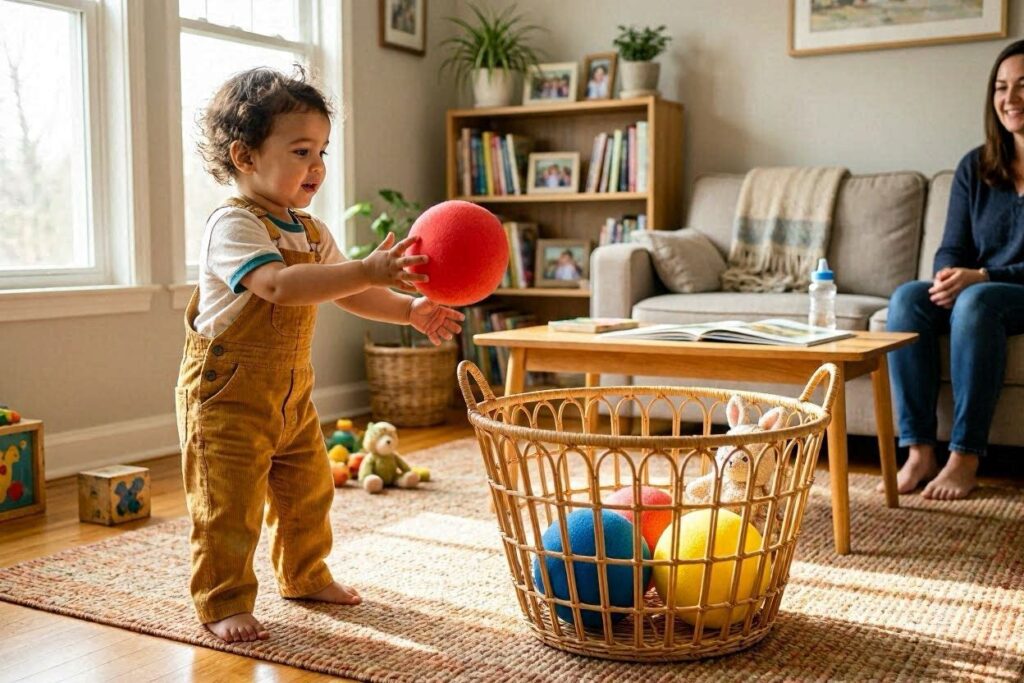
Scrunching paper builds significant hand strength, and the tossing component adds a gross motor element that keeps the whole activity fun.

17. Transferring Pompoms with Tweezers

Materials needed: Child-safe tweezers (available cheaply online), small pom poms or dried beans, two small bowls.

How to set it up:

  • Fill one bowl with small pom poms.
  • Show your toddler how to hold the tweezers and pinch a pom pom.
  • Transfer them one by one to the empty bowl.
  • For a challenge, set a timer and count how many they can move in one minute.

Tweezers require even more precision than tongs. Consequently, this activity is better suited for toddlers aged three and above. For younger ones, try the tong version in activity 10.

18. Stringing Large Wooden Beads

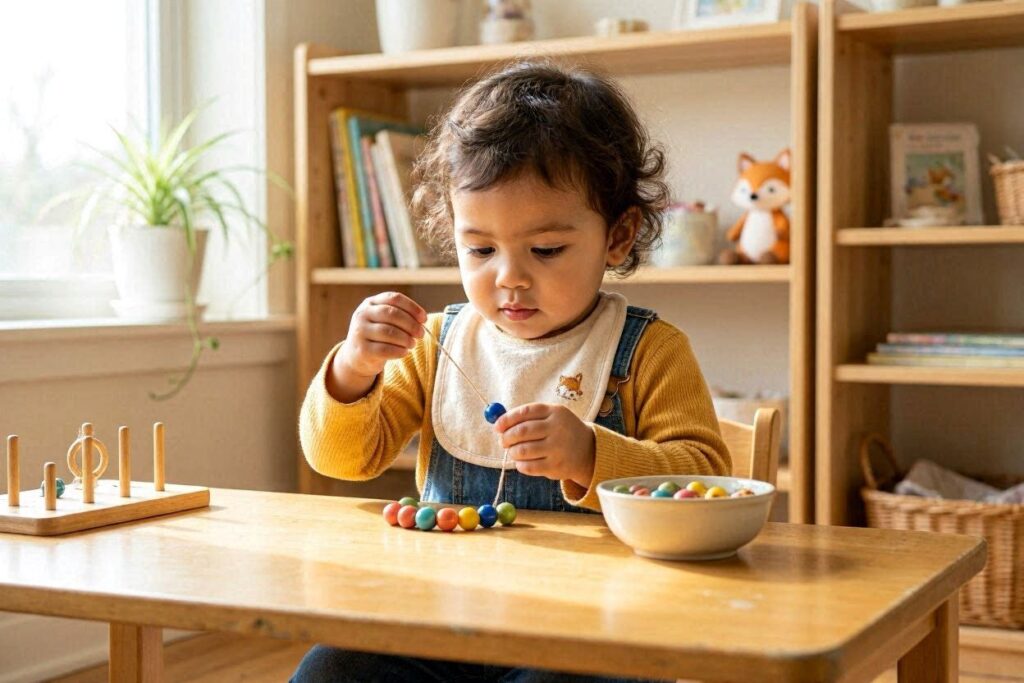
Materials needed: Large wooden beads (with wide holes), a thick shoelace or stiff yarn with a taped end.

How to set it up:

  • Tie a large knot at one end of the shoelace so the beads do not fall off.
  • Show your toddler how to hold a bead in one hand and guide the lace through the hole with the other.
  • Let them fill the lace with as many beads as they can.
  • For a challenge, call out a color pattern and ask them to copy it.

Bead threading is a classic occupational therapy tool for building the bilateral coordination and fine motor control that fine motor activities for toddlers aim to develop.

19. Making Balls from Clay or Playdough

Materials needed: Playdough or air-dry clay, a flat surface.

How to set it up:

  • Give your toddler a chunk of playdough.
  • Show them how to roll it into a ball using circular motions between their palms.
  • Once they have balls, show them how to flatten with fingers, roll into snakes, and pinch into shapes.
  • For a challenge, ask them to make the tiniest ball possible using just their fingertips.

Rolling and manipulating playdough builds the arch muscles in the hand, which are essential for proper pencil grip and handwriting strength later on. You can also find great sensory bin ideas for 2-year-olds to pair with this.

20. Cutting Playdough with Plastic Knives

Materials needed: Playdough, plastic kid-safe knives or popsicle sticks, a small cutting board or placemat.

How to set it up:

  • Roll playdough into thick snakes and logs.
  • Place them on the cutting board and give your toddler a plastic knife.
  • Show them how to press down and slice through the playdough.
  • Let them cut the pieces as small as they want.

This activity is a perfect pre-scissor skill builder. The cutting motion with a knife mirrors the open-close hand movement used in scissors. For more activities like this, also check out these 25 easy bottle art ideas for kids for creative craft ideas that also build hand skills.

21. Dot Sticker Counting and Placing

Materials needed: Round dot stickers, number cards (printed or handwritten), a flat surface.

How to set it up:

  • Write numbers 1 through 5 on index cards (or print them).
  • Show your toddler how to peel a dot sticker and place it on the card.
  • Ask them to put the matching number of stickers on each card.
  • Count aloud together as they place each sticker.

This combines fine motor activity for toddlers with early math concepts. Two developmental wins in one sitting.

22. Weaving Paper Strips Through a Cardboard Loom

Materials needed: A piece of cardboard (cereal box works well), scissors (adult use only), strips of colorful paper.

How to set it up:

  • Cut parallel slits into the cardboard, leaving borders intact, to make a loom.
  • Show your toddler how to thread a paper strip over one slit and under the next.
  • Guide them through the over-under pattern.
  • Let them use different colors to build their woven pattern.

Weaving builds sustained attention and bilateral coordination. It is one of those fine motor activities for toddlers that gets surprisingly addictive.

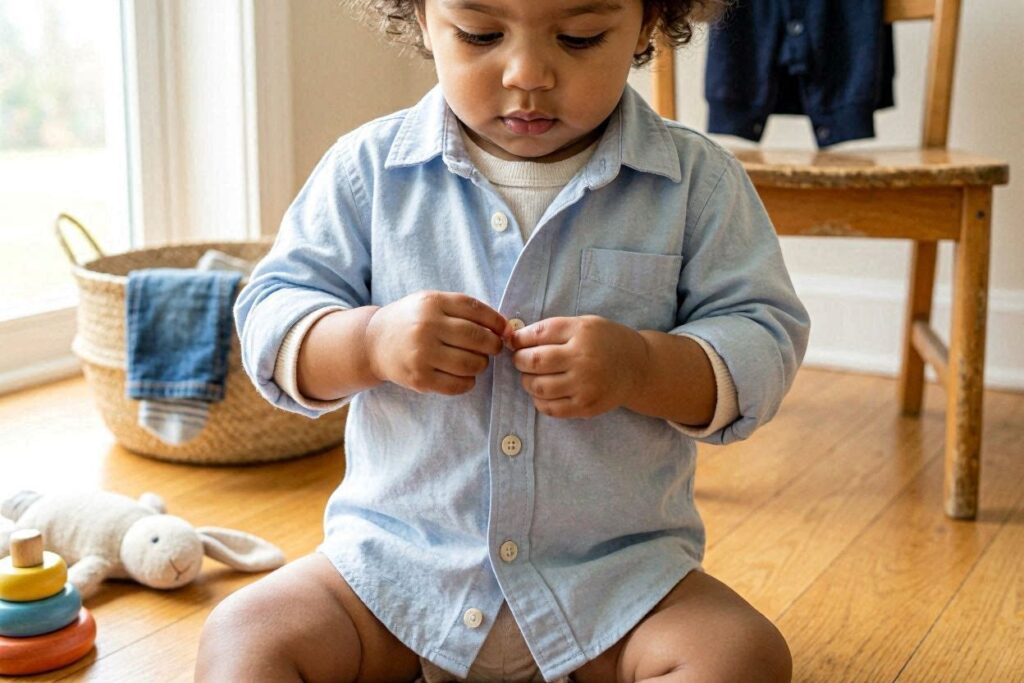
23. Pushing Buttons and Snaps on Old Clothing

Materials needed: Old shirts, jackets, or fabric with large buttons and snaps. No need to buy anything new.

How to set it up:

  • Lay a shirt flat on the table or attach fabric to a frame.
  • Show your toddler how to push a button through its hole.
  • For snap buttons, show the push-and-click motion.
  • Let them practice until the skill becomes more natural.

This is one of the most practical fine motor activities for toddlers because it directly prepares them for independent dressing. The payoff in daily life is massive.

24. Filling an Ice Cube Tray with a Dropper

Materials needed: An ice cube tray, a large medicine dropper or pipette, and two bowls of colored water.

How to set it up:

  • Fill a small bowl with colored water (a few drops of food coloring work great).
  • Place an empty ice cube tray in front of your toddler.
  • Show them how to suck water into the dropper and release it into a cube slot.
  • The goal is to fill every slot, one dropper at a time.

Using a dropper requires precise squeeze control and hand-eye coordination. Many occupational therapists use this exact setup during fine motor therapy sessions.

25. Building with Toothpick and Marshmallow Construction

Materials needed: Toothpicks, mini marshmallows (or small playdough balls as a non-food option).

How to set it up:

  • Place a bowl of mini marshmallows and a cup of toothpicks on the table.
  • Show your toddler how to push a toothpick into a marshmallow.
  • Connect two marshmallows with one toothpick, then keep building.
  • Challenge older toddlers to build a tower as tall as possible.

This open-ended building activity develops the precise grip strength needed for fine motor tasks. The engineering element also builds problem-solving and early STEM thinking simultaneously.

26. Tying Knots in Rope or String

Materials needed: Thick rope, ribbon, or yarn in about 30-centimeter lengths.

How to set it up:

  1. Give your toddler a length of rope.
  2. Demonstrate how to loop one end over the other and pull it through.
  3. Guide their hands slowly through the motion a few times.
  4. Let them practice independently, making as many knots as they want.

Tying knots develops bilateral hand coordination, finger dexterity, and focused attention. It is genuinely one of the more challenging fine motor activities for toddlers, but older toddlers often love the sense of achievement it brings.

27. Folding Paper Into Shapes

Materials needed: Regular printer paper or colorful origami paper.

How to set it up:

  1. Start with a simple fold: fold the paper in half and press the crease flat.
  2. Show your toddler how to line up the corners before pressing.
  3. Practice just one fold repeatedly before moving on to more complex shapes.
  4. For older toddlers, fold into an airplane, a fan, or a simple hat.

Creasing paper requires precise bilateral coordination and finger pressure control. It is also quietly calming, which makes it a great option for winding down after a busy morning.

28. Picking Up Rice with Chopsticks

Materials needed: A bowl of cooked rice or large dried beans, a pair of child-safe chopsticks or regular chopsticks.

How to set it up:

  1. Cook a small amount of rice and place it in a bowl.
  2. Show your toddler how to hold the chopsticks (two in one hand, or one in each hand as a simpler start).
  3. Challenge them to transfer rice or beans from one bowl to another.
  4. Celebrate every successful transfer, no matter how small.

This is genuinely one of the more challenging fine motor activities for toddlers, especially for ages three and above. The effort required builds deep finger strength and precision. Use the sensory exploration resources, like edible sensory play ideas for babies and toddlers to make messy play a positive experience alongside activities like this.

29. Spinning Tops and Wind-Up Toys

Materials needed: A wooden or plastic spinning top, or simple wind-up toys.

How to set it up:

  1. Place the top on a smooth surface.
  2. Show your toddler how to hold the stem between thumb and forefinger and flick their wrist.
  3. Let them practice until they can make it spin on their own.
  4. For wind-up toys, show the turning motion and let them wind and release repeatedly.

Wrist rotation is a critical but often overlooked component of fine motor development. Spinning tops specifically target this movement in a fun, self-directed way.

30. Cutting Playdough Snakes with Child Scissors

Materials needed: Child-safe scissors (blunt-tipped), playdough rolled into thick snake shapes.

How to set it up:

  1. Roll playdough into thick snake shapes and lay them on a tray.
  2. Show your toddler how to hold the scissors correctly with the thumb in one hole and fingers in the other.
  3. Guide them to open and close the scissors as they move along the playdough snake.
  4. Start with one snip at a time, then progress to longer cuts.

Cutting with scissors is a major milestone, and playdough is the most forgiving material to start with. Additionally, if your toddler is ready for paper cutting, printable pages like these free printable coloring pages for kids work great for early scissor practice.

How to Maximize Fine Motor Activities for Toddlers

  • Setting up the activity is only part of it. Here is how to get better results from each session.
  • Rotate activities during the week so your toddler gets variety while still practicing each skill enough to improve.
  • Sit beside your child instead of across from them so they can clearly see your hands and copy your movements easily.
  • Avoid correcting every small mistake. Let them explore and adjust on their own, stepping in only when needed.
  • Talk through what they are doing. Simple descriptions like “you are squeezing the sponge” help build language and attention.
  • Keep setups quick and simple so you can actually repeat them often. Consistency matters more than complexity.

For more simple and fast ideas to keep your toddler engaged, this list of 30 indoor activities for toddlers when you are stuck at home is a great companion resource.

Pairing Fine Motor Activities for Toddlers with Sensory Play

Many of the best fine motor activities for toddlers also have a sensory element. Combining the two makes activities more engaging and more developmentally rich.

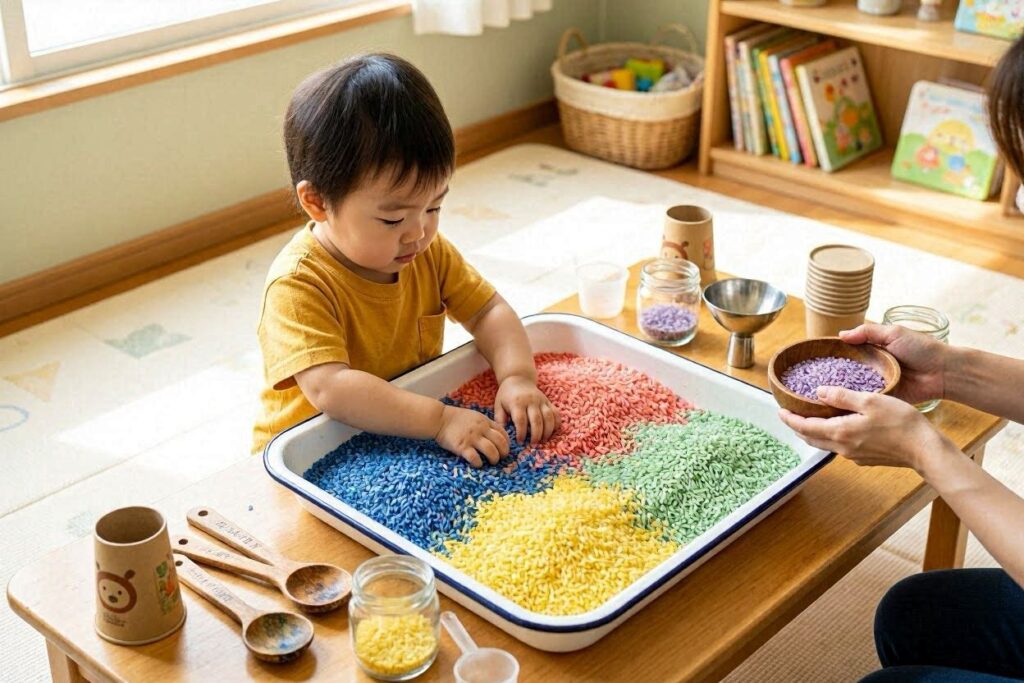
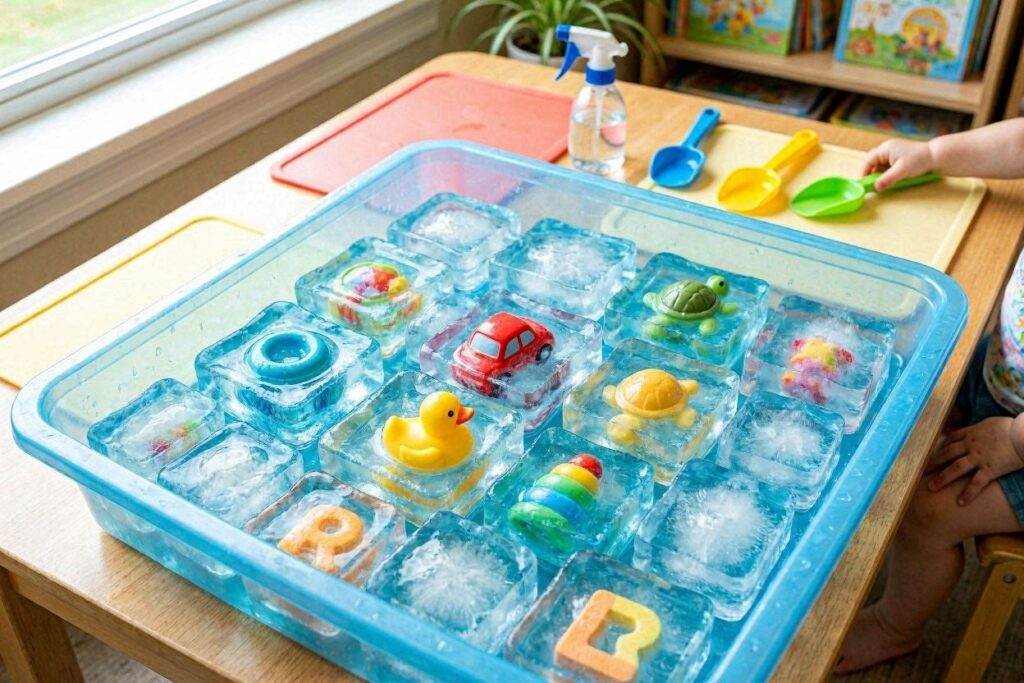
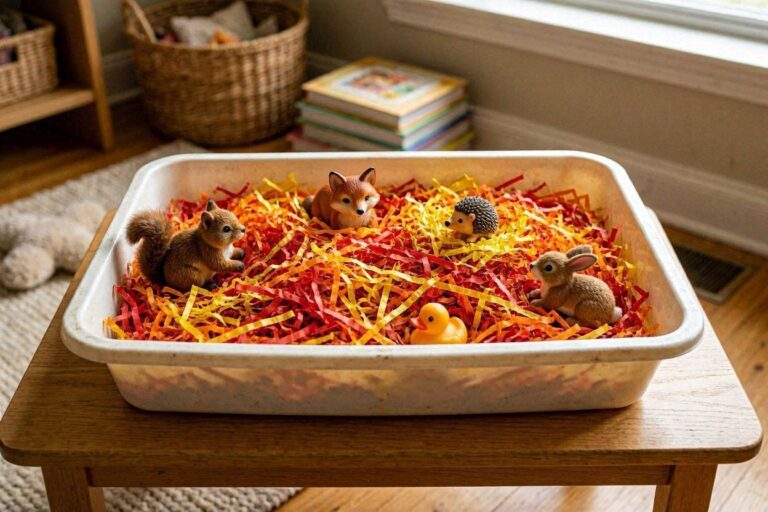
Sensory bins, for example, naturally invite toddlers to use their hands in varied ways. Digging, scooping, pouring, and pinching all happen automatically when a child is exploring a sensory bin. You can explore these sensory bin ideas for 2-year-olds and these best sensory play activities for babies 6 to 12 months for age-specific ideas.

Furthermore, adding different textures to your fine motor activities makes them even more effective. Think wet sand, kinetic sand, rice, dried beans, water beads (for supervised older toddlers), or even simple shaving cream spread on a tray. Each texture challenges the hand muscles differently.

Wrapping Up,

The 30 fine motor activities in this post are easy to set up, low-prep, and effective. Some will become instant favorites, while others may take time before your toddler gets comfortable with them. What matters is consistency.

These early activities build skills your child will later use for writing and daily tasks.

For more ideas, explore these easy DIY crafts for kids and 25 sensory bin ideas for toddlers. You can also find printable resources and activity kits at my shop

You are doing a great job, mama. Keep showing up.

Save this post for later! Pin it to your toddler activities board on Pinterest so you can come back to it anytime.

Leave a Reply

Your email address will not be published. Required fields are marked *