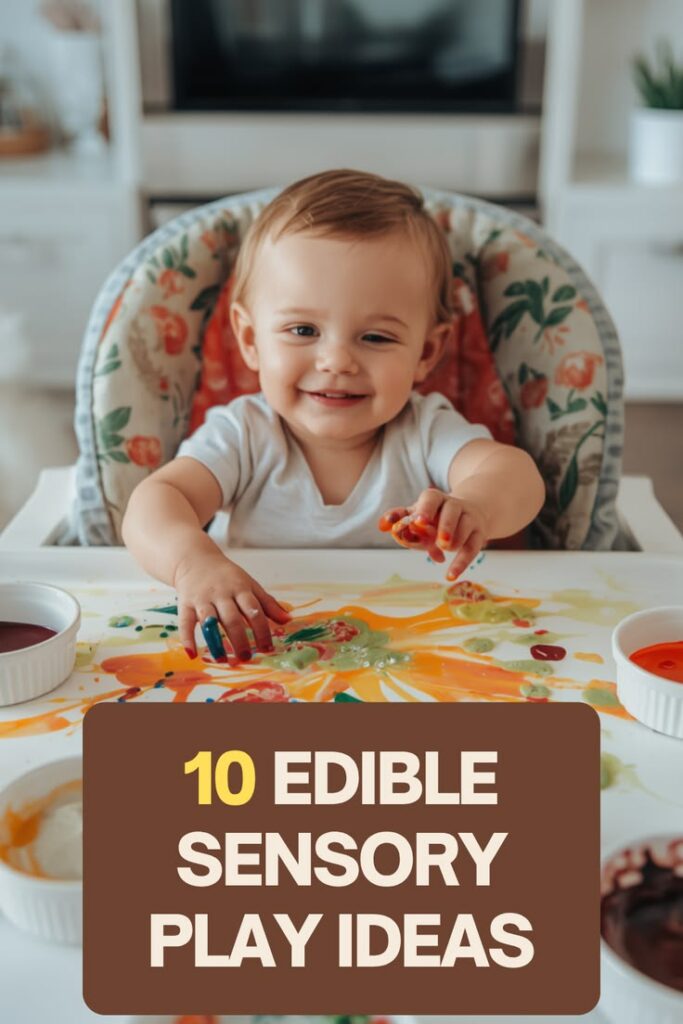
My daughter once smashed a banana with her bare hand, rubbed it across her tray, and laughed as she had just discovered the best secret in the world. That moment showed me how powerful edible sensory play baby activities can be.
They let babies explore safely with their hands, eyes, and mouths using simple food-based fun that supports learning and sensory growth.
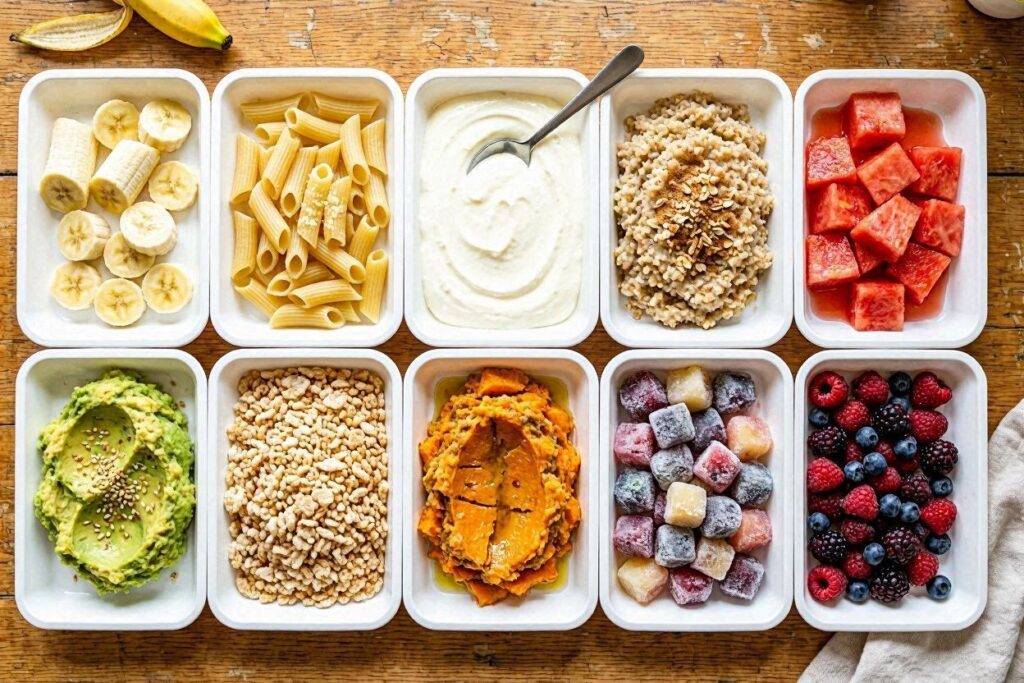
In this post, I am sharing 10 edible sensory play baby ideas that are easy to set up, budget-friendly, and genuinely safe for little ones who still explore everything mouth first. So grab a bib, lay down a mat, and let us get into it.
📌 Quick Note: This post contains affiliate links. I may earn a small commission if you purchase through them, at no extra cost to you.
How to Set Up Safe Edible Sensory Play for Babies
Before starting edible sensory play baby activities, safety comes first. Always supervise your baby closely, as even soft foods can be a choking or gagging risk.
1. Mashed Banana Finger Painting
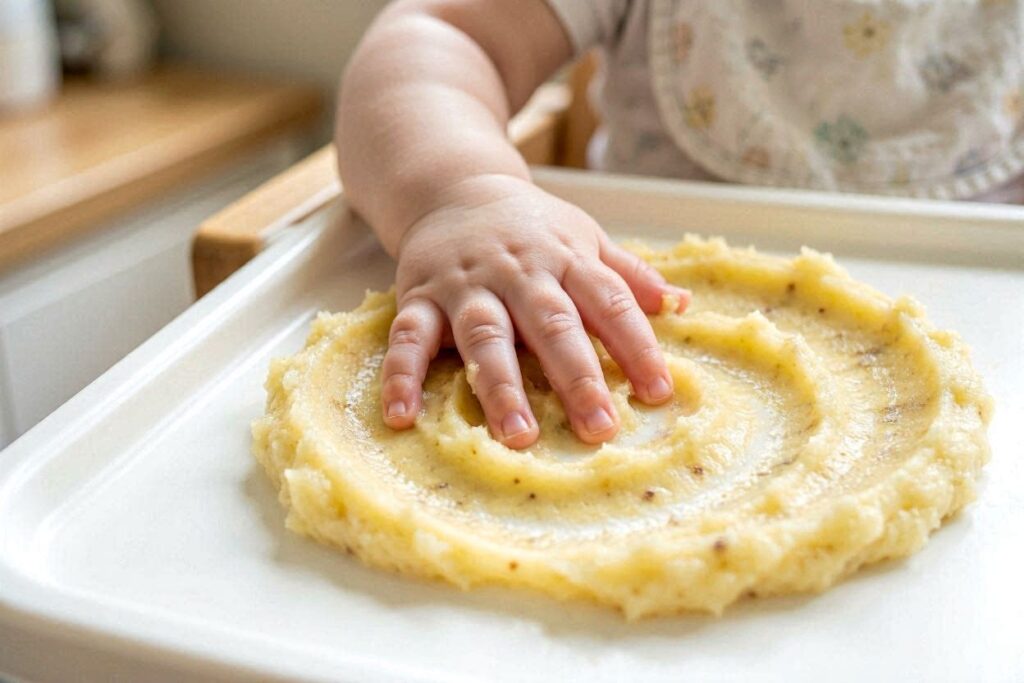
Mashed banana is naturally sweet, soft, and incredibly easy to clean, which makes it one of the best edible sensory play baby ideas for beginners. Simply mash a ripe banana on a tray or directly on your baby’s highchair, then let them smear it around with their hands.
2. Cooked Pasta Sensory Bin
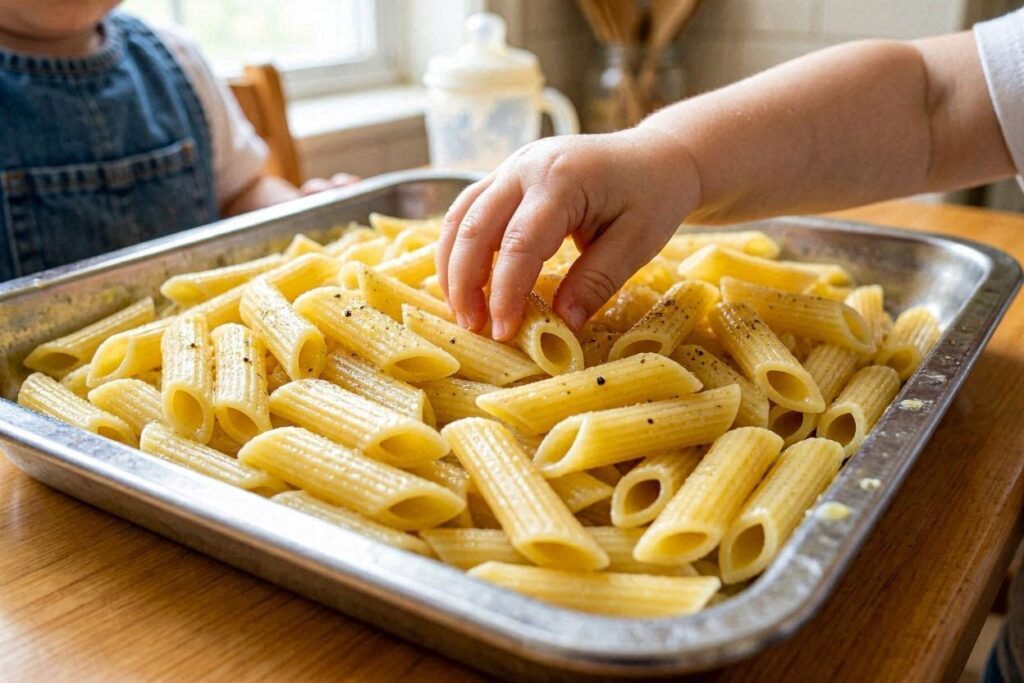
Plain cooked pasta, slightly cooled, gives babies a fun squishy texture to grab and squeeze. Penne and rigatoni work especially well since they are easy for small hands to hold. Spread the pasta across a shallow tray or large bowl and let your baby dig in with their fingers.
This activity is also a wonderful introduction to the kind of open-ended exploration found in this guide to sensory bins for 2-year-olds that actually keep them busy, so you can carry the same idea forward as your baby grows into toddlerhood.
3. Yogurt Sensory Painting
Plain yogurt makes a wonderfully smooth, cool sensory experience, and it doubles as a snack your baby can eat straight from their hands. Spread a thin layer of yogurt on a tray, then let your baby drag a spoon, a silicone brush, or simply their fingers across the surface.
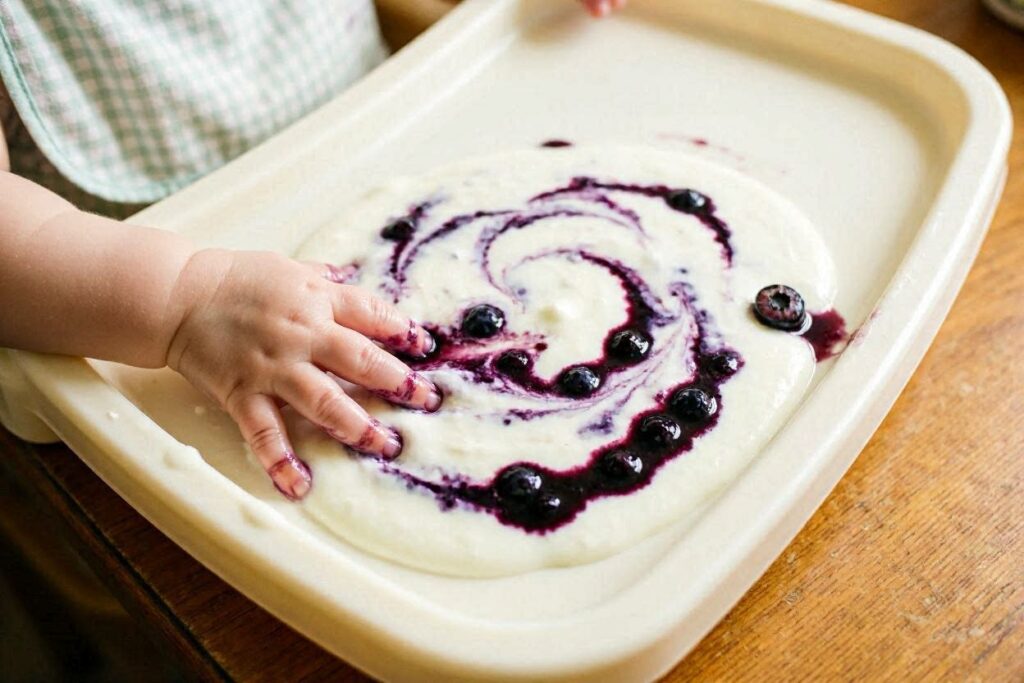
If your baby has already tried fruit purees safely, you can swirl in a little blueberry or strawberry puree to create a color contrast against the white yogurt. This naturally introduces your baby to mixing colors while keeping everything completely edible.
4. Oatmeal Sensory Bin
Cooked oatmeal has a thick, slightly sticky texture that feels different from anything else on this list, which is exactly why babies tend to love it. Let the oatmeal cool completely, then spoon it into a tray or bowl for your baby to squish and scoop.
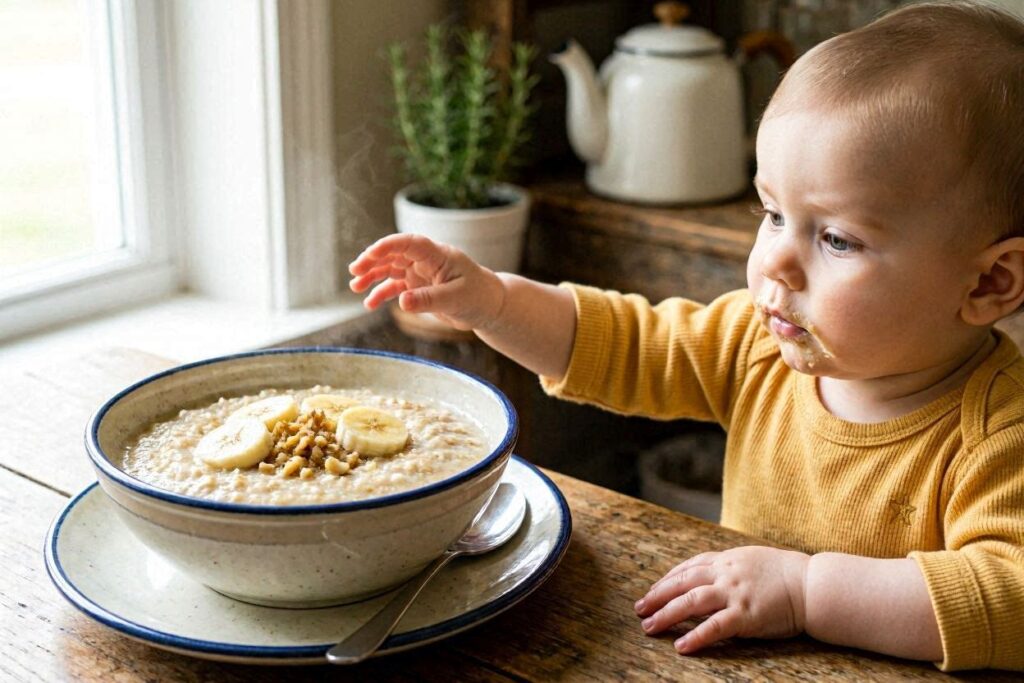
You can divide the oatmeal into small bowls and tint each one naturally using fruit purees like mango or spinach, giving your baby a colorful, multi-textured experience all from one simple breakfast food. Activities like this build the same kind of hand strength and coordination that support later fine motor activities for toddlers at home.
5. Watermelon and Ice Cube Play
On a warm day, frozen or chilled watermelon cubes make a refreshing edible sensory play baby activity that also helps soothe teething gums. Cut watermelon into baby-safe pieces, freeze them briefly, then place them in a shallow tray for your baby to touch, squeeze, and gum.
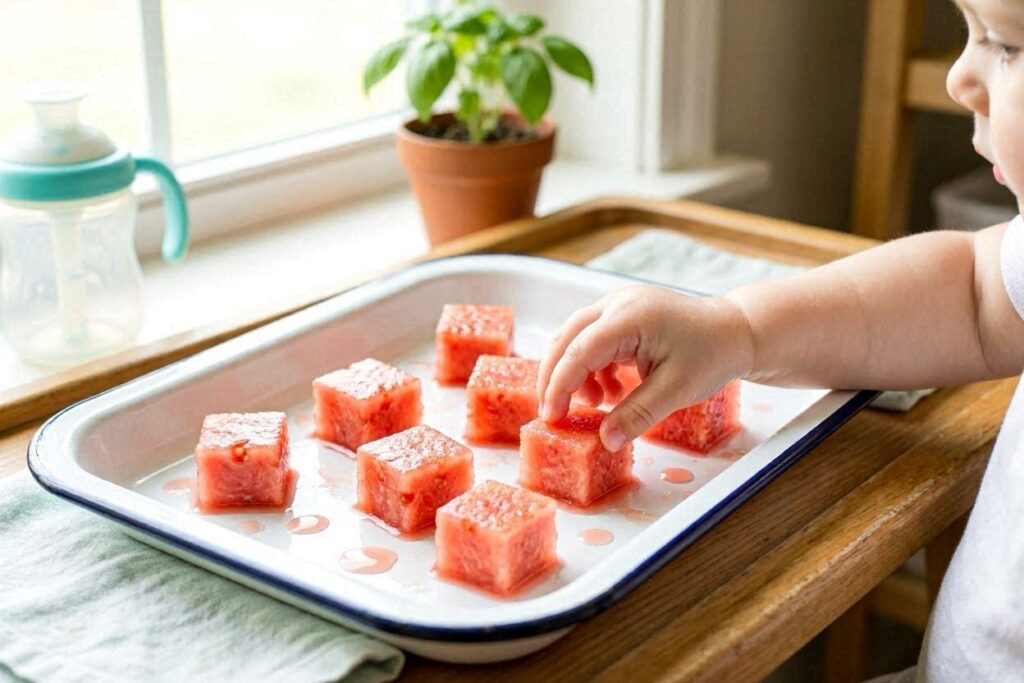
Since watermelon naturally softens as it warms, your baby gets to experience a changing texture in real time, from cold and firm to soft and juicy. This is a great choice if you are planning easy water play activities for toddlers later in the summer, since it introduces the same cooling sensory concept early on.
6. Avocado Mash Exploration
Avocado has a buttery, smooth texture that babies often enjoy squishing between their fingers. Simply mash a ripe avocado and spread it across a tray or directly onto a high chair surface. Because avocado is naturally soft and mild, it is gentle even if your baby decides to taste test along the way.
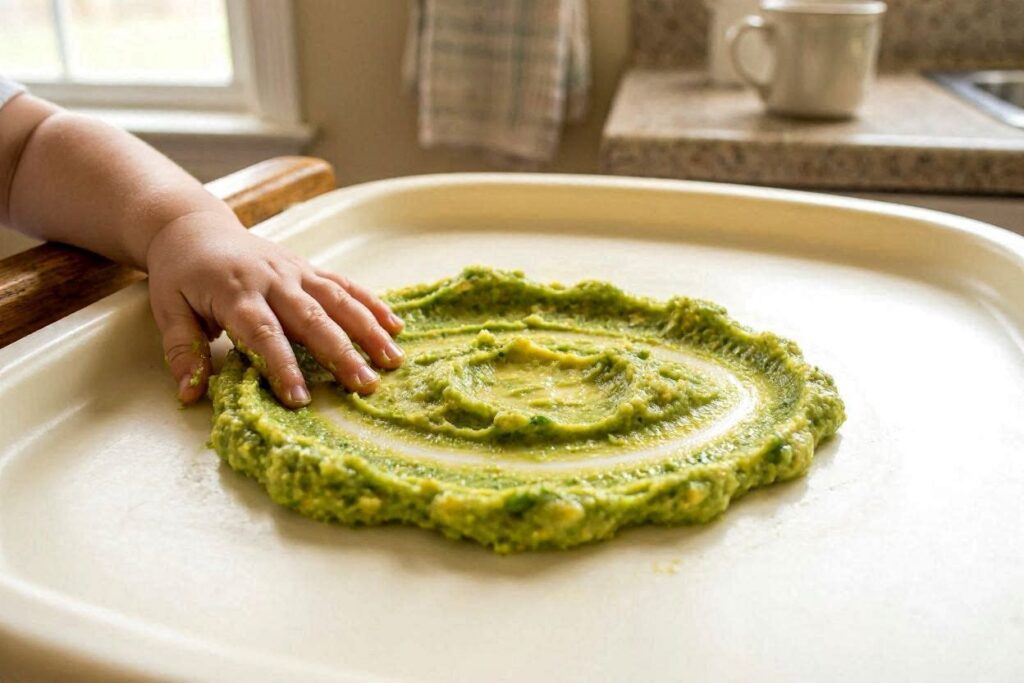
You can also use a fork to create texture lines in the avocado, encouraging your baby to drag their fingers through the ridges. This kind of repetitive motion supports the same hand control skills covered in this list of fine motor activities for toddlers at home that actually work.
7. Rice Cereal and Water Goop
Mixing baby rice cereal with a little warm water creates a thick, gooey texture that is completely safe, even if your baby eats a spoonful or two. Pour the mixture onto a tray and let your baby press, drag, and squish it with their hands.
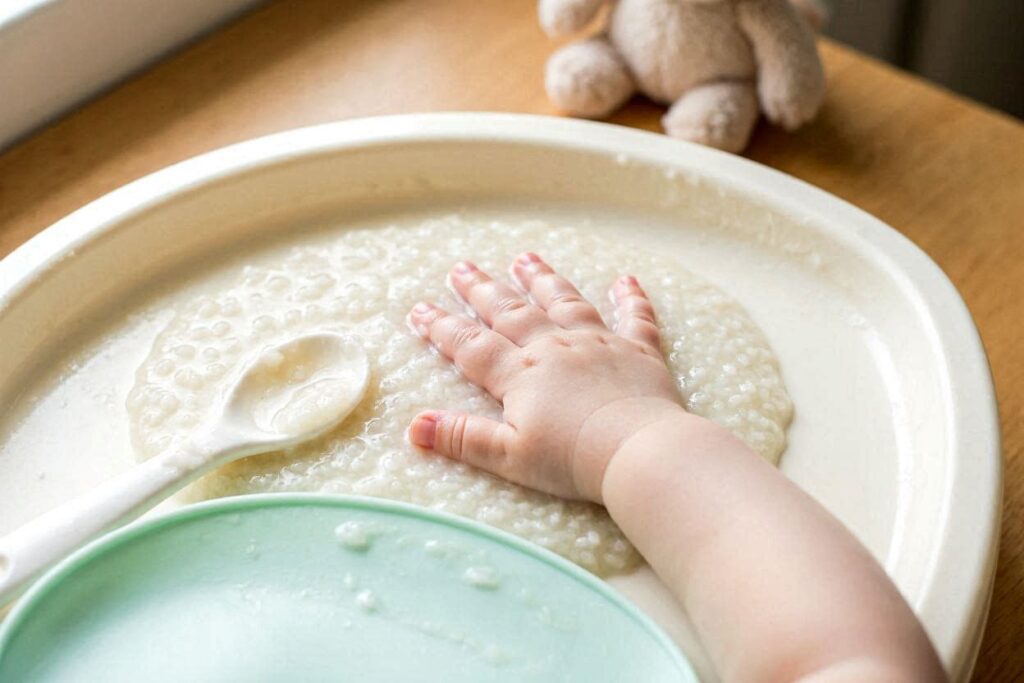
Since rice cereal is often one of the very first solid foods babies try, this activity feels familiar to them while still offering a brand new sensory experience. It is a low-cost option too, since most parents already have rice cereal in the pantry, making it one of the most budget-friendly edible sensory play baby ideas on this list.
8. Sweet Potato Mash Squish
Cooked and mashed sweet potato has a slightly thicker consistency than banana or avocado, giving babies a new texture to discover. Its naturally bright orange color also makes it visually exciting for little eyes that are still developing color recognition.
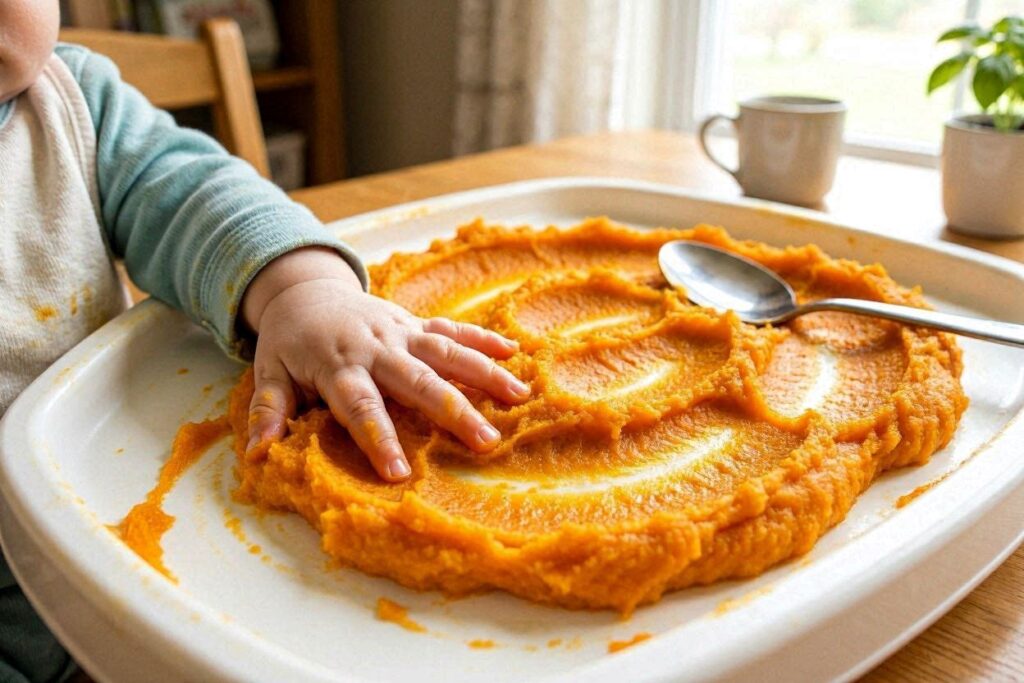
Spread the sweet potato across a tray and let your baby use their whole hand to mash it flatter, then scoop it back into a pile. Babies often repeat this motion again and again, which is part of how repetition strengthens their developing motor skills.
9. Frozen Fruit Puree Pops
For babies who already enjoy chewing on teething toys, frozen fruit puree in a mesh feeder offers a similar sensation along with real flavor. Freeze pureed mango, peach, or pear into small cubes, then place them into a silicone mesh feeder for your baby to hold and explore.
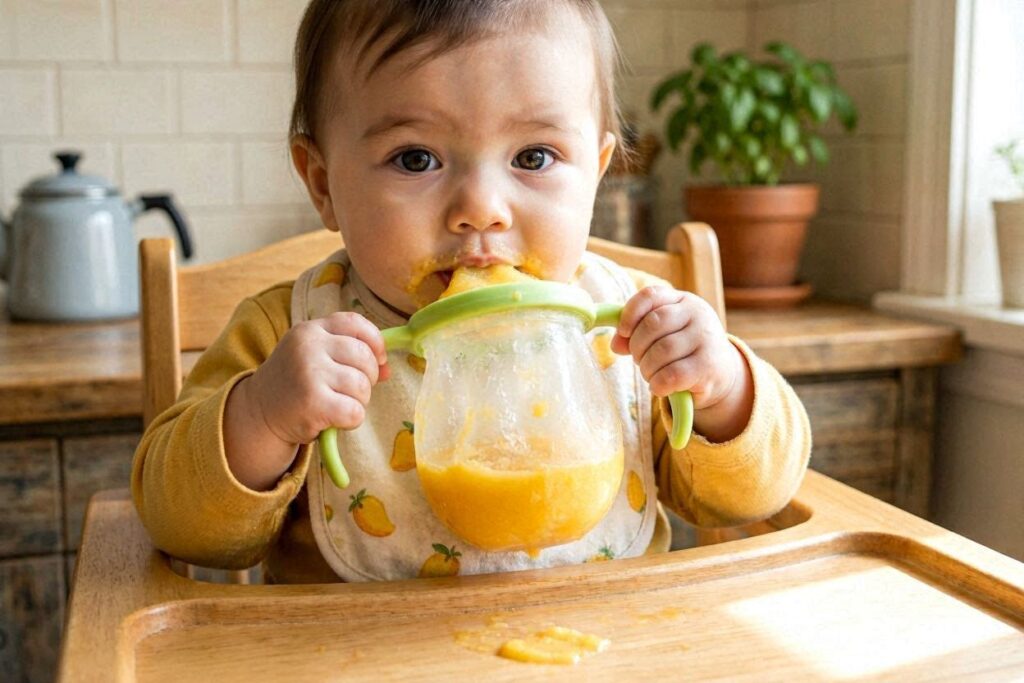
This activity combines taste, temperature, and texture all at once, which makes it one of the more stimulating edible sensory play ideas for babies who are starting to show more curiosity. It is also incredibly soothing for sore gums during teething weeks.
10. Mixed Berry Mash Station
For babies closer to 10 to 12 months who have already tried a variety of berries, a mixed berry mash station offers a colorful, multi-sensory finale to your edible play rotation. Place small amounts of mashed strawberry, blueberry, and raspberry in separate sections of a tray.
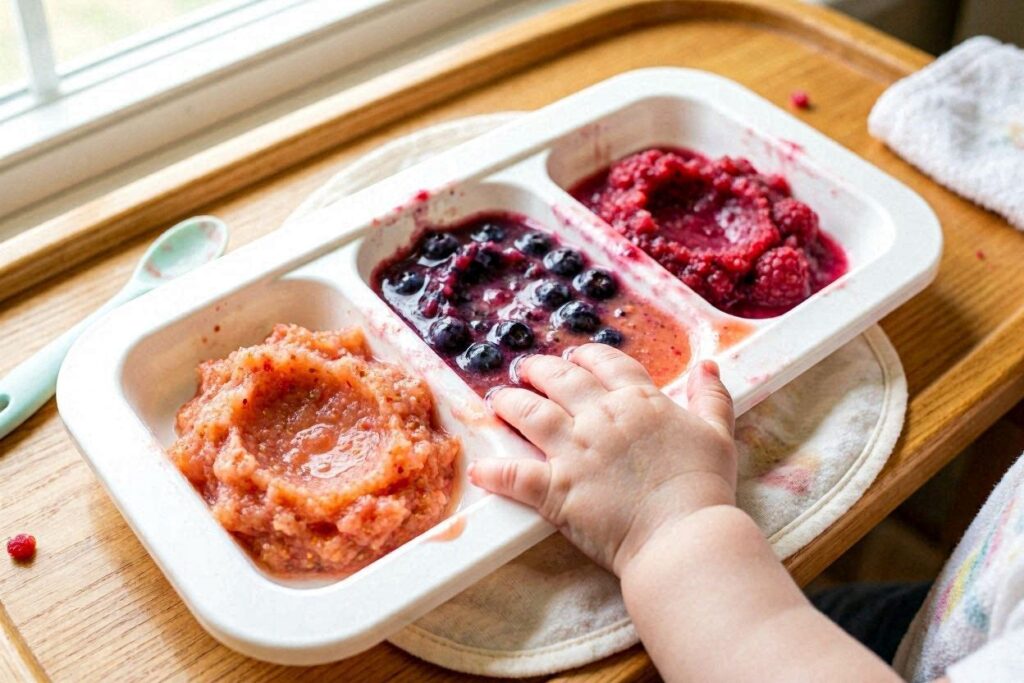
Encourage your baby to mix the colors using their fingers, watching how pink, purple, and red blend into new shades. This activity also naturally introduces early color words into your conversation, since you can narrate every shade as your baby explores. If your little one enjoys this kind of color mixing, they may also love these simple butterfly crafts for toddlers once they are a bit older and ready for craft-based color play.
Tips to Make Edible Sensory Play Less Messy
Even though edible sensory play baby activities are wonderfully simple, the mess can feel overwhelming if you are not prepared. Strip your baby down to a diaper or use a long-sleeve bib that covers their arms. Place a splash mat or large towel underneath the highchair, and keep a damp cloth nearby for quick wipe-downs.
Many moms also like to do these activities right before bath time, so cleanup becomes part of the natural routine rather than an extra chore. If you need more ideas for keeping your little one busy on days when you simply cannot leave the house, this list of indoor activities for toddlers when you are stuck at home is worth saving for later.
How Often Should Babies Do Edible Sensory Play
There is no strict rule here, but most babies benefit from edible sensory play two to three times a week. This gives them enough exposure to build comfort with different textures, without overwhelming their developing senses or wasting too much food.
As your baby grows and becomes steadier on their feet, you can slowly transition from edible sensory play into broader sensory experiences, like the activities found in this guide to sensory play activities for babies aged 6 to 12 months. Eventually, you can also explore 10 edible sensory play ideas for babies for even more inspiration once your little one masters these basics.
When to Avoid Edible Sensory Play
While edible sensory play baby activities are generally very safe, there are moments when it is better to wait. Avoid introducing a new food during sensory play if your baby has not eaten it before, since you want to watch for allergic reactions during regular feeding first, not while they are also smearing it everywhere.
Also, skip sensory play if your baby is overly tired, hungry, or fussy, since they may get frustrated rather than curious. Choosing the right moment, usually after a nap and before a meal, makes the whole experience far more enjoyable for both of you.
My Final Thoughts on Edible Sensory Play for Babies
Edible sensory play baby activities do not need to be complicated or expensive to be effective. A mashed banana, a bowl of cooled oatmeal, or a handful of berries can turn into a meaningful learning moment that also happens to be a lot of fun for your little one. The mess is temporary, but the developmental benefits and the giggles are absolutely worth it.
If you found these ideas helpful, save this post for later and follow along on Pinterest for more sensory play inspiration. And while your baby naps after all that messy fun, you might enjoy browsing these cozy self-care ideas every tired mom needs, because you deserve a break, too.
Once your baby grows into toddlerhood, you will find even more ways to keep them busy and learning through play, including these easy toddler play ideas moms can set up fast, and this full list of 25 easy toddler activities at home that moms genuinely love using.
Pin for Later!