If your toddler wants to touch everything in sight, a sensory bin for 2-year-olds can keep them busy while helping them learn through play. Most sensory bins are cheap to set up, easy to make with things you already have at home, and perfect for busy toddlers who need hands-on activities. In this post, I am sharing 15 simple sensory bin ideas with full materials lists and easy step-by-step setup instructions.
📌 Affiliate Disclaimer: This post may contain affiliate links. That means if you click and buy, I may earn a small commission at no extra cost to you. I only recommend things I genuinely love and use with my own kids. Thank you for supporting this blog!
What Is a Sensory Bin and Why Does It Matter for 2 Year Olds ?
Simply put, a sensory bin is a container filled with different materials that your toddler can dig into, pour, scoop, and explore. It stimulates their senses, touch, sight, and sometimes smell, which is exactly what a two-year-old brain needs to learn and grow.
Moreover, sensory play helps toddlers build fine motor skills, develop focus, and even work through big emotions. If your little one is easily frustrated or struggles to sit still, you will likely notice a big difference after just a few sessions with a sensory bin.
If you want even more play ideas, check out my full list of sensory bin ideas for toddlers on the blog.
A Quick Note on Safety Before You Start
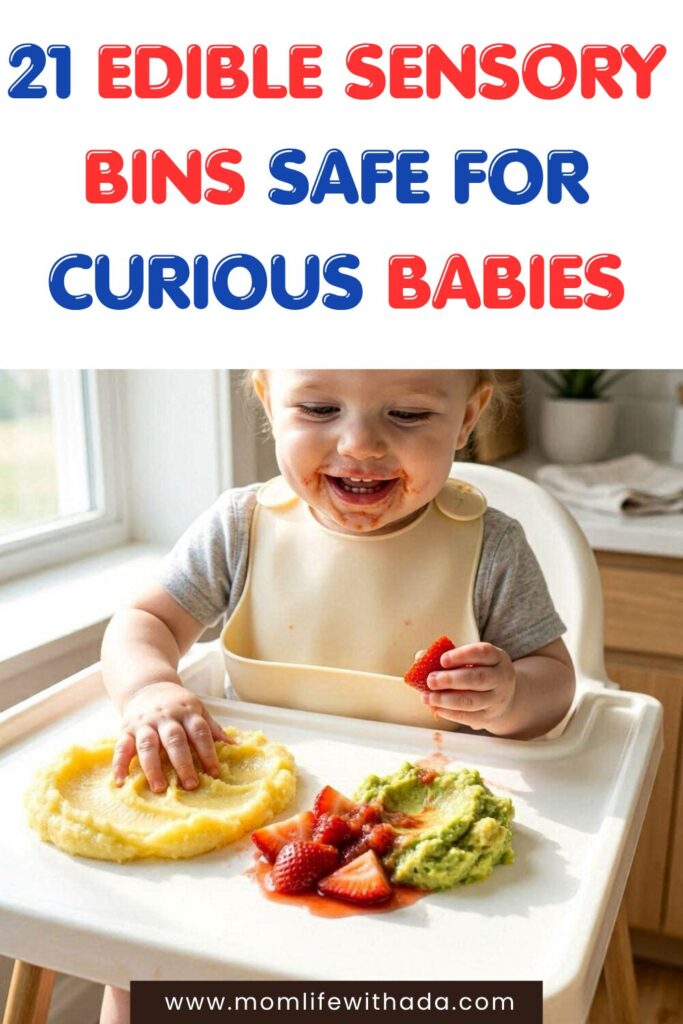
Because two-year-olds still explore with their mouths, always stay close during sensory play. For very young toddlers or those who mouth everything, skip small beads or dried beans and go with safer fillers like cooked pasta, large pom poms, or shredded paper. The edible sensory bin ideas further down in this list are great for kids who are not quite past the mouthing stage.
You can also check out my post on edible sensory play ideas for babies for completely safe options.
1. Rainbow Rice Sensory Bin for 2 Year Olds
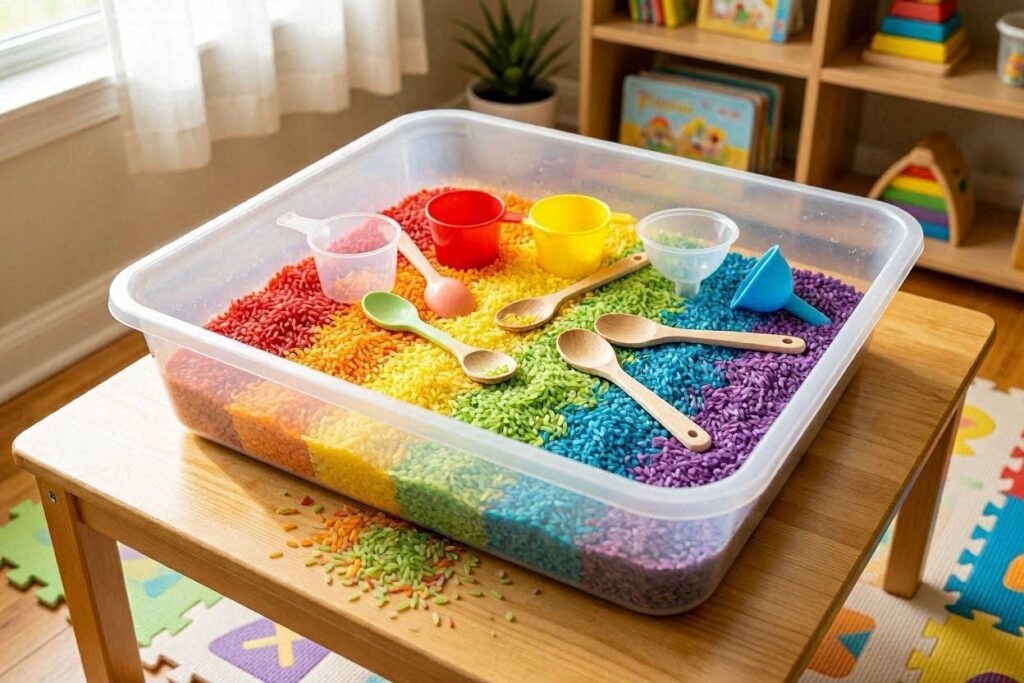
This is probably the most popular sensory bin idea out there, and honestly, it deserves all the hype. The bright colors catch a toddler’s attention immediately, and the sound of rice pouring from one cup to another is strangely satisfying for them.
Materials Needed
- 2 cups of uncooked white rice
- Food coloring (red, yellow, blue, green)
- White vinegar (1 teaspoon per color)
- Ziplock bags (one per color)
- A large plastic bin or storage container
- Small cups, spoons, and bowls
Step-by-Step Process
- Divide rice evenly into separate ziplock bags.
- Add a few drops of food coloring and a teaspoon of vinegar to each bag.
- Seal and shake each bag until the rice is fully coated.
- Spread the rice on a baking sheet and let it dry for about 30 to 60 minutes.
- Once dry, layer the colors in your bin.
- Add small cups, spoons, and scoops, then call your toddler over.
Furthermore, you can hide small plastic animals or letter tiles under the rice for an extra layer of fun. This simple addition turns it into a little treasure hunt that keeps them going even longer.
2. Cloud Dough Sensory Bin- Perfect for Little Hands
Cloud dough is soft, moldable, and absolutely mesmerizing for a two-year-old. It holds its shape when squeezed but crumbles easily, which makes it feel completely different from playdough.
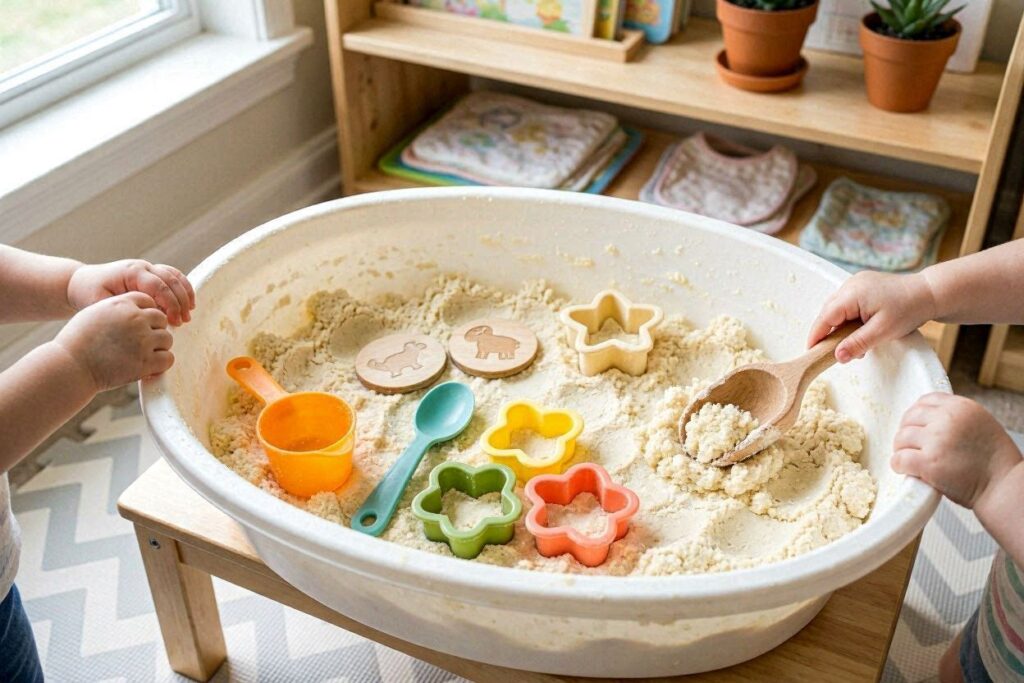
Materials Needed
- 4 cups of plain flour
- Half a cup of baby oil or coconut oil
- A large bin
- Small molds, cookie cutters, or cups
Step-by-Step Process
- Pour the flour into your bin.
- Slowly drizzle in the oil while mixing with your hands.
- Keep mixing until the dough holds together when squeezed but still crumbles when you let go.
- Add molds, cups, or little plastic toys, and let your toddler explore.
As a result, you get one of the simplest and most satisfying sensory bin fillers you can make at home in under five minutes. You can also add a few drops of lavender or vanilla extract to make it smell amazing.
3. Water Sensory Bin for 2 Year Olds (No-Mess Version)
Water play is genuinely one of the best sensory bin ideas for toddlers, especially in warm weather. All you need is a shallow bin of water and a few tools, and your two-year-old will be happily busy for ages.
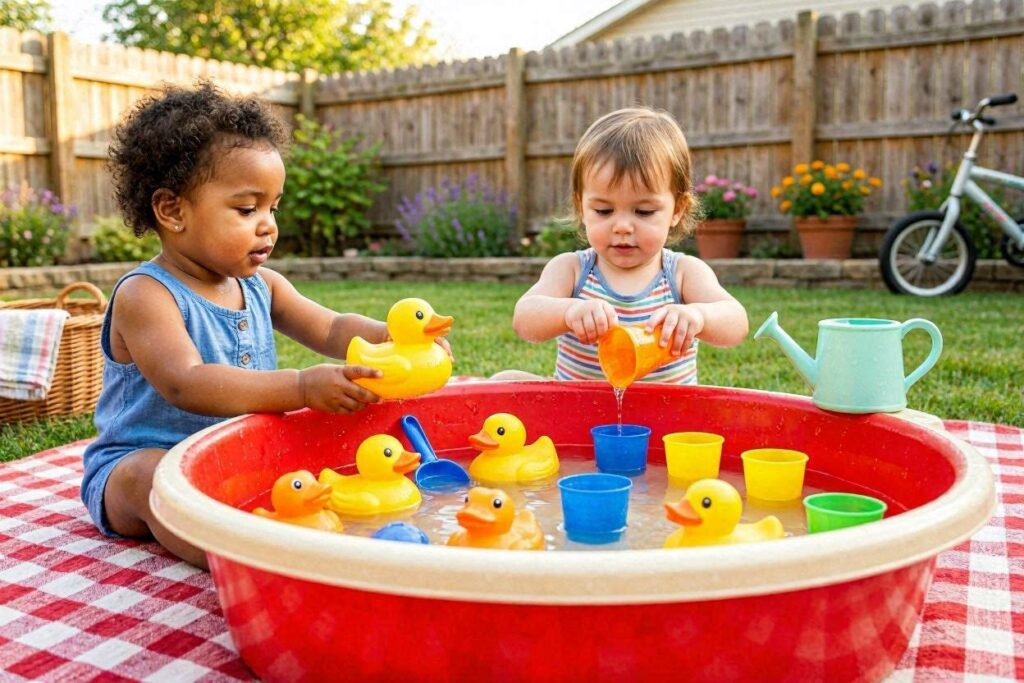
Materials Needed
- A plastic storage tub or baby bathtub
- Warm water
- Rubber ducks, plastic cups, and small funnels
- A few drops of dish soap (optional, for bubbles)
- Towel underneath to catch spills
Step-by-Step Process
- Fill the bin with a few inches of warm water.
- Add rubber ducks, plastic cups, funnels, and squeeze toys.
- Optional: add a squirt of dish soap and let them swirl it for bubbles.
- Place a towel underneath and let them pour, splash, and scoop freely.
Additionally, you can add a few drops of food coloring to make the water blue or green. It looks like the ocean and your toddler will think it is the most exciting thing ever.
4. Cooked Pasta Sensory Bin – Completely Edible and Safe
This one is brilliant for toddlers who still mouth everything. Cooked spaghetti, penne, or any pasta shape works well here. The slippery texture is totally new for most kids, and they absolutely love it.
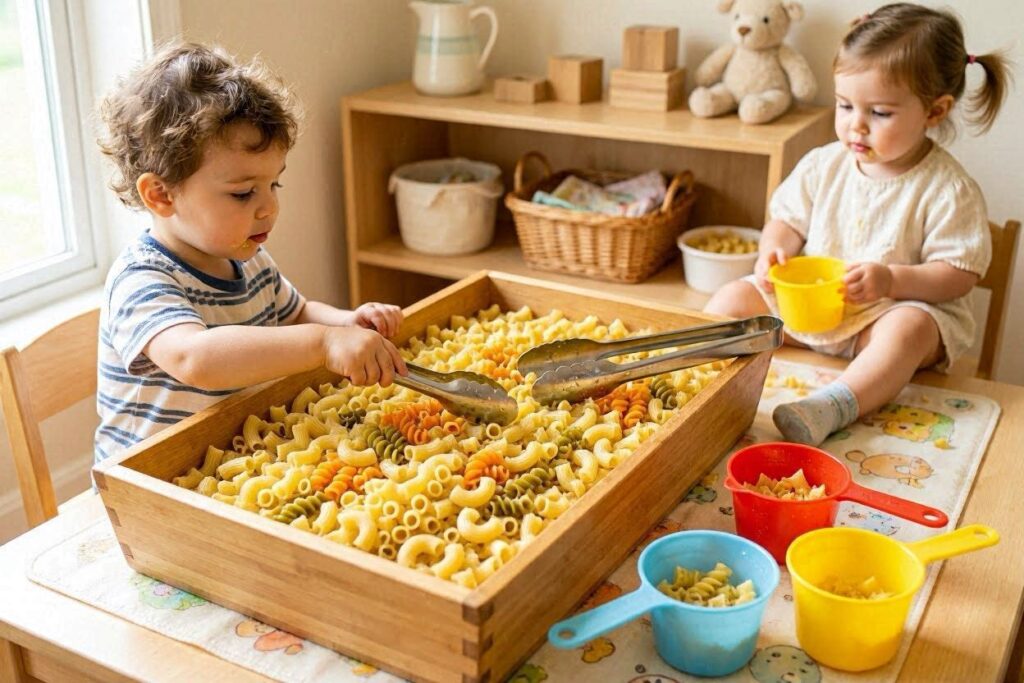
Materials Needed
- 2 to 3 cups of cooked pasta (any shape)
- A few drops of food coloring (optional)
- A drizzle of olive oil (to prevent sticking)
- Child-safe tongs, cups, and bowls
Step-by-Step Process
- Cook pasta and let it cool completely.
- Toss it with a little olive oil so it does not stick together.
- Divide into portions and color each one with a different food coloring if you like.
- Add to your bin and throw in some cups, spoons, and tongs.
Consequently, even the most cautious parent can relax during this activity because everything in the bin is completely safe to eat.
For more edible play ideas, visit my post on edible sensory play for babies — it is full of easy, mouth-safe ideas.
5. Kinetic Sand Sensory Bin for 2 Year Olds
Kinetic sand is one of those things that, once you see your toddler play with it, you will wonder why you waited so long to try it. It flows like a slow liquid, but packs together like wet sand, and two-year-olds are totally fascinated by it.
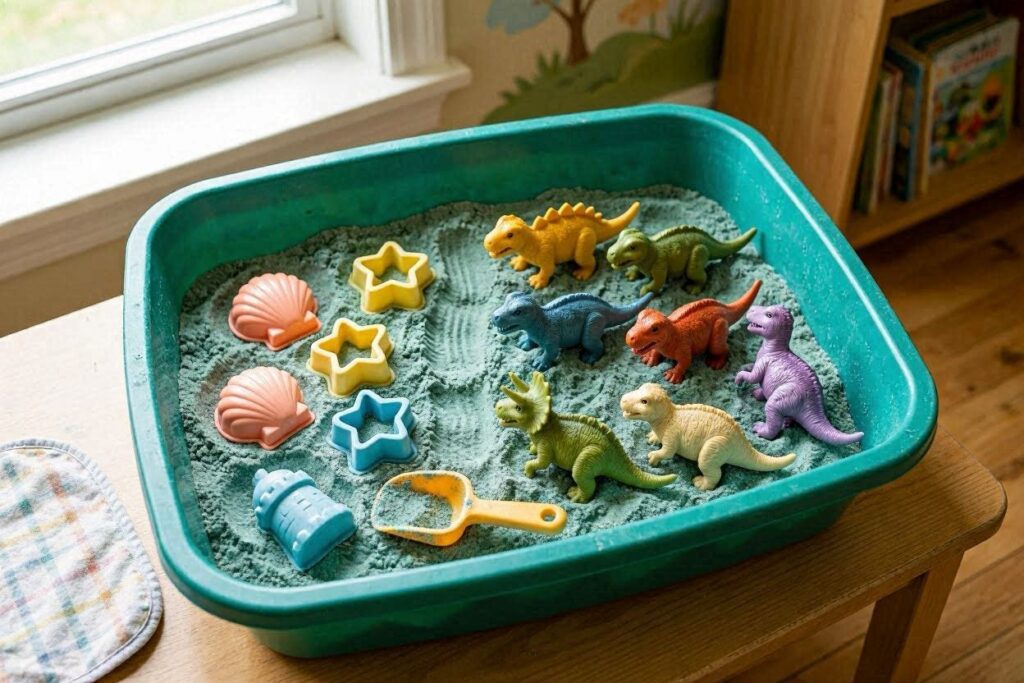
Materials Needed
- 1 to 2 kg of kinetic sand (you can buy it or make your own with fine sand and cornstarch)
- Small molds and cookie cutters
- A shallow bin
- Plastic dinosaurs or other small figures
Step-by-Step Process
- Pour kinetic sand into a shallow bin.
- Bury small plastic figures in the sand.
- Set out molds and encourage your toddler to press, dig, and build.
- Show them how to flip a filled cup to make a sand castle, and they will want to repeat it endlessly.
This pairs beautifully with some indoor activities for toddlers when you are stuck inside on a rainy day.
6. Oobleck Sensory Bin- The Magic Goo Your Toddler Will Love
Oobleck is made from just two ingredients, but it behaves most unexpectedly. It is hard when you press it fast, but liquid when you move your hand slowly through it. Most two-year-olds stare at it in complete confusion for at least the first minute — and then they go wild.
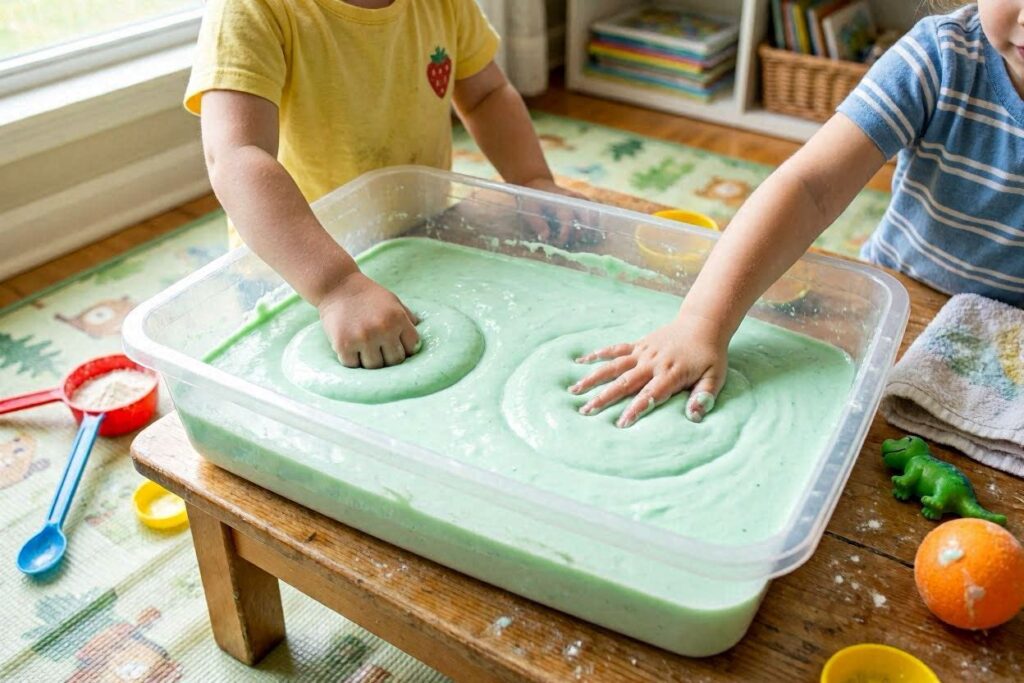
Materials Needed
- 2 cups of cornstarch
- 1 cup of water
- Food coloring (optional)
- A large shallow tray or bin
Step-by-Step Process
- Pour cornstarch into your bin.
- Slowly add water and mix with your hands until it reaches the right consistency.
- Add food coloring if you want to make it more visually interesting.
- Let your toddler touch, squeeze, poke, and pour it.
Note: this one is messy, so set it up outside or put a sheet underneath. However, it cleans up easily with water, so do not let that stop you.
7. Farm Animal Sensory Bin for 2 Year Olds
If your toddler is obsessed with animals, this sensory bin idea will be a huge hit. You can set it up to look just like a little farm, which makes the imaginative play element even stronger.
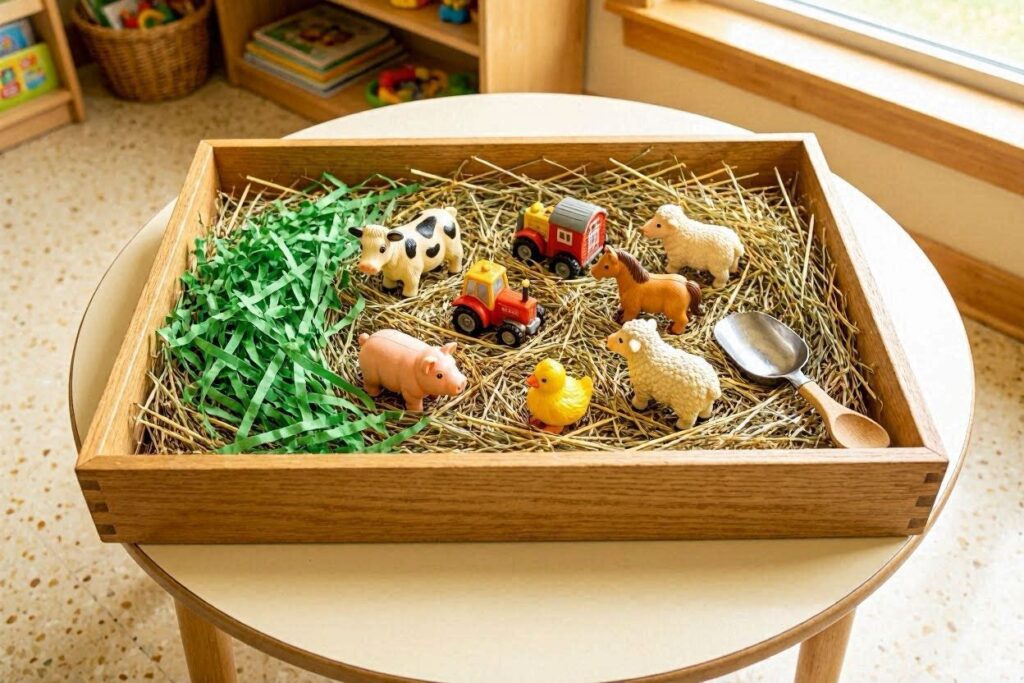
Materials Needed
- A handful of dried hay or straw (from a pet or garden store)
- Green shredded paper or dyed rice for grass
- Small plastic farm animals
- A small bin or cardboard box
Step-by-Step Process
- Layer green shredded paper or dyed rice at the bottom of your bin.
- Add a section of hay or straw on one side.
- Place plastic animals throughout.
- Let your toddler move the animals around, hide them in the hay, and act out farm scenarios.
In addition, you can add a small cup of water for a “pond” element or a tiny fence made from craft sticks for even more detail. Two-year-olds love small details that they can control.
8. Ice Excavation Sensory Bin for 2 Year Olds
This is one of those sensory bin ideas that feels really special without being complicated at all. You freeze small plastic toys inside a block of ice, and then your toddler gets to dig them out using warm water and small tools.
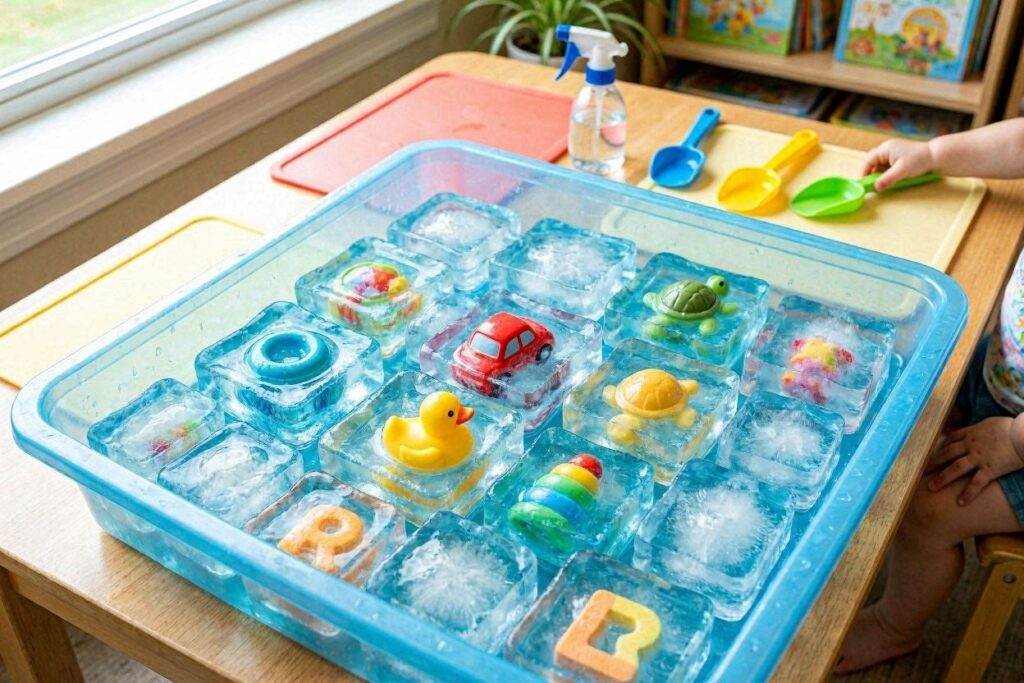
Materials Needed
- Small plastic toys or figurines
- Water
- A container to freeze (like a bread tin or a bowl)
- Small cups of warm water
- A plastic spoon or toothbrush for digging
Step-by-Step Process
- Place small toys in your container and fill with water.
- Freeze overnight.
- Pop the ice block out and place it in a shallow bin.
- Give your toddler cups of warm water and small tools to help melt and dig the toys out.
This activity also teaches early science concepts like melting and temperature. Therefore, it is a win for both fun and learning.
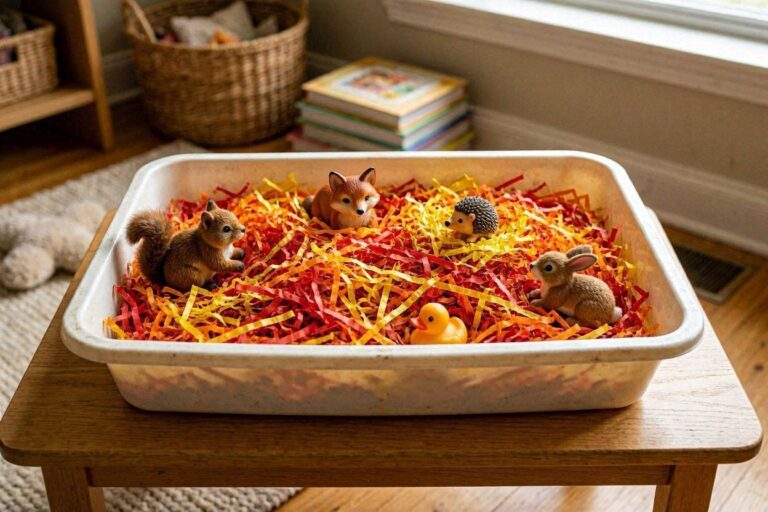
9. Shredded Paper Sensory Bin- Budget-Friendly and Easy
If you have a paper shredder at home, this is completely free to make. Shredded paper has a really interesting texture, light, crinkly, and a little chaotic, which two-year-olds seem to absolutely love.
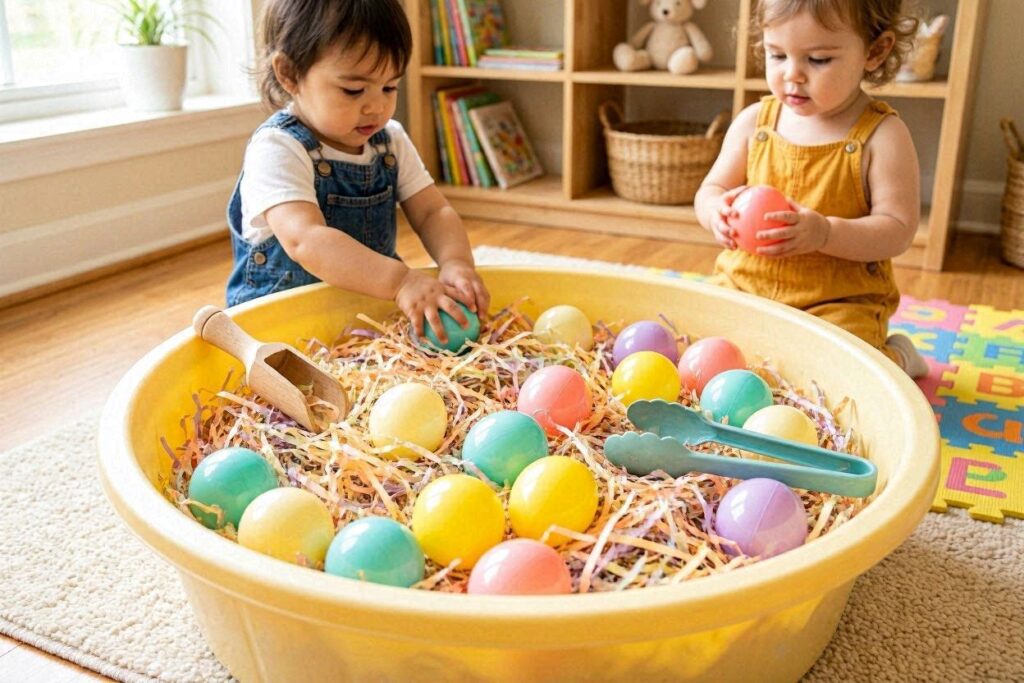
Materials Needed
- A bag of shredded paper (colored paper makes it more fun)
- Small toys, plastic eggs, or pompoms to hide inside
- A large bin
Step-by-Step Process
- Fill your bin with shredded paper.
- Hide small toys, plastic Easter eggs, or pompoms throughout.
- Encourage your toddler to dig through and find what is hidden.
- Let them throw, shake, and pour the paper, too; it is all part of the fun.
As an alternative, you can dye the paper with food coloring for a more visually exciting version. Either way, this one takes about two minutes to set up, which makes it a brilliant option for busy days.
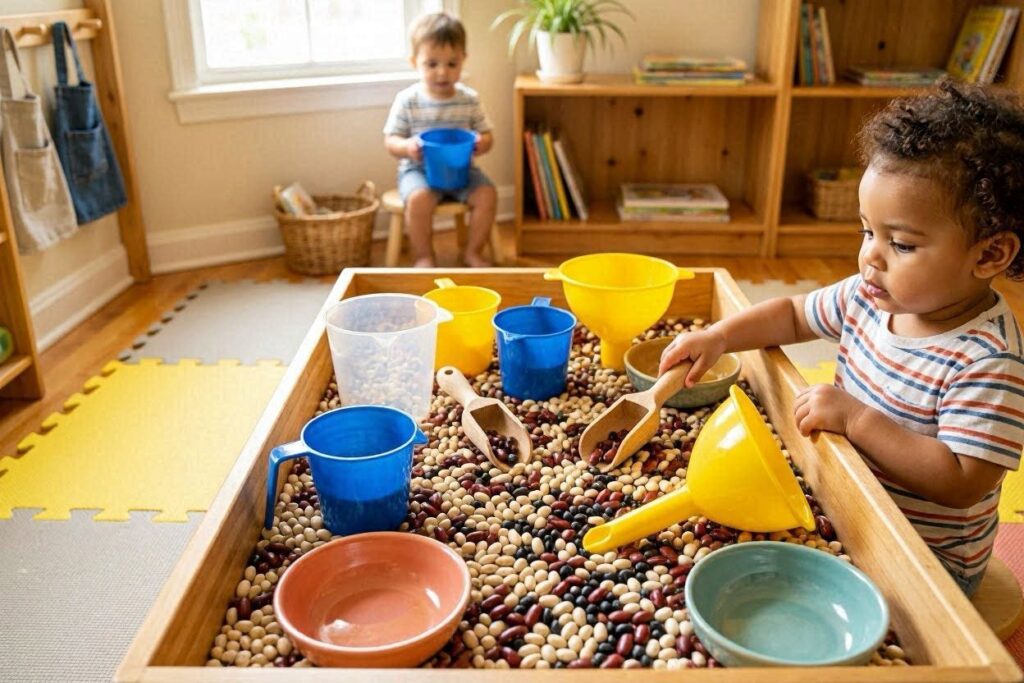
10. Sensory Bin for 2 Year Olds with Dried Beans and Scoops
Dried beans are a classic sensory bin filler for good reason. The sound they make when poured is incredibly satisfying, and the weight of them in a cup feels substantial to little hands.
Materials Needed
- A mix of dried beans, lentils, or chickpeas
- Measuring cups, funnels, and spoons
- A large bin with high sides (to contain spills)
Step-by-Step Process
- Pour a mix of beans into your bin.
- Add measuring cups, funnels, and spoons for scooping and pouring.
- Optional: add small plastic numbers or letters for a hidden learning element.
- Supervise closely, especially if your toddler still mouths things.
This bin is especially great for pouring practice, which is a key fine motor skill at this age. As a result, your two-year-old is learning while they play without even realizing it.
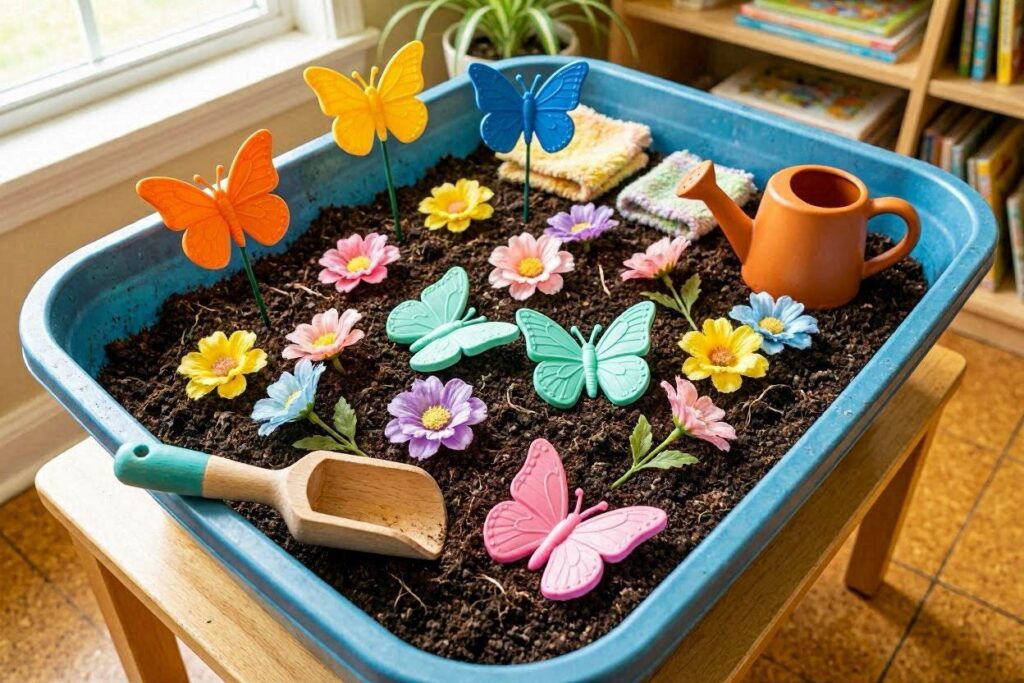
11. Spring Garden Sensory Bin for 2 Year Olds
This seasonal sensory bin is perfect for spring, or anytime you want to bring a little nature indoors. It smells amazing, looks beautiful, and gives your toddler a hands-on way to explore the natural world.
Materials Needed
- A tray of potting soil or kinetic sand as a base
- Real or fake flowers with stems
- Small plastic butterflies or insects
- Small watering can or spoon
Step-by-Step Process
- Fill your bin with potting soil or kinetic sand.
- Push flower stems into the soil to “plant” them.
- Add plastic butterflies, ladybugs, or worms throughout.
- Give your toddler a small watering can and let them water their garden.
Furthermore, this is one of the most visually stunning sensory bins on this list, and it doubles beautifully as a simple imaginative play setup.
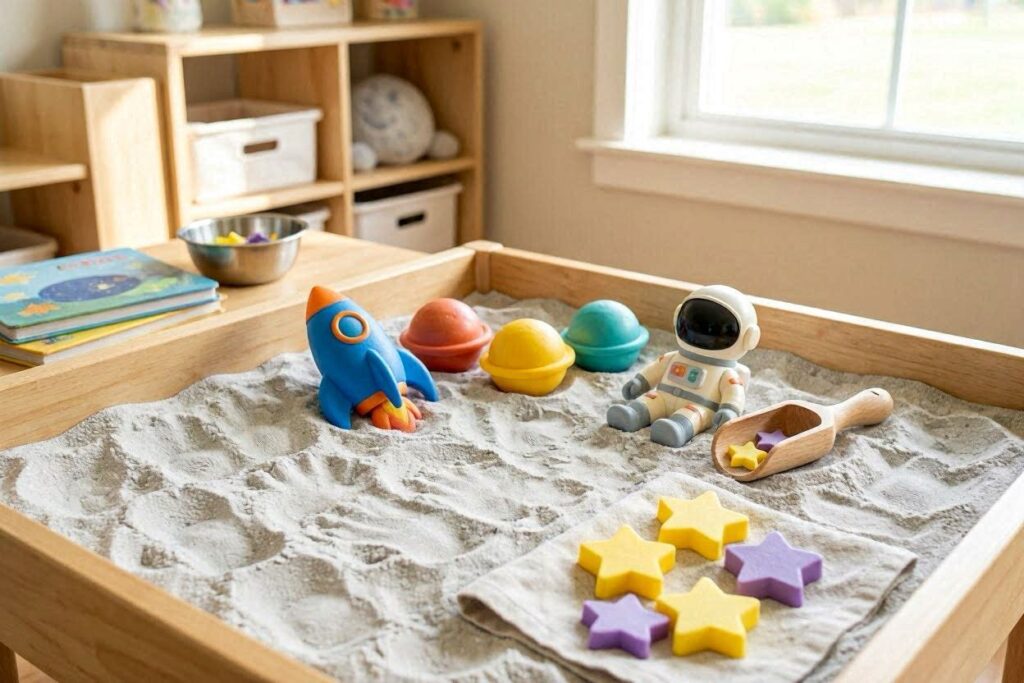
12. Moon Sand Sensory Bin- Smooth and Satisfying
Moon sand is similar to cloud dough but uses a slightly different ratio, giving it a smoother, finer texture. It is ideal for kids who love to mold and shape things.
Materials Needed
- 8 cups of fine sand
- 1 cup of cornstarch
- Half a cup of water
- Star-shaped molds or space figurines
Step-by-Step Process
- Mix sand and cornstarch in your bin.
- Slowly add water and mix until the texture becomes moldable.
- Add star molds and small space toys.
- Let your toddler press, mold, and smash to their heart’s content.
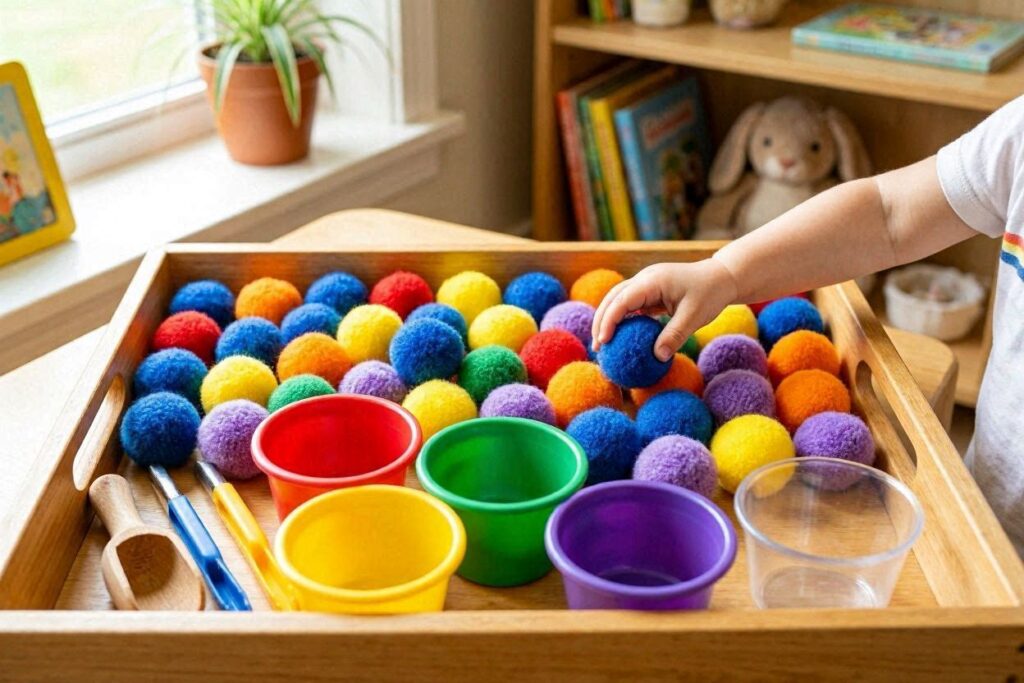
13. Color Sorting Sensory Bin for 2 Year Olds
This sensory bin idea adds an early learning element without taking away any of the fun. Two-year-olds are developmentally ready to begin sorting by color, and this activity makes it feel like a game rather than a lesson.
Materials Needed
- Large colorful pom poms in 3 to 4 different colors
- Matching colored bowls or cups (one per color)
- Tongs or a spoon (for fine motor practice)
Step-by-Step Process
- Toss all the pom poms into a large bin.
- Set out a colored bowl for each color pom pom.
- Show your toddler how to pick up a pom pom with tongs and drop it into the matching bowl.
- Let them go at their own pace, do not worry if the sorting is not perfect.
Consequently, this simple activity builds color recognition, fine motor skills, and concentration all at once. It is also one of the easiest sensory bins to reset and repeat.
14. Dinosaur Dig Sensory Bin for 2 Year Olds
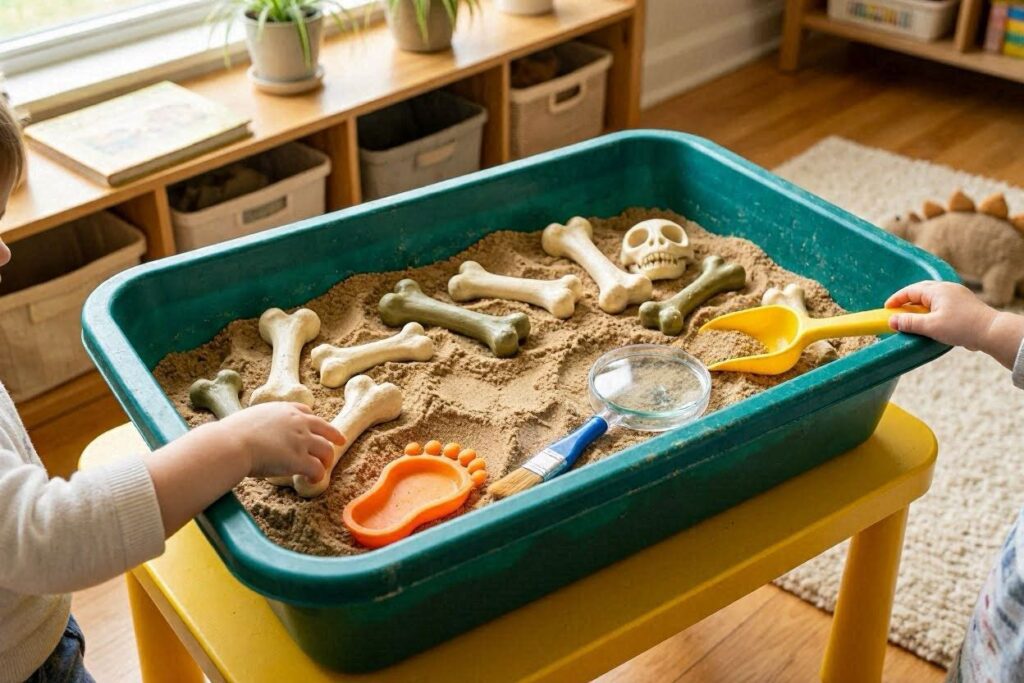
Toddlers who love dinosaurs will lose their minds over this one. You bury dinosaur figures and let them excavate. It feels like a real archaeological dig, scaled perfectly for tiny hands.
Materials Needed
- Kinetic sand or kinetic play sand
- Plastic dinosaur figures or dinosaur bones
- Small brushes, spoons, and scoops
Step-by-Step Process
- Fill your bin with kinetic sand.
- Bury the dinosaur figures throughout the sand.
- Give your toddler small brushes and spoons and let them dig.
- Cheer when they uncover a dinosaur; the excitement is contagious.
Additionally, you can add a little roar effect when they find one, which makes the whole thing feel more like an adventure.
15. Bubble Wrap Sensory Bin- The Simplest One on This List
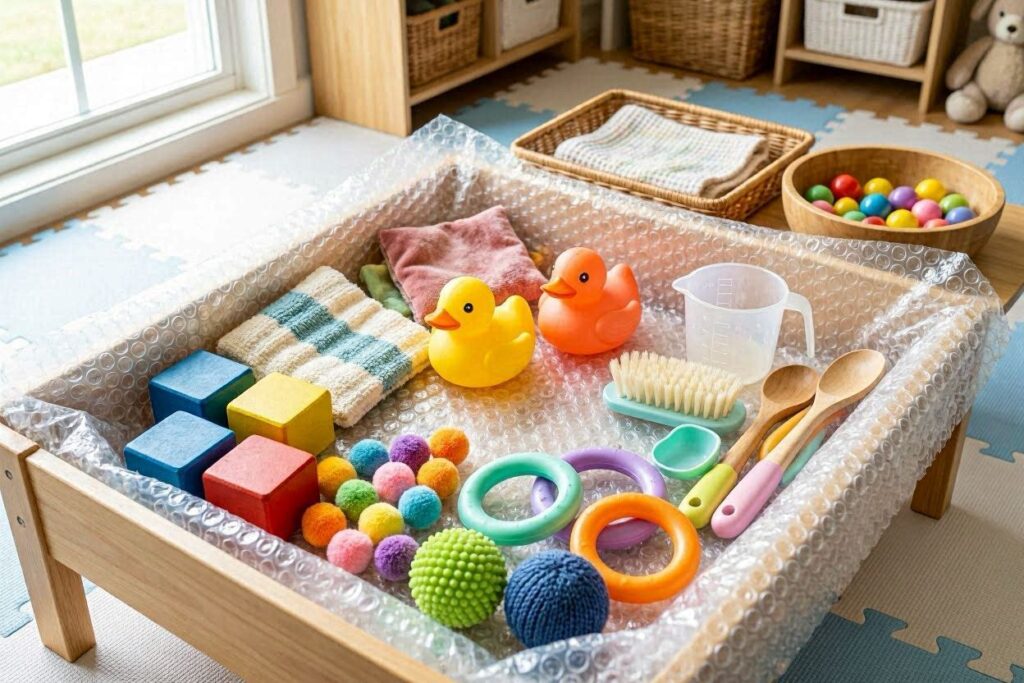
This last one barely counts as a bin, but it deserves a spot on this list because toddlers absolutely love it. The popping sensation is deeply satisfying and great for little fingers.
Materials Needed
- A large sheet of bubble wrap
- A few small toys or pompoms
- Tape to secure the edges if needed
Step-by-Step Process
- Lay bubble wrap flat on the floor or inside a shallow bin.
- Scatter a few small toys on top.
- Let your toddler stomp, press, and pop away.
- For extra fun, paint your toddler’s feet with washable paint and let them walk across it.
This is also a great way to reuse packaging materials and turn them into something useful and fun. Moreover, the sensory feedback from popping is genuinely calming for many toddlers.
Tips for Setting Up a Sensory Bin for 2 Year Olds
Before you begin, here are a few practical tips that will make sensory bin time go more smoothly for both you and your toddler:
- Always use a bin with high sides to contain the mess. A shallow storage box or under-bed storage box works brilliantly.
- Place a plastic sheet or shower curtain liner under the bin to catch spills and make cleanup much easier.
- Rotate your sensory bins every few days to keep things fresh and interesting. Toddlers lose interest quickly when things stay the same.
- Introduce tools like spoons, cups, and funnels to extend the play and build fine motor skills at the same time.
- If your toddler gets frustrated, simplify the setup. Sometimes a bin with just one filler and one tool is more than enough.
More Fun Activities to Try With Your Toddler
If you are looking for even more ways to keep your little one busy, check out these posts from the blog:
- 30 Indoor Activities for Toddlers When You’re Stuck at Home
- 25 Easy Bottle Art Ideas for Kids — Fun DIY Crafts
- The Best Sensory Play Activities for Babies 6 to 12 Months
- Free Printable Coloring Pages for Kids — 20 Fun Sheets
And One Last Thing, Do Not Forget About Yourself
Honestly, setting up a sensory bin for your two-year-old is also one of the best gifts you can give yourself. While they are busy playing, you actually get a few minutes to breathe. So use those minutes well.
Check out my post on self-care ideas for moms — 30 quick ways to recharge without guilt. You deserve it.
Get More Done With Less Stress —Visit My Shop
If you want ready-made printable activities, play guides, and more resources to make planning toddler activities easier, head over to my shop. Everything there is designed to save you time and make playtime more intentional.
➔ Visit my shop here for printable activity packs and toddler play guides.
Final Thoughts on Sensory Bin Ideas for 2 Year Olds
Setting up a sensory bin for 2-year-olds does not have to be complicated or expensive. As you can see from this list, most of the best sensory bins use simple materials you already have at home or can pick up cheaply from a grocery store.
The most important thing is to let your toddler lead. Give them the materials, step back, and watch them explore at their own pace. You will be amazed at how long they stay engaged when they feel free to touch, pour, and discover without being directed.
Try one of these sensory bin ideas this week and let me know how it goes in the comments. I would love to hear which one your toddler loved the most!
Save This Post for Later
Found this post helpful? Pin it so you can come back to it whenever you need a quick activity idea for your toddler.